
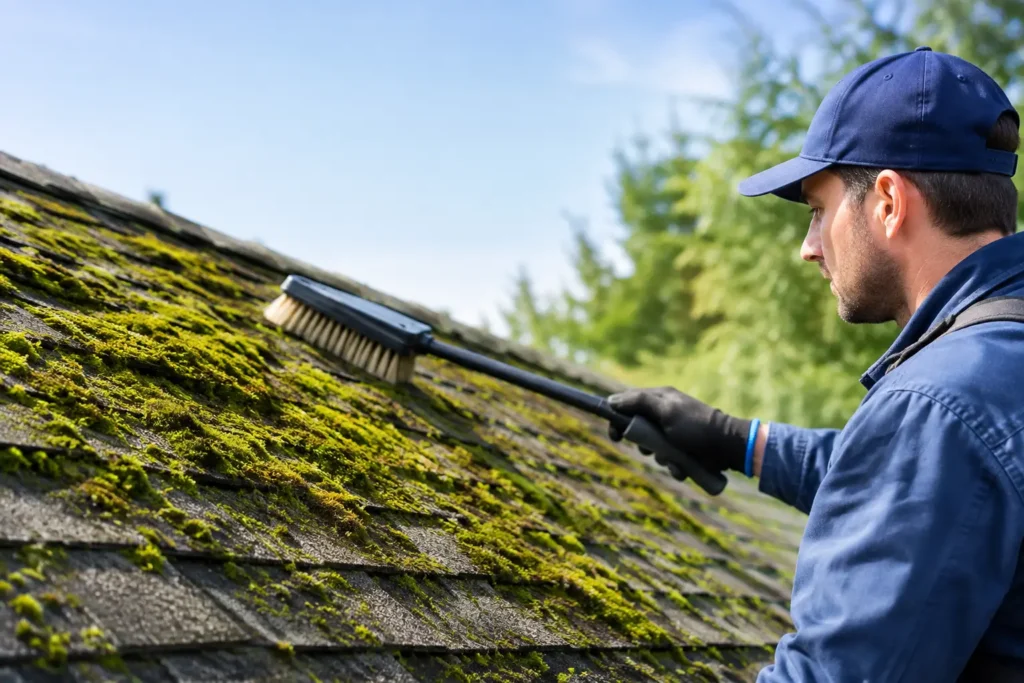
Moss on a roof can make a property look neglected, but the bigger concern is what happens when it is left to spread. Effective moss treatment removes established growth safely and helps prevent the moisture, blocked gutters and tile damage that can lead to avoidable repair bills.
For homeowners, landlords and property managers, the right approach is not simply to make the roof look cleaner for a few weeks. It is to protect the roof covering, keep rainwater moving as it should and avoid unnecessary damage during the cleaning process.
Why moss grows on roofs
Moss thrives where surfaces stay damp and receive limited sunlight. North-facing roof slopes, overhanging trees, nearby woodland and sheltered properties are all more likely to develop it. In Buckinghamshire, wet autumns and mild spells through winter can give moss plenty of opportunity to take hold.
It commonly starts in small patches around tile edges, valleys and areas beneath trees. Over time, it traps moisture against the roof surface and spreads across the tiles. Moss itself does not always mean a roof is failing, but ignoring heavy growth can create conditions that shorten the life of the roof.
Tiles may stay wet for longer, especially during colder months. On older roofs, moss roots and trapped debris can contribute to lifted, cracked or weakened tiles. It can also conceal existing faults that would otherwise be easy to spot.
What moss can do to your roof and gutters
The most visible issue is the green build-up on tiles, but moss rarely stays in one place. Rain loosens clumps of growth and carries them into gutters, valleys and downpipes. A gutter that cannot drain freely can overflow onto fascias, brickwork and paths below.
That overflow is not just inconvenient. Persistent water running down the outside of a property can stain walls, encourage damp around vulnerable areas and cause problems near entrances. For commercial premises, it can also make a site look poorly maintained and create slippery surfaces for staff or visitors.
Heavy moss can affect roof drainage too. Water should travel quickly down the roof and into clear gutters. When moss, leaves and silt collect in valleys or behind growth, water can back up. This increases the chance of water finding its way beneath tiles during prolonged rainfall.
Moss treatment is more than a quick scrape
The best moss treatment depends on the type and condition of the roof. A sound tiled roof with light surface growth may need a different approach from an older roof with thick moss, fragile tiles or difficult access.
Professional work normally begins with an assessment from the ground and, where safe, a closer inspection. This helps identify loose tiles, damaged flashing, blocked gutters, delicate roof materials and the safest way to access the job. It also avoids treating a roof as though every surface can be cleaned in the same way.
Manual moss removal is often the first stage for heavier growth. Used carefully, this takes away the bulk of the moss without forcing water beneath tiles. It should be done with suitable tools and controlled methods, rather than aggressive scraping that could crack tiles or dislodge their protective surface.
A suitable biocide treatment may then be applied to tackle remaining spores and slow regrowth. Unlike a dramatic, instant clean, this treatment works gradually with the weather. Remaining discolouration can fade over time as rainfall washes away dead organic material. That slower result is often kinder to the roof than harsh cleaning methods.
Why high-pressure washing is not always the answer
High-pressure washing can make a roof appear clean quickly, but it is not suitable for every roof. The pressure can damage ageing tiles, strip surface coatings, disturb pointing or force water into gaps around tiles and flashings. It can also send large amounts of debris into gutters and downpipes if these are not properly managed.
There are circumstances where controlled pressure cleaning may be considered, particularly on certain hard surfaces or newer, suitable roof materials. However, it should only follow a proper assessment and use the right equipment, technique and pressure setting.
For many domestic roofs, a manual removal and soft-wash treatment is the safer choice. The result may take longer to fully develop, but the priority should be preserving the roof rather than chasing a fast visual change.
A safe process protects the whole property
Roof work carries obvious risks, so safety should never be an afterthought. Safe moss treatment requires suitable access equipment, trained operatives and insurance that gives customers confidence. Working from ladders without the right setup, walking unnecessarily on fragile tiles or allowing debris to fall uncontrolled can all turn a routine maintenance job into a costly problem.
A careful service also looks beyond the roof itself. Gutters should be cleared of moss and debris once removal is complete, and downpipes checked so water can flow away. Fascias, soffits, conservatory roofs and paths may need protection or cleaning afterwards, particularly where loose moss has fallen during the work.
At Spotless Cleans, the focus is on practical, safety-conscious exterior maintenance. Using suitable access methods and soft-wash techniques where appropriate helps deliver a clean result while reducing risk to the roof and the people around it.
How often should a roof have moss treatment?
There is no single timetable for every property. A roof in an open, sunny position may only need periodic inspection and occasional treatment. A shaded roof beneath mature trees may need more frequent attention, especially if gutters are regularly filling with leaves and moss.
As a sensible rule, arrange a visual roof and gutter check at least once a year, ideally after autumn leaf fall or before winter weather sets in. Look for visible moss build-up, grass-like growth in gutters, water overflowing during rain, staining on external walls or fallen debris around the property.
A recurring maintenance plan can be useful for landlords and commercial site operators who want fewer surprises. Regular gutter clearing and early moss control are usually easier to manage than dealing with a blocked downpipe or roof leak after heavy rain.
Can you treat roof moss yourself?
Small areas may be manageable from the ground with appropriate products, but roof access introduces real risks. Household cleaning products can also damage plants, painted surfaces and surrounding materials if used incorrectly. Never pressure wash a roof from a ladder or climb onto tiles without suitable training and equipment.
If moss is widespread, the roof is steep, tiles look worn or gutters are difficult to reach, professional treatment is the safer option. A clear assessment will help you understand what work is needed and what can be left alone.
Will moss treatment stop growth permanently?
No treatment can stop new spores landing on a roof forever. Trees, shade and the local weather all play a part. A good treatment removes current growth and reduces the speed of regrowth, while regular gutter cleaning and inspections prevent small issues from becoming larger ones.
Is treatment safe for gardens and pets?
It can be, provided the work is planned properly. A professional should use appropriate products, apply them carefully and take sensible precautions around planting, ponds and outdoor areas. Customers should also be told if pets need to be kept indoors or away from treated surfaces until it is safe.
A clean roof is useful, but a roof that drains properly and remains protected through the next wet season is far more valuable. Address moss early, keep gutters clear and you give your property a better chance of staying dry, presentable and easier to maintain.