
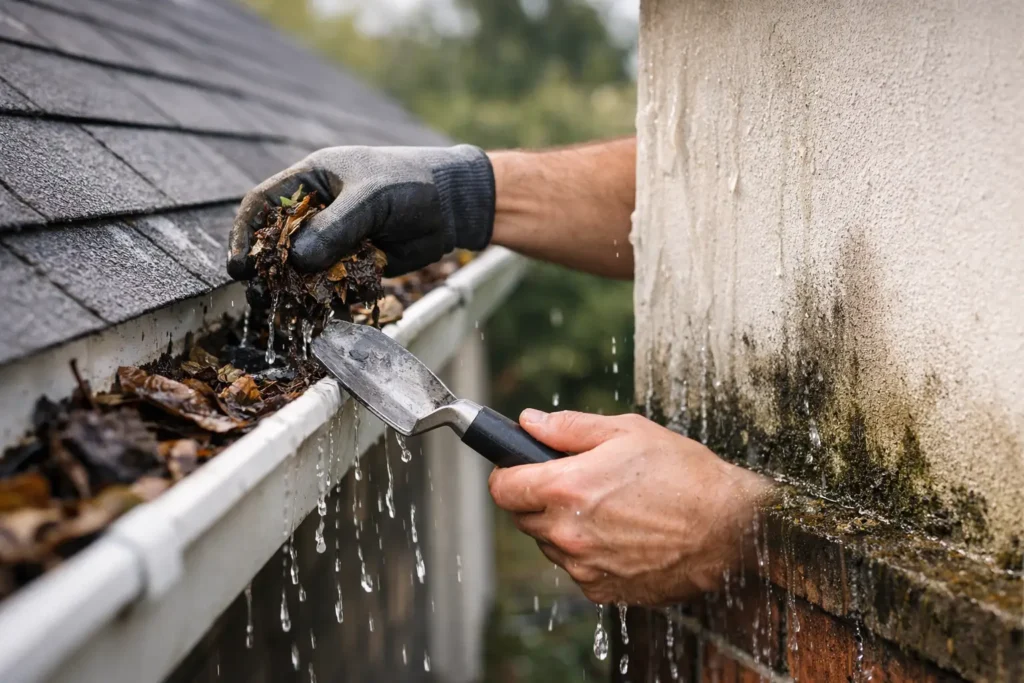
A gutter overflowing during a Buckinghamshire downpour is more than an untidy sight. Water can run down brickwork, soak the ground beside the house and find its way into places it should not be. So, does gutter cleaning prevent damp? In many cases, yes: keeping gutters and downpipes clear is one of the simplest forms of preventative maintenance for reducing water-related damp problems around a property.
It is not a cure for every damp issue. Rising damp, plumbing leaks, failed roof coverings and poor ventilation all need their own investigation. But when rainwater cannot drain as designed, blocked gutters can create the conditions that allow penetrating damp and moisture damage to develop.
How gutter cleaning helps prevent damp
Gutters collect rainwater from the roof and direct it through downpipes into a drain or suitable outlet. When that route is clear, water is kept away from the roof edge, external walls, windows, doors and foundations.
Leaves, moss, twigs, roof grit and nesting material gradually build up. A small blockage can hold enough water for the gutter to overflow, particularly in heavy rain. Instead of travelling safely through the downpipe, water spills over the side or backs up beneath roof tiles and fascia boards.
Repeated wetting is the real concern. Brickwork and mortar are designed to cope with rain, but not with a constant stream of water running over the same area. Over time, moisture can penetrate cracks, porous pointing or gaps around windows. Inside, this may show as discoloured patches, peeling paint, swollen plaster, a musty smell or mould on colder surfaces.
Clear gutters also protect the ground around the building. Overflowing water can saturate soil close to external walls. If the damp-proof course is bridged by high soil, debris or splashing water, moisture has a more direct route into the wall. This is especially worth checking on older properties, where drainage arrangements and brickwork may already need more careful maintenance.
The difference between damp prevention and damp treatment
Gutter cleaning is prevention, not a substitute for diagnosing an established damp problem. If there is already a persistent patch indoors, it is sensible to identify the source rather than assuming the gutter is solely responsible.
For example, a damp mark high on an outside-facing wall may be linked to overflowing gutters, a blocked downpipe or damaged flashing. Damp appearing low on a ground-floor wall could be related to external ground levels, drainage or another issue altogether. A good inspection looks at the pattern of the problem, not just the nearest gutter.
Signs your gutters may be contributing to damp
You do not need to wait for water to enter the property before taking action. Many warning signs are visible from ground level, particularly during or shortly after rain.
Look out for water pouring over the front edge of a gutter, drips from joints, sagging sections, vegetation growing from the channel, or stains running down walls below the roofline. Damp patches around upstairs windows, peeling external paint on fascias and soffits, and green algae on brickwork can also point to regular overflow.
Downpipes deserve the same attention. A gutter may look clear but still fail if the downpipe is blocked. Water then pools in the gutter, adds weight to its fixings and spills over at the weakest point. At the base of the downpipe, check that water is reaching the drain rather than collecting around the wall or paving.
Commercial premises can show the same warning signs on a larger scale. On offices, shops, schools and industrial units, long roof runs and concealed gutters can allow a blockage to affect a wide section of the building before anyone notices. Regular checks are far less disruptive than dealing with water damage, access equipment and emergency repairs later.
Why blocked gutters cause more than a damp patch
Damp is often the most noticeable result, but the effects of poor gutter drainage can spread further. Standing water and debris add unnecessary weight, which can pull gutters out of alignment or loosen brackets. Wet fascia boards may rot, and water behind the gutter can affect soffits and roof edges.
In colder weather, trapped water can freeze and expand. This can worsen leaks at joints and cause already weakened guttering to crack. Moss on a roof can make matters worse by shedding into gutters over time, while also holding moisture against tiles.
There is also a practical safety issue. Climbing ladders to scoop out gutters is risky, particularly where access is uneven, gutters are high, or the work involves reaching over conservatories and extensions. Professional high-reach gutter vacuum equipment allows much of the work to be completed from the ground, with the system checked as the cleaning progresses. It is a safer approach and helps ensure the blockage is actually removed rather than pushed further along the run.
How often should gutters be cleaned?
For most homes, gutter cleaning once or twice a year is a sensible starting point. Autumn is an obvious time because falling leaves quickly fill gutters, while a spring clean removes winter debris and helps prepare the property for heavier seasonal rain.
The right frequency depends on the property. Homes beneath or close to trees often need more regular attention. Properties with mossy roofs, older guttering, flat-roof sections or frequent bird activity may also benefit from scheduled checks. A large house with several roof levels can have hidden sections that are easy to overlook.
Rather than choosing a date solely by the calendar, consider what lands on the roof and how quickly it accumulates. If gutters have overflowed before, or if you have seen staining on walls, more frequent maintenance is usually worthwhile. Landlords and property managers may find a planned schedule especially useful, as it creates a clear record of routine upkeep across tenancies or sites.
Gutter cleaning is most effective with a full check
Removing leaves is the main job, but a proper service should also consider where the water goes next. Gutters should be checked for obvious damage, poor falls, leaking joints and areas where water sits instead of flowing to the outlet. Downpipes should be clear, securely connected and discharging correctly.
It is also sensible to look at the surrounding exterior. Overhanging branches can continually fill a clean gutter. Moss may be dropping from the roof. Cracked render, worn sealant around window frames or damaged pointing can make a wall more vulnerable when water does overflow. Addressing these issues early helps prevent a small drainage problem from becoming a larger repair.
At Spotless Cleans, gutter work is carried out with safety-focused equipment and a practical eye for the wider condition of the exterior. For homeowners and site managers, the aim is straightforward: clear the route for rainwater and highlight visible concerns before they cause unnecessary damage.
When cleaning alone will not solve the problem
Sometimes a gutter is clean but the system still fails. The gutter may have an incorrect fall, meaning water pools instead of moving towards the downpipe. A downpipe may be connected to a blocked underground drain. In other cases, the gutter may be too small for a large roof area, especially where intense rainfall causes regular overflow.
Damp can also continue if roof tiles, flashing, chimney pointing or wall render have deteriorated. If a patch persists after gutters and downpipes have been cleared, take note of when it appears. Does it worsen after wind-driven rain? Is it near a bathroom or pipework? Is mould forming on an internal wall with no obvious external defect? These details help distinguish rainwater ingress from condensation or an internal leak.
A qualified damp or building professional may be needed where the cause is unclear, structural damage is visible, or the problem has affected timbers and internal finishes. Early investigation is generally less costly than waiting for staining, rot or mould to spread.
Practical steps between professional cleans
Homeowners can keep an eye on gutter performance safely from the ground. During rainfall, observe whether water is flowing into the downpipes or spilling over the edge. Afterwards, look for fresh streaks on walls, puddling near foundations and loose brackets or joints.
Avoid leaning ladders against gutters or attempting to reach awkward roof areas. A gutter that looks lightly blocked can conceal a deeper obstruction, and wet surfaces make access more hazardous. If there is an urgent overflow, arrange a professional clean and check rather than risking a fall or damaging the gutter further.
Keeping rainwater moving is a modest job with a meaningful role in protecting a property. Regular gutter cleaning cannot solve every cause of damp, but it removes one of the most common and avoidable sources of water reaching walls, roof edges and foundations. A clear system today can spare you a far more inconvenient repair after the next spell of heavy rain.