
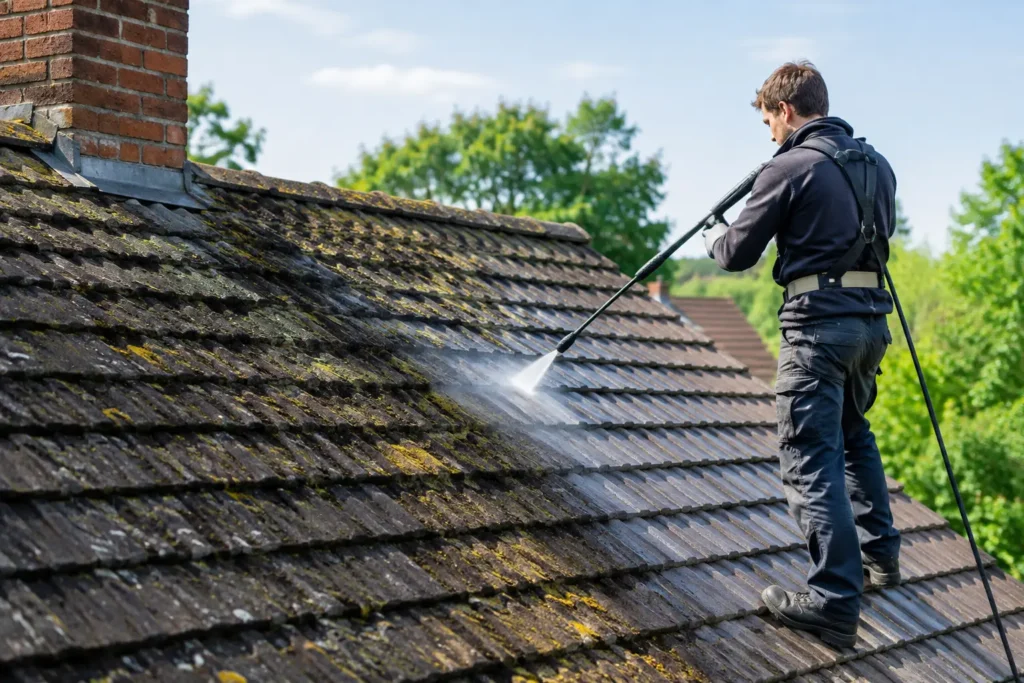
A roof can look fine from the ground while moss is quietly holding moisture against the tiles, blocking gutters and working its way into vulnerable areas. The best time for roof cleaning is usually when conditions are dry, mild and settled – but the right timing also depends on the condition of your roof, the type of growth present and how safely it can be accessed.
For most properties in Aylesbury and Buckinghamshire, spring and early autumn are the most practical seasons for professional roof cleaning. They generally offer workable weather without the extremes of winter frost or summer heat. That said, waiting for the perfect month is not always the best decision. If moss is already shedding into your gutters or tiles are showing signs of damp staining, arranging a clean sooner can prevent a small maintenance job becoming a larger one.
Why timing matters for roof cleaning
Roof cleaning is not simply about improving kerb appeal. Moss, algae and lichen retain water, particularly on shaded roof slopes. Over time, that dampness can leave tiles slower to dry, add weight to gutters as debris builds up, and encourage blockages in downpipes.
A properly timed clean gives the roof a chance to dry afterwards and makes it easier for a professional to work safely. Wet, icy or high-wind conditions create unnecessary risk, while very hot conditions can cause cleaning treatments to dry too quickly before they have done their job. A mild, dry day is usually the sensible middle ground.
It is also worth remembering that a roof clean often reveals related maintenance needs. Once moss and leaf debris are removed, it is easier to spot slipped tiles, worn mortar, damaged flashing or gutters that need attention. Cleaning does not replace roofing repairs, but it can make potential issues visible before they are hidden under growth.
Spring is often the best time for roof cleaning
Spring is a popular choice because winter has usually left behind a build-up of leaves, twigs, moss and gutter debris. The days are becoming longer, temperatures are more moderate, and homeowners can deal with exterior maintenance before the wetter months return.
This is especially useful for roofs beneath trees or on north-facing sides of a property, where shade allows moss and algae to thrive. Cleaning in spring helps remove the material that has accumulated through autumn and winter, then leaves the roof clearer for the year ahead.
The trade-off is that British spring weather can still be unpredictable. A professional service will not clean a roof in unsafe wind, heavy rain or frosty conditions simply to keep an appointment. Allowing some flexibility in the booking is the best way to get safe access and a proper result.
A good choice before summer maintenance
Spring roof cleaning also works well if you are planning other exterior jobs, such as gutter cleaning, fascia and soffit cleaning, window cleaning or repairs to the roof itself. Starting with a clearer roof and free-flowing gutters makes it easier to keep the rest of the property in good order.
For landlords and property managers, this timing can be particularly helpful before seasonal inspections or planned maintenance visits. It is a practical way to reduce avoidable gutter blockages before summer storms and heavy rain.
Early autumn is equally effective
Early autumn is another strong window, particularly after a dry spell and before the main leaf fall begins. Temperatures are often mild enough for treatment to work effectively, while roofs are generally more comfortable and safer to work on than during winter.
For homes surrounded by mature trees, an early autumn clean may need to be paired with a follow-up gutter clean later in the season. There is little benefit in clearing gutters in September if nearby trees are about to drop a large amount of leaves in October and November. In that situation, cleaning the roof in early autumn and arranging gutter maintenance after leaf fall is often the more sensible plan.
Autumn is also a good time to prepare a property for winter. Removing moss and checking water flow before prolonged rain, storms and freezing temperatures helps reduce the chance of overflowing gutters and damp patches around the roofline.
When winter roof cleaning makes sense
Winter is not automatically off limits. On a dry, calm and frost-free day, professional roof cleaning may still be possible, especially where there is an urgent issue such as moss blocking gutters or debris causing water to overflow.
However, winter appointments are more weather-dependent. Shorter daylight hours, icy surfaces, saturated ground and stronger winds can mean work needs to be postponed. That is not inconvenience for its own sake – it is the right decision for the safety of the people carrying out the work and for the protection of your property.
If your roof has a heavy moss problem in winter, it can still be worthwhile to request an assessment and plan the work for the next suitable conditions. In the meantime, keeping gutters and downpipes clear is often the priority, as this helps rainwater drain away as intended.
Is summer too hot for roof cleaning?
Summer can be a good time for roof cleaning, particularly during mild, overcast conditions. Longer days provide more working time, and dry weather can make access easier. It is often a convenient period for homeowners who want their property looking its best before hosting guests or putting it on the market.
The limitation is prolonged heat. On very hot, bright days, cleaning products can dry too rapidly on the surface. A responsible contractor will adjust the method, timing or treatment rather than rushing the work. Roof tiles can also become very hot under direct sun, which affects safe working conditions.
For this reason, summer cleaning is usually best booked with flexibility. Early starts, shaded roof elevations and milder days can all make a difference.
Do not wait for moss to become severe
The condition of the roof matters more than the calendar. A light dusting of moss is easier to manage than a thick layer spreading along tile edges and dropping into the gutters. If you can see clumps of moss on the drive, patio or around downpipe outlets, there is a good chance more is collecting above.
Other signs that it is time to arrange a clean include overflowing gutters during rain, green staining on tiles, vegetation growing from guttering, or persistent damp marks near fascias and soffits. These symptoms do not always mean the roof itself is damaged, but they should not be ignored.
There is also a balance to strike. Not every roof needs frequent cleaning, and an overly aggressive approach can cause damage. Pressure washing is not suitable for every roof, particularly older tiles, delicate surfaces or roofs with existing defects. The method should be chosen after assessing the tile condition, pitch, access and level of biological growth.
Choose a safe cleaning method, not just a convenient date
The best result comes from combining suitable weather with the right equipment and cleaning method. For many tiled roofs, this means careful manual moss removal followed by a soft-wash treatment where appropriate. The aim is to remove growth without forcing water under tiles or damaging their protective surface.
Safe access is just as important. Roof work should not involve risky shortcuts, unstable ladders or untrained people walking across tiles. Insured professionals use suitable access equipment and work to protect the roof, surrounding garden, windows, gutters and neighbouring property.
At Spotless Cleans, roof cleaning is approached as preventative property care rather than a quick cosmetic job. A professional assessment helps determine whether cleaning is appropriate, what method is suitable and whether gutter clearing should be completed at the same time.
How often should a roof be cleaned?
There is no single schedule that suits every property. Homes beneath trees, properties with shaded roof slopes and older roofs with established moss may need attention more often than open, sunny homes. As a broad guide, checking the roof and gutters once a year is sensible, with cleaning arranged when growth or debris begins to build up.
Commercial properties may benefit from a planned maintenance schedule, especially where blocked gutters could affect customers, staff or building operations. Regular inspections make it easier to deal with smaller issues at the right time instead of reacting after water has started overflowing.
If you are unsure whether now is the right time, a clear view from the ground, a look at the gutters and an honest professional assessment will usually give you the answer. Acting while conditions are safe and the build-up is manageable is the simplest way to keep your roof looking cared for and your drainage working properly.