
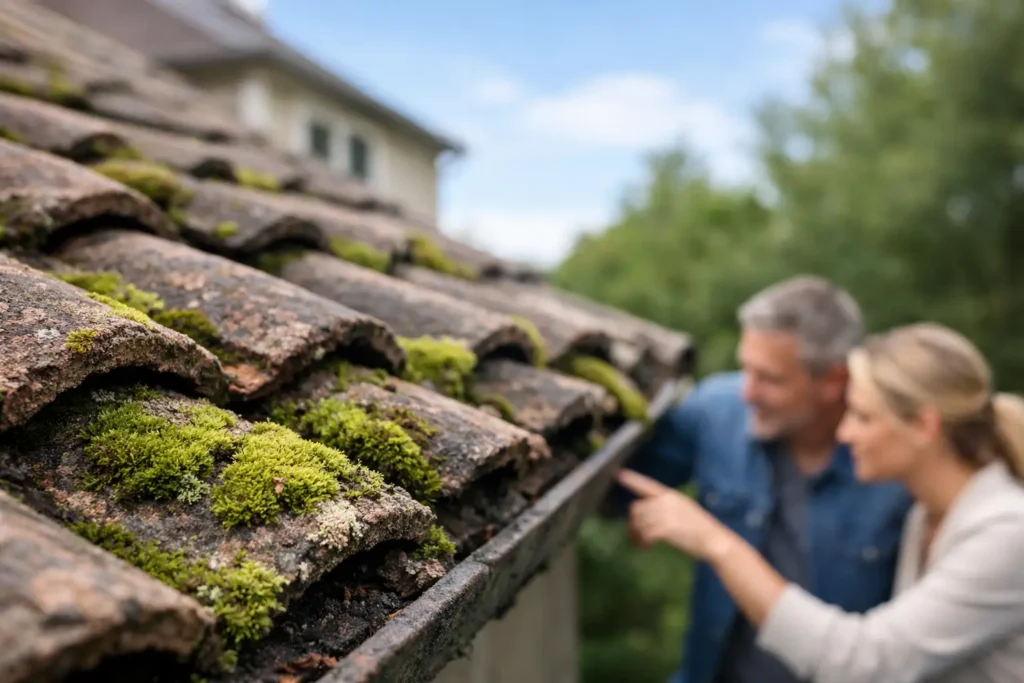
A patch of green moss may make a roof look older than it is, but the real concern is what is happening underneath it. Can moss damage roof tiles? In some cases, yes – particularly when growth is heavy, long-standing, or combined with blocked gutters, poor drainage or already ageing tiles. Moss is not always an emergency, but it should not be ignored.
For homeowners, landlords and property managers, the sensible approach is to assess the roof condition early and remove moss using a method that protects the covering rather than causes further damage. The aim is not simply to make the roof look cleaner. It is to reduce moisture retention, keep water flowing where it should, and spot maintenance issues before they become expensive repairs.
Can Moss Damage Roof Tiles Over Time?
Moss does not eat through a sound roof tile. However, it holds water against the roof surface and can work its way into small gaps between tiles. That changes how the roof handles rain, frost and drainage.
On a dry, well-maintained roof with a small amount of light growth, the immediate risk may be low. On a roof where moss has formed thick clumps, lifted tile edges, filled valleys or spread into gutters, the risk is much greater. Water can be slowed, diverted or retained in places where it should run freely towards the gutter.
During colder weather, trapped water may freeze and expand. This freeze-thaw cycle can worsen tiny cracks and surface wear, particularly on older concrete tiles. Moss can also hide broken, slipped or porous tiles, meaning a minor issue is easier to miss until damp appears inside the property.
The type and age of the roof matter. Modern, well-fired clay tiles often tolerate moisture better than weathered concrete tiles, while natural slate has different fixing and access requirements altogether. That is why a professional roof clean should begin with an inspection, not a one-size-fits-all cleaning method.
The Problems Moss Can Cause Around a Roof
The most visible issue is the appearance. A moss-covered roof can make an otherwise tidy home, rental property or commercial building look uncared for. Yet the more practical concerns tend to be water management and gradual wear.
Heavy moss growth can collect in roof valleys and behind chimneys, where rainwater naturally concentrates. It can then break away in wet clumps and fall into gutters. A gutter partly blocked by moss, leaves and roof grit can overflow during heavy rain, sending water down external walls, onto fascias or around entrances.
This can contribute to staining, damp patches and premature wear to guttering components. It may also place extra weight on gutters when wet debris builds up. Clearing the roof but leaving the gutters full of moss is only half a job, which is why both areas should be considered together.
Moss may also sit beneath the lower edge of tiles or around laps. It does not necessarily lift every tile, but thick, rooted growth can interfere with the way tiles overlap and shed water. If a tile is already loose, cracked or poorly seated, moss can make that weakness more likely to cause a leak.
Why Pressure Washing Can Be the Bigger Risk
It is understandable to want a quick result when a roof is green. However, aggressive pressure washing is often the wrong answer, especially on older or brittle tiles.
High-pressure water can strip the protective surface from concrete tiles, dislodge pointing, force water beneath overlaps and damage fragile areas that were not obvious from ground level. It can also create an uneven finish and leave a roof more open to rapid regrowth if the underlying spores are not treated appropriately.
A safer approach commonly involves careful manual moss removal followed by a suitable soft-wash or biocide treatment. The exact method depends on the roof material, pitch, condition and extent of growth. The treatment works over time to deal with remaining spores, so a roof does not need to be blasted clean in a single afternoon.
There is a trade-off here. A gentle treatment can take longer to produce the bright, freshly cleaned appearance some people expect, but it is usually far kinder to the roof. A trustworthy contractor should explain what result is realistic, what method they propose and why it suits your property.
Signs Your Roof Needs Attention
You do not need to climb a ladder to decide whether moss needs dealing with. In fact, walking on roof tiles without the right training and equipment risks breaking tiles and causing a fall.
From ground level, look for thick moss along the lower courses of tiles, in valleys, near chimneys or behind roof windows. Moss spilling from gutters, persistent gutter overflow, green debris on paths, and visible dark damp areas can all point to a maintenance issue. Binoculars can help with a basic visual check, but they are not a substitute for a close professional inspection.
Inside the property, check loft spaces for water marks, damp insulation, daylight around roof fittings or a musty smell. These signs do not automatically mean moss is the cause. Failed flashing, damaged underlay, blocked gutters and cracked tiles can produce similar symptoms. The important point is to identify the source rather than treating the visible growth alone.
Safe Moss Removal Protects More Than Tiles
A proper roof-cleaning visit should take account of the whole roofline. Before work starts, the contractor should assess access, roof pitch, tile condition, overhead hazards, nearby conservatories and where debris may fall. For many properties, safe-access equipment and specialist tools avoid unnecessary foot traffic on the roof.
Moss should be removed carefully and contained where possible, rather than scraped onto paths, patios or neighbouring land. Gutters, downpipes and gullies should then be checked and cleared so loosened material cannot create a blockage after the job is finished.
Care is especially important around older roofs, fragile ridges, solar panels, roof windows and leadwork. These areas may need a more cautious method or separate repair work before cleaning. Cleaning cannot fix failed mortar, cracked tiles or damaged flashings, and a professional should say so plainly rather than cleaning over a defect.
For properties in Aylesbury and across Buckinghamshire, wet winters, shaded gardens and overhanging trees can all encourage moss. Regular gutter cleaning and occasional roof checks are often more cost-effective than waiting for dense growth to develop.
How Often Should Moss Be Removed?
There is no single timetable for every roof. A sunny, open roof may stay relatively clear for years, while a north-facing roof beneath trees may need attention much sooner. Nearby trees drop leaves and seeds, shade slows drying, and rough or weathered tile surfaces give moss more places to establish itself.
As a practical rule, inspect the roof and gutters at least once a year, ideally after autumn leaf fall or before the wetter months. If moss is clearly collecting in gutters or covering sections of tile, arrange an assessment rather than waiting for a leak.
After a careful clean and appropriate treatment, ongoing prevention matters. Keeping gutters clear, trimming back overhanging branches where appropriate, and dealing with slipped or broken tiles promptly can all reduce the conditions moss prefers. No treatment can guarantee that moss will never return, but maintenance can make regrowth slower and easier to manage.
When to Call a Professional
A small amount of moss is rarely a reason for panic. But professional help is sensible when growth is thick, the roof is steep or high, gutters are overflowing, tiles look worn, or you suspect water is getting into the property. This is not a safe DIY task for most people, and the wrong cleaning technique can turn a maintenance job into a repair bill.
Spotless Cleans uses safety-focused roof and gutter cleaning methods designed to remove growth without taking unnecessary risks with your property. A clear assessment should give you practical advice on whether cleaning, gutter clearance, minor repair work or simple monitoring is the right next step.
A roof does not have to look perfect to be protected. What matters is that water can drain freely, tiles remain secure, and small problems are dealt with before they have the chance to grow with the moss.