
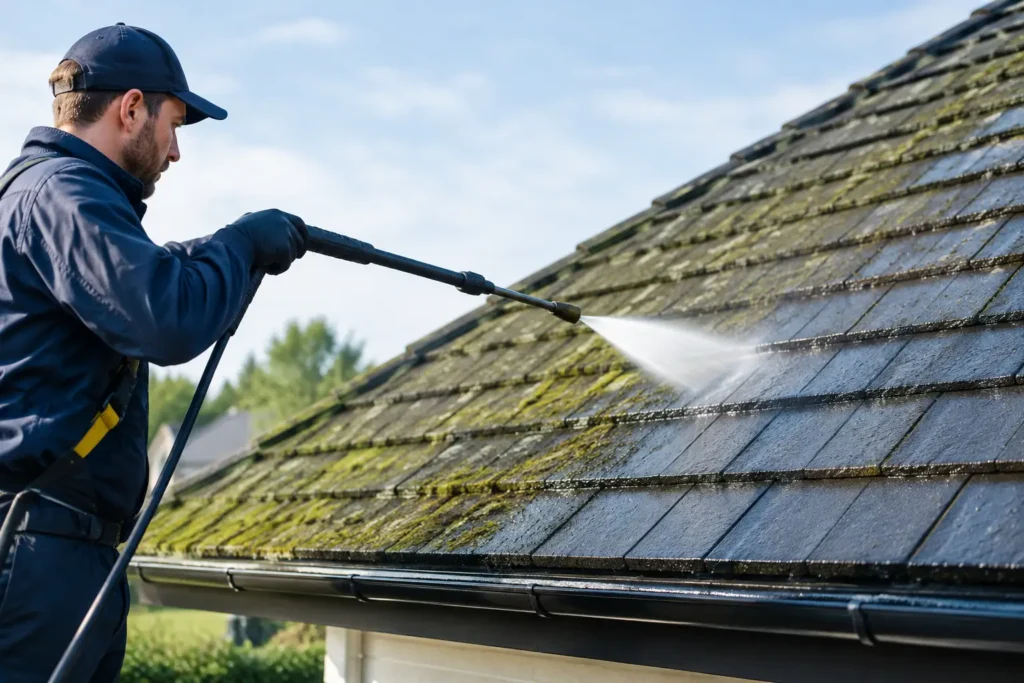
A roof can look clean on the day moss is removed, then gradually develop green staining again over the following months. That is where biocide comes in. Used correctly after a roof clean, it helps deal with the tiny spores and organic growth left behind on tiles, reducing the conditions that allow moss, algae and lichen to return.
For homeowners and property managers, the aim is not to make a roof look artificially new. It is to keep it cleaner for longer, protect the surface from avoidable build-up and reduce the need for frequent heavy cleaning. The method, product and timing all matter.
What is biocide?
A biocide is a treatment designed to control living organisms such as algae, moss, lichen, fungi and bacteria. In exterior cleaning, it is commonly applied to roofs, patios, render, cladding and other surfaces affected by organic growth.
The treatment is usually applied after loose moss and debris have been removed. Rather than stripping the roof again, it works gradually over time. Rain helps distribute the treatment across the surface, and remaining light staining or lichen may fade and release slowly in the weeks and months that follow.
That gradual action can surprise people expecting an instant colour change. A biocide treatment is preventative maintenance as much as a cleaning step. It is designed to give a longer-lasting result, not simply a same-day transformation.
Why moss and algae return to roofs
Moss spores are everywhere outdoors, particularly in leafy areas and on north-facing roof slopes that stay damp for longer. Shade from trees, overhanging branches, blocked gutters and poor drainage can all create a roof environment where growth takes hold quickly.
Moss holds moisture against roof tiles. On its own, that does not mean a roof is immediately damaged, but thick growth can contribute to avoidable problems. It can lift around tile edges, fill valleys, block gutters and downpipes, and shed into drainage channels during heavy rain.
Algae often appears first as a green film. Lichen may show as pale, crusty patches that cling firmly to the tile surface. Each needs a considered approach. Aggressive cleaning may remove visible growth quickly, but it can also damage older tiles, dislodge pointing or force water where it should not go.
How biocide is used in roof cleaning
Professional roof cleaning begins with an assessment of the roof type, its condition, access requirements and the level of growth present. Fragile, weathered or previously repaired roofs need extra care. The safest option is not always the fastest-looking one.
Where moss is thick, it is normally removed first using controlled manual methods. Gutters are cleared afterwards so loosened material does not cause a blockage. A biocide treatment can then be applied at the correct dilution and coverage rate, often using low-pressure equipment or a soft-wash method.
Pressure washing is not the default answer for every roof. While it may have a place in certain circumstances, it can be unsuitable for older concrete tiles, delicate surfaces or roofs with underlying issues. A low-pressure approach reduces the risk of surface damage and avoids blasting moss, dirty water and debris across the property.
The biocide does not need to be rinsed away immediately. It is left to work on the remaining microscopic growth. Over time, weathering helps the roof brighten naturally, while the treatment continues to discourage regrowth.
The result is usually gradual
A freshly treated roof may still show lichen marks or darker patches. This is normal, especially where growth has been established for years. The treatment is working below the visible surface, and the final improvement may take several months.
This slower process is often kinder to the roof than repeated harsh washing. It also makes sense for customers who want a sensible maintenance solution rather than unnecessary work.
Is biocide safe for roofs, gardens and pets?
Biocide products need responsible handling. They are effective because they are made to control biological growth, so they should never be treated like ordinary household cleaner.
A professional application involves choosing a product suitable for the surface, following the manufacturer’s dilution and application guidance, and managing runoff carefully. Gutters, drains, ponds, planted borders and neighbouring areas all need consideration before work begins.
Plants can be protected by pre-wetting, covering where appropriate and rinsing afterwards. Pond life needs particular care, as even small amounts of unsuitable chemical runoff can cause harm. Pets and children should be kept away from the work area during treatment and until the surface is dry.
For commercial properties, a proper method statement and site-specific risk assessment may also be needed. This is particularly relevant for schools, care settings, shopfronts and shared premises, where public access must be managed safely.
When a roof biocide treatment makes sense
Biocide is particularly useful after moss removal, when a roof has recurring green growth or when light staining is beginning to develop. It can also be a practical option for homeowners who want to maintain a roof without the disruption of a full clean every few years.
It is not a repair product. If tiles are cracked, slipped or missing, if flashing is failing, or if there is an active leak, those issues need attention first. Treating moss will not fix water ingress or structural defects.
It also depends on the condition of the roof. A relatively clean, modern roof may only need occasional maintenance. A shaded property beneath mature trees may need more regular attention, including gutter clearing and branch management where appropriate.
Roof cleaning and gutter maintenance work together
A clean roof is only part of the job. Moss often collects in gutters after windy weather and heavy rainfall, where it can form dense blockages. Once water cannot drain freely, it may overflow onto fascias, soffits, walls and paths below.
Combining roof treatment with gutter cleaning is often the most practical approach. High-reach gutter vacuums allow gutters to be cleared from ground level in many situations, reducing the need for ladders and helping to keep the work safer around homes and commercial sites.
Regular window, gutter and roof maintenance also makes small issues easier to spot. Overflow marks, damaged downpipes and persistent damp patches are easier to deal with early than after they have caused staining or deterioration.
Why professional application is worth considering
Buying a treatment product is straightforward. Applying it safely to a pitched roof is another matter. Working at height, judging tile condition, controlling runoff and achieving even coverage all require the right equipment and experience.
Spotless Cleans uses safety-focused exterior cleaning methods suited to the property and surface involved. That means assessing access before work starts, protecting surrounding areas and avoiding unnecessary pressure on roofs that would be better served by a gentle clean and biocide treatment.
For landlords and commercial property managers, professional work also provides a clearer record of what has been done and when. This is useful when maintaining a property portfolio, arranging planned maintenance or showing that a site has been looked after responsibly.
How long does biocide last?
There is no fixed answer because weather, shade, roof material and nearby trees make a real difference. A well-applied treatment can help keep a roof clearer for years, but it will not stop airborne spores landing on the surface.
A bright, open roof with good drainage may stay clear for a long time. A damp, shaded roof under trees may show early signs of growth sooner. Periodic inspections and clear gutters are the best way to get more value from any treatment.
If your roof is showing moss, green staining or overflowing gutters, the sensible next step is an assessment rather than a rushed clean. The right treatment should leave your property tidier, safer to maintain and better prepared for the next spell of wet weather.