
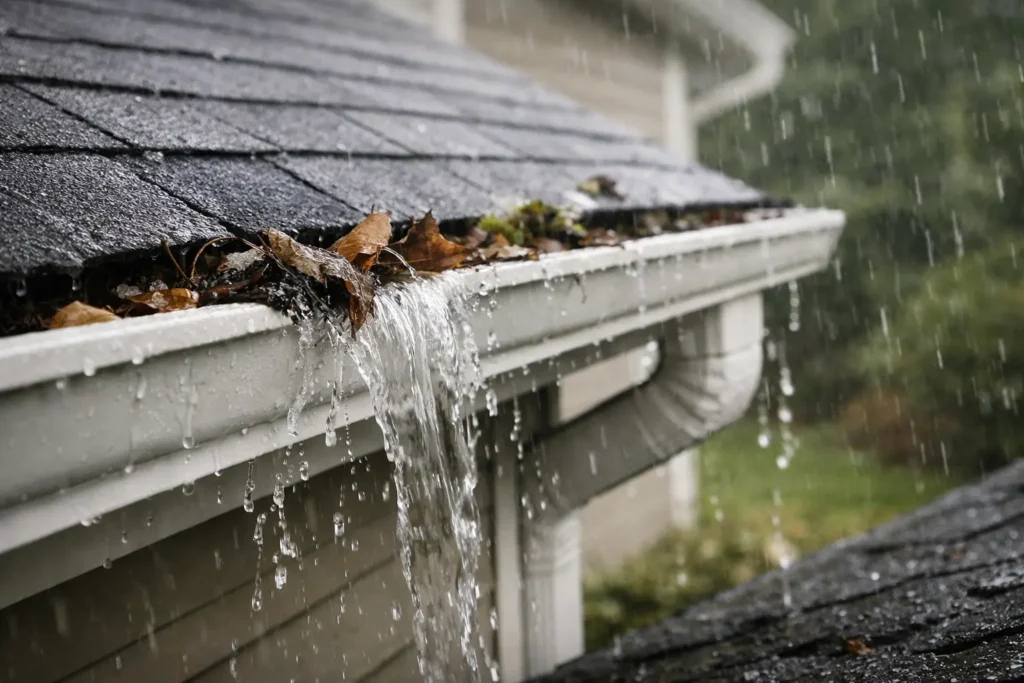
A gutter that overflows during a heavy downpour is easy to dismiss as bad weather. But what causes gutter overflow problems is usually more straightforward: water cannot travel freely through the gutter system, or the system cannot handle the amount of water reaching the roof. Left alone, that water can run down brickwork, soak fascias, damage paths and contribute to damp around the property.
A quick look from ground level can often reveal the problem. Water spilling over the front edge, pouring from a gutter joint or cascading from the top of a downpipe all point to a system that needs attention. The right remedy depends on where the blockage or fault sits, which is why it is better to investigate the cause than simply wait for drier weather.
What causes gutter overflow problems most often?
For homes and commercial premises, debris is the most common cause. Leaves, moss, twigs, seed pods and windblown dirt settle in the gutter channel. Rainwater carries smaller debris towards the outlet, where it builds into a compact blockage. Once the outlet is restricted, water backs up along the gutter and eventually spills over its edge.
In Buckinghamshire, gutters can fill quickly in autumn, especially beneath mature trees. Moss from nearby roofs is another frequent issue. It may look harmless when dry, but it absorbs water, forms clumps and can block both the gutter outlet and the downpipe below it.
A gutter does not need to be completely full to overflow. Even a small obstruction at the outlet can slow drainage enough for water to escape during a sustained shower. This is why a gutter that appears clear from the ground may still overflow when it rains.
Blocked downpipes trap water above
The downpipe is just as important as the gutter itself. If it is blocked with leaves, moss, silt or even a bird’s nest, rainwater has nowhere to go. The gutter fills from the outlet backwards and spills at the lowest point.
Downpipe blockages are often hidden. You may only notice them when water shoots from the top of the pipe, leaks from a joint, or overflows several metres away along the gutter. Clearing the visible gutter without checking the downpipe can mean the issue returns at the next heavy rainfall.
Poor gutter fall sends water the wrong way
Gutters should have a slight fall towards the outlet. It is subtle, but it allows water to drain instead of sitting in long, shallow pools. If a bracket has loosened, the gutter has sagged, or the original installation was poorly aligned, water may collect in the middle or run away from the downpipe.
Standing water adds weight and puts further pressure on brackets and joints. Over time, this can make the sag worse. In freezing conditions, trapped water can expand and increase the risk of cracks or joint failures.
Leaking or separated joints create local overflows
Not every overflow comes over the front edge. Sometimes the problem is a failed seal or a gutter joint that has pulled apart. Water then escapes in one concentrated stream, often directly onto a wall, window frame or entranceway.
Plastic gutters expand and contract with changing temperatures. Age, movement and the weight of debris can all affect the fit at a joint. A small drip may not seem urgent, but repeated water flow in the same place can stain surfaces and encourage damp problems.
When the roof sends too much water too quickly
Very heavy rain can overwhelm any gutter for a short period, particularly on a large or steep roof. This is known as capacity overflow. Water comes off the roof faster than the gutter and downpipe can carry it away.
That said, genuine capacity issues are less common than blockages or poor alignment. Before considering larger gutters or additional downpipes, it makes sense to ensure the existing system is clean, correctly pitched and securely fitted. A clear, well-maintained gutter handles normal British rainfall far better than a neglected one.
Roof design matters too. Valleys concentrate water from two roof slopes into one area, while conservatory roofs can shed water quickly into a short section of guttering. If water always overflows at the same point during intense rain, the gutter layout may need adjusting rather than just cleaning.
Overflow behind the gutter can point to roof-edge issues
Water should run from the roof covering into the gutter. If it tracks behind the gutter instead, it can wet the fascia board and wall below. This can happen where roofing felt has deteriorated, the eaves detail is damaged, or the gutter sits too low or too far from the roof edge.
This type of fault is not always visible during dry weather. Look for staining on the fascia, peeling paint, rotting timber or water marks beneath the gutter line. Cleaning is still worthwhile, but it will not resolve a roof-edge defect on its own.
Warning signs worth acting on
Overflowing water is the clearest sign, but there are earlier clues that a gutter system is struggling. Plants growing from the gutter, dark streaks on exterior walls, sagging sections, damp patches near upper-floor ceilings and puddles beside the building all deserve attention.
On commercial properties, check areas above entrances, walkways and loading points. Overflow water can create a slip hazard as well as a maintenance problem. Schools, offices, shops and industrial units also tend to have longer gutter runs, where one overlooked outlet can affect a large section of the building.
You may also hear the problem before you see it. A persistent dripping sound after rain has stopped can indicate pooled water, a leaking joint or a partially blocked downpipe.
How to prevent gutter overflows safely
The practical answer is routine gutter maintenance, timed around the conditions near your property. A home surrounded by trees may need a clean in late autumn and again in spring. A more exposed property with little tree cover may only need an annual inspection and clean. There is no single schedule that suits every building.
Gutters should be cleared of debris, outlets checked and downpipes tested for free flow. During the visit, it is also sensible to inspect brackets, joints, end caps and the gutter fall. Cleaning removes the immediate blockage; identifying loose or misaligned sections helps prevent the next one.
It is tempting to climb a ladder with a bucket after spotting an overflow. However, wet ground, uneven paving and awkward roof lines make gutter work riskier than it looks. High-reach gutter vacuum equipment can remove debris from ground level in many situations, reducing the need for ladder access and allowing the operator to see what has been cleared.
For properties with persistent moss growth, gutter cleaning may need to be paired with appropriate roof moss removal. The trade-off is simple: removing moss from the roof can reduce future gutter blockages, but the roof surface and tile condition should always be assessed so the cleaning method does not cause damage.
When to arrange professional help
Arrange an inspection if water is repeatedly spilling over, a gutter is visibly sagging, downpipes remain blocked after basic clearing, or there are signs of water damage around fascias and walls. It is also sensible to call a professional where gutters are above conservatories, extensions or difficult access areas.
Spotless Cleans provides professional gutter cleaning and exterior maintenance across Aylesbury and Buckinghamshire, using safe-access equipment to clear gutters and check the wider system. For landlords and commercial site operators, a scheduled maintenance plan can make particular sense, as it helps reduce unexpected call-outs and keeps the property looking cared for.
A working gutter is a small part of a building, but it directs thousands of litres of rainwater away from the places it can do harm. Acting when the first warning signs appear is usually simpler, safer and more affordable than dealing with the damage after the next storm.