
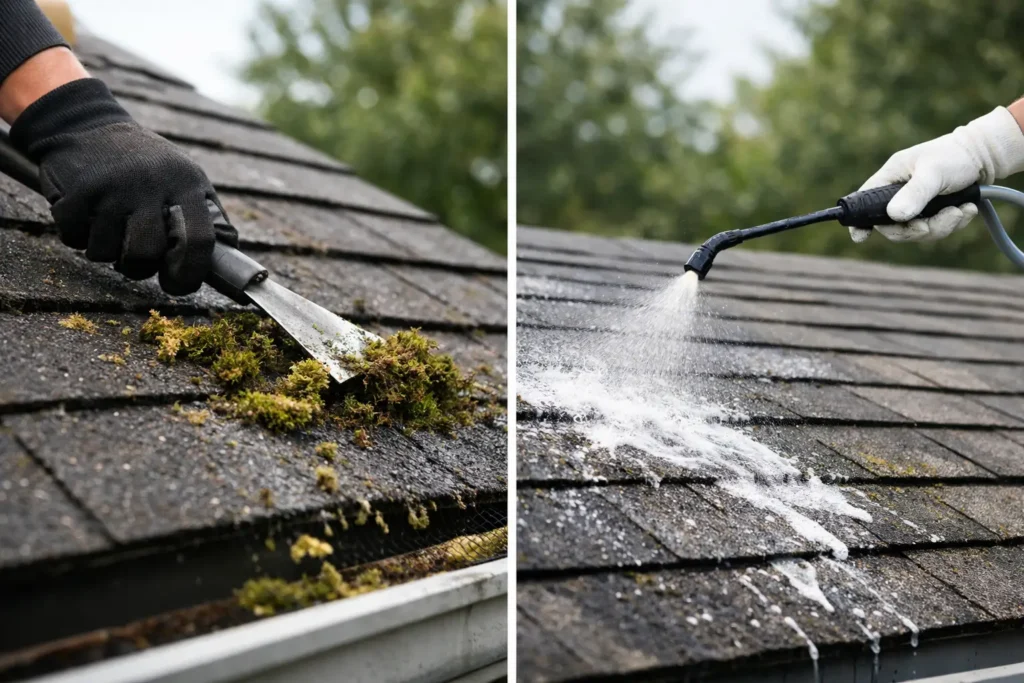
A moss-covered roof can look like a minor cosmetic problem from the ground. In reality, heavy growth can hold moisture against tiles, block gutters as it breaks away and make routine roof maintenance more difficult. When weighing up roof scraping vs chemical treatment, the best answer is rarely a simple choice between one or the other. The condition of the roof, the type of tile, the amount of moss and how quickly you need visible results all matter.
For most properties, the safest and most effective approach is a careful manual removal followed by a suitable professional treatment. That said, there are occasions when treatment alone is the more sensible option. Knowing the difference helps you protect the roof rather than simply make it look cleaner for a short time.
What roof scraping involves
Roof scraping is the manual removal of moss, lichen and loose debris from the tile surface. A trained operative uses purpose-made tools chosen to suit the profile and condition of the tiles, rather than improvised blades or aggressive equipment. The aim is to lift the growth away without damaging the tile coating, edges or fixings.
This method produces an immediate visual change. Thick moss is removed on the day, leaving the roof looking clearer and reducing the amount likely to wash into gutters and downpipes during the next spell of rain. It is particularly useful where moss has built up in clumps along lower roof sections, valleys, around chimneys or behind solar panels.
The important word is careful. Roof tiles can become brittle with age, and walking directly across a roof without the right access plan can crack tiles or disturb pointing. A professional roof cleaning service should assess safe access first, use appropriate equipment and work with controlled methods. Ladders, roof access equipment and safe working practices are not optional extras when the work is carried out at height.
Scraping also creates waste. Moss needs to be collected rather than pushed into the gutters, where it can cause a blockage and move the problem elsewhere. Protecting nearby paths, patios, planting and drainage areas is part of doing the job properly.
What chemical roof treatment does
Chemical treatment uses a roof-safe biocide or moss treatment to kill remaining organic growth and slow its return. It is often applied at a controlled rate using a low-pressure or soft-wash method. It is not the same as blasting the roof with a pressure washer.
Once applied, the treatment works over time. It penetrates the remaining spores and growth on the roof surface, and rainfall gradually helps wash away dead material. Depending on the weather, roof type and level of staining, the full visual improvement may take several weeks or even months. Lichen marks can be particularly stubborn and may fade more slowly than moss.
This gradual action is one reason homeowners sometimes feel disappointed when they expect an instantly bright roof. Chemical treatment is primarily a preventative and restorative measure, not a quick cosmetic wash. Its value is in reducing regrowth and treating areas that are difficult to clear completely by hand.
A treatment must be selected and applied responsibly. Nearby gardens, ponds, watercourses and drainage all need consideration. An experienced contractor will use the correct dilution, avoid overspray, manage runoff and explain what precautions are needed. Strong household chemicals and unlabelled products are not a sensible substitute for a roof-specific treatment plan.
Roof scraping vs chemical treatment: the key differences
The biggest difference is timing. Scraping gives immediate removal of bulky moss. Chemical treatment works more slowly but addresses the tiny remnants and spores that manual removal cannot always reach. If a roof is heavily covered, treatment alone may leave large amounts of dead moss in place for too long, with material still able to fall into gutters.
There is also a difference in how each method affects the roof. Gentle scraping can be safe on sound tiles when carried out correctly, but poor technique can chip tile surfaces, snag mortar or break fragile tiles. Chemical treatment avoids the physical action of scraping, which can make it a better choice for delicate roofs where there is only light biological growth. However, applying the wrong product or too much of it can create its own risks for surrounding areas.
Cost depends on access, roof size, pitch, condition and the amount of growth. A scrape-and-treat service usually costs more than treatment alone because it involves more labour, waste collection and time on site. Yet it can offer better value for a heavily mossed roof because it clears the immediate problem and helps keep gutters functioning. The cheapest quote is not always the most economical one if it leaves thick debris behind or causes avoidable damage.
When scraping is usually the better option
Manual moss removal tends to be the right starting point when growth is dense, raised or visibly dropping from the roof. It is also useful when gutters are filling with moss, water is overflowing, or you want a clear improvement before selling, letting or presenting a commercial property.
A scrape is often appropriate for concrete tiles with a substantial moss build-up, provided the roof has been inspected and is in serviceable condition. Clearing it lets an operative see the tile surface more clearly, making it easier to spot cracked tiles, loose ridge pieces or areas that need a roofer’s attention.
It should not be treated as a way to force a roof back to a brand-new appearance. Older tiles naturally weather, and some discolouration can remain after organic growth is removed. Trying to remove every mark through increasingly harsh cleaning is where damage can occur.
When chemical treatment alone may be suitable
Treatment-only work can make sense for a roof with light moss, early lichen growth or dark organic staining but no thick clumps. It is also worth considering where the roof is ageing, access is limited or the tiles need minimal physical contact.
This approach requires patience. A treated roof may look much the same initially, then improve gradually as weathering removes the dead growth. For property owners planning ahead rather than needing an immediate visual transformation, that slower result can be a fair trade-off for a lower-contact method.
Regular preventative treatment can also reduce the need for major scraping in future. Homes shaded by trees, positioned beneath overhanging branches or exposed to persistent damp often benefit from a planned maintenance approach. Keeping gutters clear matters too, as trapped moss and standing water create conditions where further growth thrives.
Why pressure washing is a different question
Pressure washing is sometimes presented as a fast alternative, but it should not be confused with either careful roof scraping or soft chemical treatment. High-pressure water can strip protective surface coatings from certain tiles, drive water beneath overlaps, disturb mortar and scatter moss across the property. It can also leave a roof looking clean briefly while creating a better surface for moss to return.
There are limited circumstances where controlled washing may be considered by a suitably trained specialist, but it is not the default solution for most tiled roofs. The roof’s age, tile type and condition should always come first. A method that is quick from the pavement can be costly when viewed over the life of the roof.
Choosing the right approach for your property
A proper assessment should look beyond how green the roof appears. The key questions are whether tiles are cracked or porous, how much moss is present, where debris will go, whether gutters already need clearing, and what safe access is possible. For commercial sites, the assessment should also account for public access, working hours and the need to keep entrances, car parks and neighbouring areas protected.
In many cases, the practical recommendation is straightforward: remove thick moss by hand, clear the gutters and apply a suitable biocide treatment afterwards. This gives visible results without relying on harsh pressure, while helping to slow the next cycle of growth. On lightly affected or delicate roofs, a carefully applied treatment may be enough.
At Spotless Cleans, roof work is approached with the same focus on safe access, reliable service and respect for the property that applies to every exterior cleaning visit. If there is evidence of damaged tiles, failing mortar or a leak, cleaning should pause and a qualified roofer should assess repairs first.
A roof does not need to look perfect to be well maintained. It needs the right level of care, carried out safely, before moss and debris turn a manageable job into a bigger maintenance issue.