
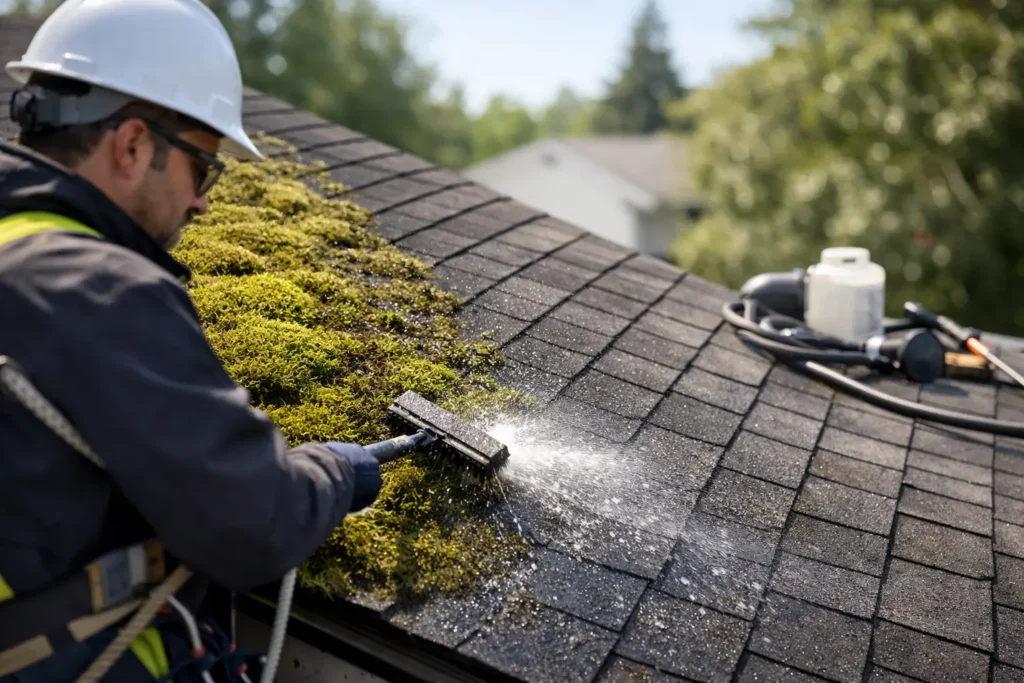
A roof can look perfectly sound from the driveway, yet hold enough moss to block gutters, trap moisture and leave a mess across paths after heavy rain. Knowing how to remove roof moss safely is less about finding the strongest cleaner and more about using the right access, gentle methods and sensible aftercare. Get it wrong and a straightforward maintenance job can damage tiles, strip their surface or create a serious fall risk.
Why roof moss needs careful removal
Moss thrives where a roof stays damp and shaded, particularly beneath overhanging trees or on north-facing slopes. It does not usually force its way through a sound tile, but thick growth can hold water against the roof covering. As it grows around laps and edges, it can also slow drainage and shed into gutters and downpipes.
The visible problem is only part of it. Moss often breaks away in clumps during wind and rain, collecting in gutter outlets where it can contribute to overflow. In winter, trapped water and repeated freezing conditions can put extra strain on older tiles. For landlords and property managers, a mossy roof can also make routine inspections harder because cracked or slipped tiles are less easy to spot.
That said, not every small patch needs urgent treatment. A light amount of growth on an otherwise clear roof may be best monitored until gutter cleaning or planned maintenance is due. The right approach depends on the roof’s age, pitch, material, access and the amount of moss present.
How to remove roof moss safely: start from the ground
The safest roof-cleaning decision is often to avoid climbing onto the roof at all. A wet, moss-covered tile is slippery, and even dry tiles can crack under a person’s weight if they are old, poorly supported or not designed for foot traffic. Ladders also need secure footing, correct angle and safe restraint. A quick job is not worth a fall or a damaged roof.
Before any work begins, inspect the roof from ground level using binoculars if needed. Look for loose ridge tiles, broken slates, sagging gutters, damaged flashing and overhead cables. Check where moss is likely to fall, then move cars, garden furniture and pots from below. Cover delicate planting if a treatment will be used, and make sure rainwater outlets are managed so debris does not enter drains.
For many properties, specialist access equipment makes the work much safer. Water-fed poles, controlled soft-wash systems and professional gutter vacuums can reduce the need to walk on the roof. On steep, fragile, high or awkwardly positioned roofs, scaffolding or other suitable access may be necessary. This is not an area for balancing on a ladder while reaching sideways.
Never use a pressure washer on roof tiles
High-pressure washing is one of the most common causes of avoidable roof damage. It can lift tile edges, dislodge mortar, drive water beneath laps and remove the weathered surface of concrete tiles. The roof may look clean immediately afterwards, but it can become more porous and prone to quicker regrowth.
Pressure washing can also send moss, dirty water and grit into gutters, neighbouring gardens and windows. On asbestos-containing roof sheets, it is particularly unsafe and should never be attempted. If you are unsure what your roof is made from, arrange an assessment before any cleaning takes place.
A gentle method for light to moderate moss
Where the roof is in good condition and access can be managed safely, moss removal is usually a two-stage process: careful physical removal followed by an appropriate treatment to deal with remaining spores.
Start by removing loose, dry moss gently. A soft brush or purpose-made scraper may be used with light pressure, working down the roof slope so debris is not pushed under tiles. Avoid metal tools that can gouge surfaces, and do not scrape aggressively around tile edges, flashings or ridge mortar. The aim is to lift bulk growth, not to make the roof look brand new in one pass.
Collect debris as far as practical rather than allowing it to wash into the guttering. Once the main moss has been cleared, gutters, hoppers and downpipes should be cleaned and checked for free flow. This part matters: removing moss from the roof without clearing the gutter system simply moves the blockage elsewhere.
A roof-safe biocidal treatment can then be applied at the manufacturer’s stated dilution and coverage rate. These treatments work gradually. Over the following weeks and months, remaining moss and algae weather away naturally with rain. This slower result is often preferable to harsh cleaning because it avoids unnecessary abrasion and reduces the risk of tile damage.
Do not assume every chemical product is suitable for every roof. Read the label carefully, follow the safety instructions, and take particular care around ponds, watercourses, pets and planted borders. Never mix cleaning products. If runoff cannot be controlled safely, or the roof treatment requires working at height, professional application is the sensible choice.
Protect the roof, guttering and garden
Roof moss removal affects more than the tiles. Before treatment, disconnect or protect rainwater collection systems so treated water does not enter a water butt. Keep children and pets away from the work area until surfaces are dry and any product instructions allow access.
Gutters deserve close attention. A blocked downpipe can send water over fascias, soffits and brickwork, causing staining and damp problems that cost much more to put right than regular cleaning. Once debris has been removed, run clean water through the system and confirm that it reaches the drain as it should.
If your property has solar panels, conservatory roofs, skylights or fragile roof lights, use extra caution. These areas need their own cleaning approach and should not be scraped or treated casually. It may be safer to leave roof cleaning until a professional can inspect the whole exterior and plan the work around these features.
When to call a professional roof cleaner
Some roofs are not suitable for DIY work, even if the moss looks manageable from the ground. Professional help is strongly recommended where there is a steep pitch, a roof higher than a single storey, loose or ageing tiles, extensive moss, poor ladder access, nearby power lines, asbestos materials or signs of leaks.
A reputable roof-cleaning service should explain how it will access the property, what method it will use and how it will protect gutters, gardens and neighbouring areas. Ask whether it is insured and whether the team uses low-pressure or soft-wash methods rather than pressure washing. Clear answers are a good sign that the job is being planned properly rather than rushed.
For homes and managed properties in Aylesbury and across Buckinghamshire, Spotless Cleans uses safety-focused exterior cleaning methods and can assess whether moss removal, gutter clearance or a wider roof maintenance visit is appropriate. The best treatment is the one that suits the condition of the roof, not a one-size-fits-all service.
Reduce moss returning after cleaning
No treatment can permanently stop moss on a roof exposed to shade, moisture and falling leaves. It can, however, slow regrowth significantly. Keeping gutters clear is the first priority, because standing water and overflowing outlets encourage damp conditions around the roof edge.
Trim back branches that overhang the roof where this can be done safely and within local requirements. This lets more daylight and airflow reach the tiles while reducing leaf fall. Avoid cutting back trees solely for the sake of a spotless roof if they provide valuable shade or are protected – a measured approach is usually better.
A visual roof and gutter check twice a year, usually in spring and autumn, helps catch new moss before it becomes heavy. Properties beneath mature trees may need more frequent gutter maintenance. Regular cleaning also gives you a chance to spot slipped tiles, cracked mortar or damaged downpipes before poor weather turns a small issue into a larger repair.
Common questions about safe moss removal
Can moss be removed in wet weather?
It is better to wait. Wet moss and wet tiles are much more slippery, while rain can dilute treatments before they have time to work. Choose a dry, calm day that suits the product instructions and never attempt roof access in windy conditions.
Will moss removal damage an old roof?
It can if the wrong method is used. Gentle removal and suitable biocide treatment are generally far safer than pressure washing, but an older or fragile roof should be inspected first. Sometimes repair work needs to come before cleaning.
How long does a moss treatment take to work?
Treatment is not instant. Depending on the weather, roof material and level of growth, the roof may continue to improve over several months. This gradual process is normal and avoids the damage associated with forceful cleaning.
A clean roof should still look like a roof, not like it has been blasted back to bare material. Treat moss removal as practical maintenance: protect the tiles, keep water moving freely and choose safe access over shortcuts every time.