
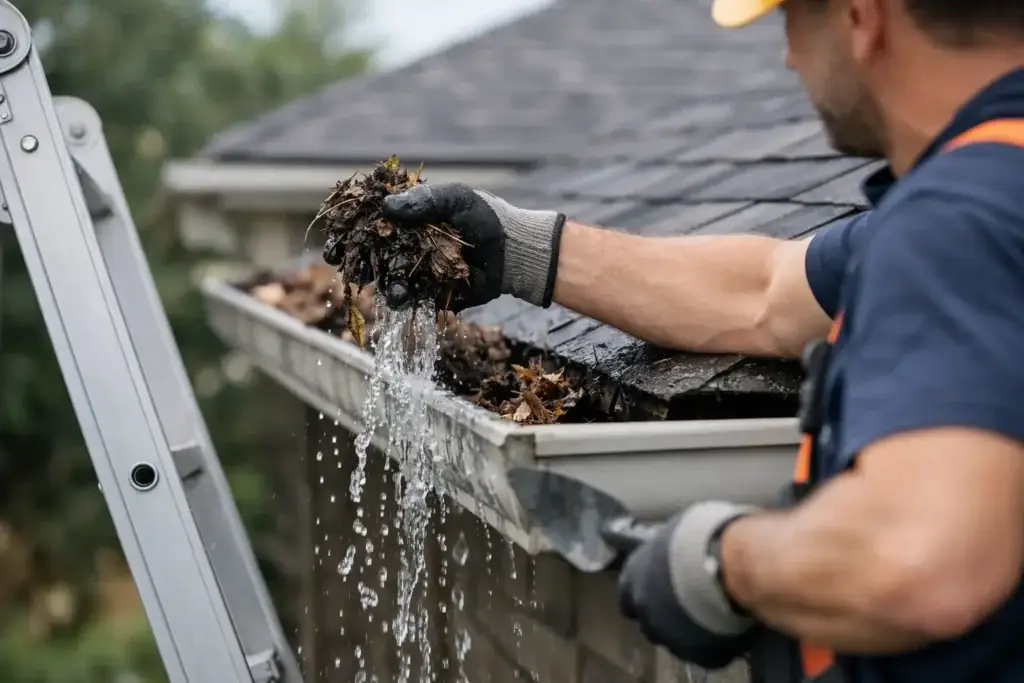
Overflowing gutters rarely start as a big problem. It is usually a small blockage, a bit of moss from the roof, or leaves packed into a corner that only becomes obvious when heavy rain starts spilling over the edge. If you are wondering how to unblock overflowing gutters, the key is to deal with the cause properly rather than just pushing debris around and hoping for the best.
When gutters overflow, the water has to go somewhere. It can run down walls, stain brickwork, soak fascias and soffits, and pool around the base of the property. Left too long, it can also contribute to damp issues and unnecessary wear on paths, patios, and entrances. For commercial sites, it can create slip risks and make the building look poorly maintained.
Why gutters overflow in the first place
In most cases, the blockage is straightforward. Leaves, twigs, moss, silt, and general grime collect in the gutter channel and stop water flowing towards the outlet. Sometimes the issue is in the downpipe rather than the gutter itself, so the gutter fills up and spills over even though the top looks only partly blocked.
There are also cases where the gutter is not blocked but still overflows. Brackets can come loose, causing a section to sag. Joints can shift. Gutters can be undersized for the roof area or overwhelmed during very heavy rain. That is why a proper check matters. If you only remove visible debris and ignore the real cause, the overflow often comes back with the next downpour.
How to unblock overflowing gutters without making it worse
Before you start, be honest about height and access. Clearing a low section on a stable ladder is one thing. Working above a conservatory, over uneven ground, or around a commercial unit is very different. Safety comes first, and there is no benefit in risking a fall to save a maintenance call.
If the gutter is safely reachable, start by checking it in dry conditions. That gives you a clear view of where the debris has built up and whether the brackets, joints, or downpipe connections look damaged. Wear gloves and use a bucket or bag to collect waste rather than dropping it onto the ground below.
A small gutter scoop or even a sturdy plastic trowel can help remove compacted debris. Work along the channel carefully and clear enough material to expose the outlets. If the blockage is mostly wet moss or sludge, take your time. Forcing it through the downpipe can simply move the problem lower down.
Once the channel is clear, rinse the gutter with water to check the flow. A hose is usually enough for this. If the water runs freely to the outlet and downpipe, you have probably dealt with the main blockage. If it backs up or drains slowly, the downpipe likely needs attention.
Clearing a blocked downpipe
A blocked downpipe is often the reason an overflowing gutter keeps coming back. Debris from above can compact inside bends and vertical sections, especially if moss from the roof has washed down over time.
The simplest check is to run water into the gutter and see whether it exits properly at the bottom of the downpipe. If not, try flushing the pipe from the top with a hose. In some cases, tapping the outside of the pipe gently can loosen compacted debris. If there is an accessible shoe or bend at the bottom, that section is often where the blockage collects.
What you want to avoid is using too much force. Aggressive poking with metal rods can crack older plastic fittings or separate joints. If the blockage is stubborn or the pipe is difficult to reach, that is usually the point where professional equipment makes more sense.
Signs the problem is more than a simple blockage
Some overflowing gutters need repair rather than cleaning. If water spills over one section even after the debris has been removed, the gutter may be misaligned. You may also notice water leaking through joints, brackets pulling away from the fascia, or sections that hold standing water.
This is where a quick fix can become false economy. Cleaning helps, but it will not correct a fall problem or a damaged joint. For landlords and property managers, especially, it is worth resolving the root issue early before it turns into stained walls, tenant complaints, or internal damp around roof edges.
Common warning signs to watch for
If you notice water marks on exterior walls, green staining under the gutter line, plant growth in the gutter, or puddling near the building after rain, those are all signs the system is not draining properly. On commercial premises, overflow above entrances and footpaths is particularly worth dealing with quickly because of slip hazards and appearance.
The safest way to approach gutter clearing
There is a reason many property owners now prefer professional gutter cleaning rather than tackling it themselves. Modern high-reach systems can clear gutters from ground level, which removes much of the risk linked to ladders. For awkward roofs, conservatories, shopfronts, and taller buildings, that matters.
A professional service should not just remove debris. It should also check flow, spot obvious defects, and flag anything that needs repair. That is especially useful if you want peace of mind before winter or after storms, when gutters tend to collect moss, leaves, and roof debris more quickly.
For homes and businesses in places with plenty of trees, regular maintenance is often more cost-effective than repeated emergency call-outs. One thorough clean at the right time can prevent overflowing water, staining, and unnecessary wear on the building.
How often should gutters be checked?
It depends on the property. A modern house with little tree cover may only need an annual inspection and occasional cleaning. An older property with overhanging trees, roof moss, or frequent wind-blown debris may need attention more often, particularly in autumn and after winter storms.
Commercial buildings vary as well. A shopfront or office block in a built-up area may stay relatively clear, while schools, industrial units, and larger sites can collect debris faster because of roof size and surrounding trees. If the gutters have overflowed once, that is a good sign the current schedule is not quite enough.
Many property owners find that a planned maintenance approach is easier than waiting for visible problems. It reduces the chance of sudden overflows and makes it easier to spot minor issues before they become repairs.
When to call a professional
If the gutters are high, difficult to access, above fragile roofing, or still overflowing after you have cleared visible debris, it is time to bring in a professional. The same applies if you suspect damaged brackets, leaking joints, or a blocked downpipe that cannot be cleared safely from ground level.
For landlords, commercial operators, and anyone responsible for public-facing buildings, there is also the question of liability. Overflowing gutters can create hazards and cause damage that costs far more than a routine clean. Using an insured, safety-focused service is often the most practical option.
At Spotless Cleans, this is exactly the sort of work where the right equipment makes a difference. High-reach gutter vacuum systems allow gutters to be cleared thoroughly while reducing risk to people and property, and that is often the better choice when access is awkward or the blockage is more stubborn than expected.
Preventing the next overflow
Once you have sorted the immediate problem, prevention is the part that saves time and money. Keep an eye on roof moss, especially if you are seeing repeated sludge build-up in the gutters. Trim back overhanging branches where possible. Check gutters after heavy weather, and do not ignore minor drips or staining because they often point to a bigger issue developing.
It also helps to think about the wider exterior. Fascias, soffits, and downpipes all take the strain when water is not moving properly. Keeping the whole system in good order usually gives better results than treating the gutter in isolation.
If there is one useful rule to keep in mind, it is this: overflowing gutters are easier to prevent than they are to put right after months of neglect. A quick check now can spare you damp walls, slippery paths, and a much bigger repair bill later.