
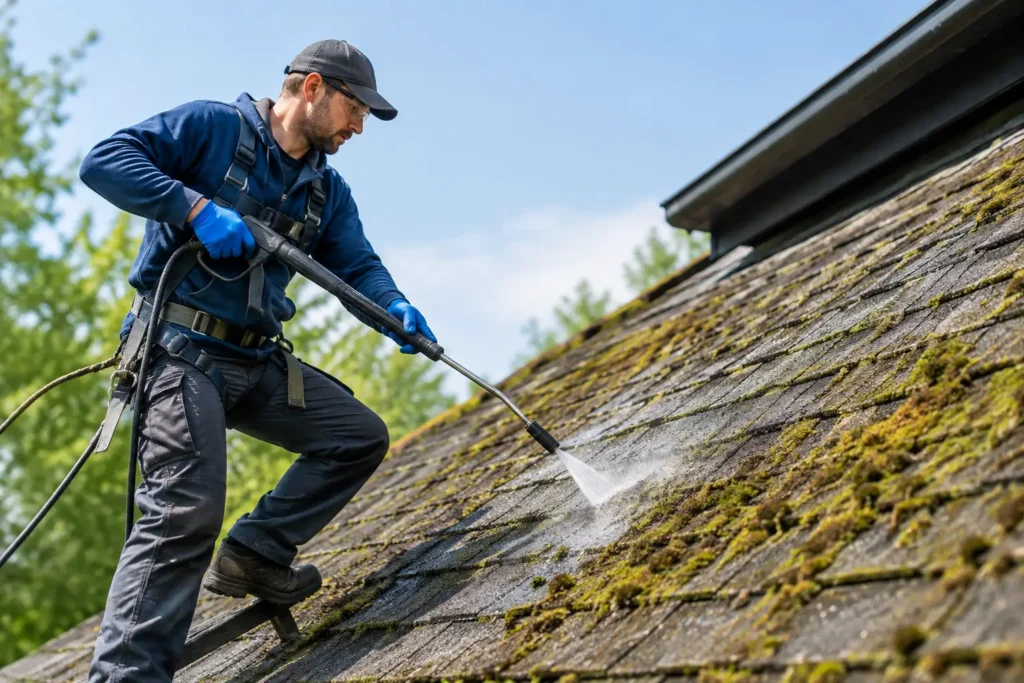
A patch of moss can make a roof look harmlessly weathered, but it is rarely just a cosmetic issue. Moss removal helps protect the parts of your property that keep water out: roof tiles, gutters, valleys and downpipes. Left in place, thick moss holds moisture against the roof surface and gradually sheds into the guttering below.
For homeowners, landlords and property managers, dealing with it early is usually simpler and more affordable than waiting for blocked drainage, slipped tiles or damp problems to appear. The right method matters, though. A roof is not a patio, and aggressive cleaning can create damage where none existed before.
Why moss grows on roofs
Moss thrives where roofs stay damp for longer. North-facing slopes, overhanging trees, shaded gardens and older roof surfaces are all common causes. In Buckinghamshire, wet autumns and mild winters can give moss plenty of opportunity to establish itself, particularly on roofs that do not receive much direct sunlight.
Once it takes hold, moss behaves like a sponge. It absorbs rainwater and keeps the tile surface damp after the weather has cleared. This can encourage further growth, make the roof look tired and add unnecessary weight in concentrated areas.
Moss also releases spores and small fragments when it dries or is disturbed. These often collect in gutters, roof valleys and around downpipe outlets. A gutter may look clear from ground level but still be restricted by compacted moss, leaves and silt near the outlet.
Moss removal protects more than appearance
A clean roof can improve kerb appeal, especially if you are preparing a property for sale, letting a home or maintaining a commercial site. The more practical benefit is better water management.
When rainwater can run freely from the roof into clear gutters and downpipes, there is less chance of overflow running down walls, soaking fascias or pooling around entrances. This is particularly useful for landlords and facilities managers responsible for keeping a property presentable and reducing avoidable maintenance calls.
Heavy moss growth can also lift slightly at tile edges and retain water in places where it should drain away. It does not automatically mean the roof needs replacing, but it is a sensible reason to have the roof condition checked. A professional clean should identify visible broken, loose or missing tiles rather than simply working over them.
Why pressure washing is often the wrong choice
High-pressure washing may seem like the quickest answer, but it is not suitable for many roofs. The force can damage the tile surface, dislodge pointing, disturb ridge materials and drive water beneath tiles. On older, brittle or already weathered roofs, that risk is greater.
It can also create a mess around the property. Moss blasted from the roof has to go somewhere, often landing in gutters, on windows, patios, neighbouring areas and planted borders. The roof may look better for a short time, while the drainage system is left with more debris than before.
A careful approach normally begins with a roof assessment. The cleaning method should reflect the roof type, age, condition, pitch and level of moss growth. There is no single method that suits every property.
Manual removal and soft-wash treatment
For many roofs, the safest option is controlled manual removal followed by a suitable biocide or soft-wash treatment. Moss is carefully lifted away using appropriate tools rather than stripped off with harsh pressure. Loose debris is then cleared from gutters and drainage points.
A treatment can deal with remaining spores and organic growth that cannot be removed by hand alone. Results are not always instant. The roof may continue to brighten over the following weeks as weathering removes treated residue naturally. This slower finish is often preferable to risking tile damage for a dramatic same-day result.
Treatments need to be applied responsibly. Run-off, nearby ponds, plants and drainage routes should all be considered before work begins. A reputable contractor will explain what is being used and take steps to protect surrounding areas.
Safe access is part of professional roof cleaning
Roof work is not a sensible DIY job for most people. Falls from height remain one of the biggest risks in property maintenance, and moss makes roof surfaces especially slippery. Walking directly on tiles can also crack them, even when the roof initially appears sound.
Professional moss removal relies on safe-access planning as much as cleaning equipment. Depending on the property, this may include work from ladders, roof ladders, access equipment or specialist long-reach systems. The aim is to complete the job with minimal contact with the roof and without compromising the safety of people, pets or vehicles below.
For homes with conservatories, extensions or awkward access, the plan may need to change again. This is why a quick look from the ground is not always enough to give an accurate price or recommend the correct method. A proper quote should account for the roof area, access, level of growth and any gutter clearing required.
Should gutters be cleaned at the same time?
Usually, yes. Moss removal and gutter cleaning work best as part of the same maintenance visit. Removing moss from a roof without clearing the gutters can leave the main drainage problem untouched, particularly after the first spell of rain.
Gutters should be cleared of moss, leaves and compacted debris, then checked to make sure water can reach the downpipes. Downpipes may need attention too if they are slow-draining or overflowing. Fascias, soffits and exterior windows can also benefit from a clean after roof work, as fine debris often settles on these surfaces.
For commercial premises, clear gutters are not just about appearance. Overflowing water near shopfronts, entrances, loading areas or car parks can create avoidable slip hazards and make a site look poorly maintained.
How often is moss removal needed?
The answer depends on the property and its surroundings. A sunny roof with little tree cover may only need periodic inspection and light treatment. A shaded home beneath mature trees may need more regular attention, particularly if gutters fill quickly in autumn.
As a general rule, arrange a roof and gutter check when you notice visible moss build-up, gutter overflow, vegetation near the roofline or dark damp patches beneath eaves. It is better to act before gutters are completely blocked or growth has spread across large sections of the roof.
A maintenance plan can make this easier. Scheduled gutter cleaning and occasional roof treatment allow issues to be spotted before they become disruptive. For landlords and commercial property managers with several responsibilities, planned visits also provide a more predictable way to manage exterior upkeep.
What to expect from a professional moss removal service
A dependable service should be clear about the process from the start. You should know whether the roof will be manually cleared, treated, or both, and whether gutters and downpipes are included. The contractor should also explain any access requirements, likely timescales and what the roof will look like immediately after treatment.
Insurance and safe working practices matter. Roof cleaning carries obvious risks, so it is reasonable to ask whether the company is insured and how it will protect your property while work is carried out. For homes and sites where trust is especially important, DBS-checked operatives and straightforward communication offer useful peace of mind.
The cheapest quote is not always the best value if it relies on high pressure, skips the gutters or leaves you to deal with debris afterwards. Look for a service that treats the roof and drainage system as connected parts of the same job.
Keep small growth from becoming a larger repair
Moss does not mean your roof has failed, but it is a prompt to give it proper attention. Safe cleaning, clear gutters and sensible ongoing maintenance can keep rainwater moving as it should and help your property look well cared for.
If you have noticed moss spreading across your roof or debris collecting in the gutters, a professional assessment from a local, insured team such as Spotless Cleans can give you a clear, practical next step without unnecessary disruption.