
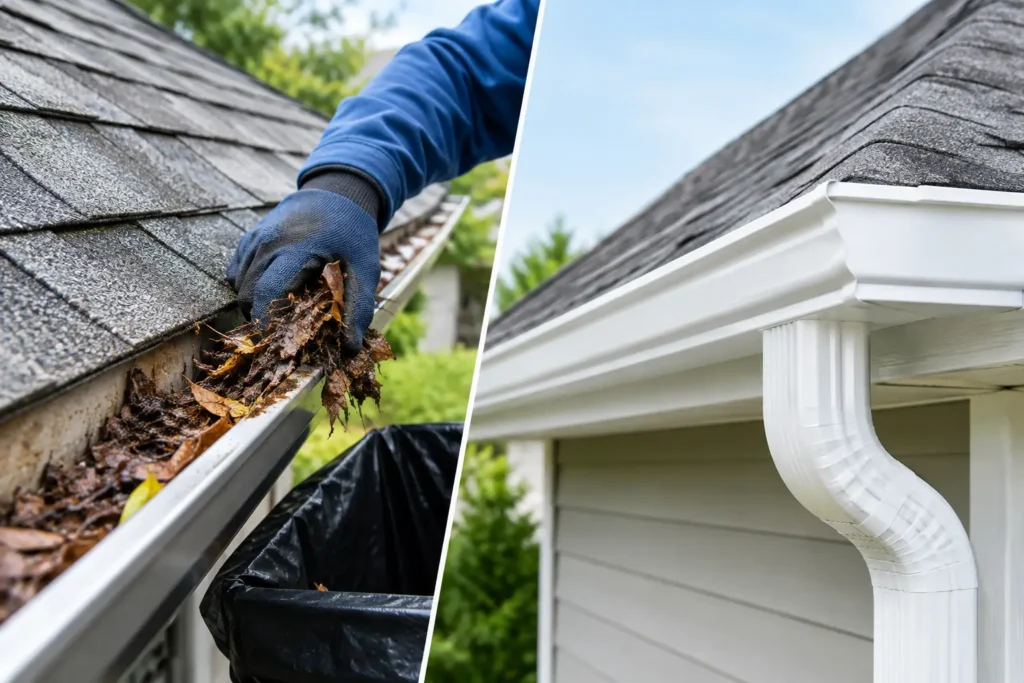
A gutter overflowing above a front door is more than an untidy nuisance. Water can run down brickwork, soak timber at the roofline and leave damp patches where they are hardest to trace. When weighing up gutter cleaning versus replacement, the key question is simple: are the gutters blocked, or have they reached the point where they can no longer carry water away properly?
For many properties, a professional clean is the sensible first step. Gutters collect leaves, moss, silt and roof debris over time, particularly after autumn and periods of windy weather. But cleaning cannot correct split joints, rusted sections or gutters that have pulled away from the fascia. Knowing the difference can prevent unnecessary replacement costs while avoiding the greater expense of water damage.
When gutter cleaning is usually enough
If your gutters were working well before debris built up, cleaning will normally restore them. This is common on homes with nearby trees, conservatories that collect moss from the roof, and commercial premises where long gutter runs gather windblown debris.
Common signs of a blockage include water spilling over one section during rain, plants growing from the gutter, visible leaves around an outlet, or a downpipe that barely drains. You may also notice water running down the outside of the gutter rather than through the downpipe. These issues often look dramatic, but they do not automatically mean the gutter system has failed.
A proper gutter clean should remove debris from the gutter channels and check that outlets and downpipes are clear. High-reach gutter vacuums can do this safely from ground level in many situations, reducing the need for ladders around the property. Once clear, it is worth checking water flow so that hidden blockages and poorly aligned sections do not go unnoticed.
Cleaning is also a preventative service. Regular visits reduce the weight of wet debris sitting in the gutters, which helps protect brackets and joints. For homeowners, an annual clean may be sufficient where there are few overhanging trees. Properties beneath mature trees, or buildings with flat-roof drainage points, may benefit from more frequent checks.
When cleaning will not solve the problem
A clean gutter should carry water quickly towards the outlet, without sagging, leaking or overflowing at the joins. If it does not, there may be a repair or replacement issue rather than a cleaning issue.
Look closely after a period of rain. Drips from a joint can sometimes be fixed by resealing or replacing a connector. A short cracked section may only need a local repair. However, repeated leaks along several joins, brittle plastic, widespread corrosion or sections that have visibly distorted are signs that the system is ageing.
Gutters can also fail because the fall is wrong. They need a gentle slope towards the downpipe. If brackets have loosened or a long run has sagged, water pools instead of draining. Standing water adds weight, encourages debris to settle and may eventually cause the gutter to pull further away from the fascia.
Replacement becomes more likely when there is structural deterioration, not just surface dirt. That includes:
- cracks or holes in multiple sections;
- rust-through on older metal gutters;
- brackets, fascias or fixings that cannot securely support the gutter;
- repeated leaks after sensible repairs; and
- water damage caused by an incorrectly designed or undersized system.
Where the fault is limited, repair is usually the better-value option. Replacing an entire gutter run because one outlet is blocked or one seal has failed is rarely necessary. Equally, repeatedly cleaning and patching a system that is clearly deteriorating can become false economy.
Gutter cleaning versus replacement: the cost question
The lower upfront price of cleaning makes it an easy decision when the gutters are sound. It removes the immediate blockage and helps avoid the damage associated with overflowing water. It is also quicker and less disruptive than fitting new gutters.
Replacement costs more because it involves materials, access, removal of old sections and correct installation. Yet it can be worthwhile if the existing system is near the end of its life. A new, correctly sized system can improve drainage and reduce the risk of recurring leaks, especially on a property with extensions, conservatories or complex rooflines.
The most cost-effective route is often neither extreme. A professional inspection may identify a combination of cleaning, clearing the downpipes and replacing one failed section or joint. That approach deals with the cause rather than treating every problem as a full replacement job.
Avoid making the decision based only on how the gutter looks from the ground. Dirt staining on the outside can be cleaned, while a gutter that appears tidy may be blocked at the outlet. Likewise, an overflow may be caused by a simple build-up of moss rather than a damaged gutter. Clear diagnosis comes before spending money.
The parts around the gutter matter too
Gutters are part of a wider drainage system. Downpipes, hopper heads, gullies, fascias and soffits all affect how rainwater leaves the roof. A clean gutter will still overflow if its downpipe is blocked underground or if the outlet has been installed poorly.
Fascias deserve particular attention. Persistent overflows can saturate the timber behind the gutter, leading to peeling paint, rot and loose fixings. On properties with uPVC fascias, water may still find its way behind the boards and affect the roof edge. If replacement is being considered, checking the condition of the fascia and brackets at the same time avoids fitting new gutters onto an unsound base.
Roof moss can add to the problem. Moss itself is not always a reason for gutter replacement, but loose clumps can quickly block outlets after rain. A suitable roof-cleaning approach and regular gutter maintenance can reduce the amount of debris reaching the drainage system. Care is needed here: aggressive pressure washing can damage roof materials and force debris into the gutters.
A sensible maintenance plan for homes and premises
For most homes, gutters should be checked at least once a year and ideally after autumn leaf fall. Landlords and property managers may need a more regular schedule, particularly for blocks of flats, schools, offices and industrial units where blocked drainage can affect several areas of a building.
A good maintenance visit is not simply about removing leaves. It should look for visible leaks, sagging runs, loose brackets, blocked downpipes and signs of water tracking onto walls. Keeping a record of recurring faults is useful. If the same section blocks every few months, there may be an issue with nearby vegetation, roof moss, poor gutter fall or inadequate capacity.
Safety should not be overlooked. Ladder work around wet surfaces, uneven ground and roof edges carries real risk. Professional equipment, insured working practices and a clear view of the gutter line make inspection and cleaning safer than attempting a rushed DIY job. This is especially relevant for taller homes, commercial buildings and gutters above conservatories.
How to decide what to book
Start with the condition of the system rather than assuming the worst. If the gutters are intact and the problem is debris, book a thorough clean and downpipe clearance. If there are isolated leaks or a loose bracket, ask about repair options. If several sections are cracked, sagging or repeatedly leaking despite repairs, request a replacement assessment.
For property owners in Aylesbury and across Buckinghamshire, Spotless Cleans can provide a practical view of what the guttering needs, using safe-access equipment to clear debris and identify visible issues. The aim is straightforward: keep water flowing where it should, without recommending more work than the property requires.
The best time to deal with a gutter problem is before the next prolonged spell of rain turns a manageable blockage into damp walls or damaged fascias. A clean, sound gutter is quiet when it rains – and that is exactly how it should be.