
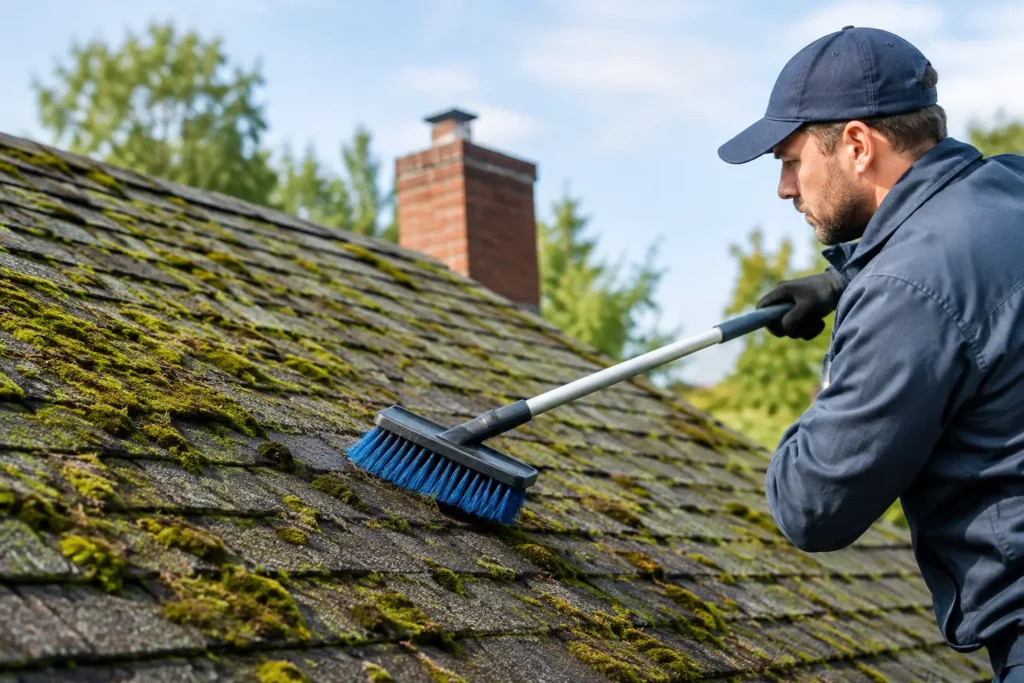
A roof covered in moss can make an otherwise well-kept property look neglected, but the concern is not only cosmetic. Moss holds moisture against tiles, sheds into gutters and can make roof surfaces dangerously slippery. Effective roof moss removal protects the parts of your property that are hardest to inspect and most expensive to repair.
For homeowners, landlords and site managers, the right approach is usually measured rather than rushed. Not every patch of growth needs an immediate full clean, but ignoring a spreading problem for years can lead to blocked drainage, loose tiles and avoidable maintenance work.
Why moss grows on roofs
Moss thrives where surfaces stay damp and receive limited direct sunlight. North-facing roof slopes, properties beneath trees and older roofs with a roughened surface are common places to find it. Buckinghamshire’s wet autumns and shaded gardens can create ideal growing conditions, especially where leaves are allowed to settle in roof valleys and gutters.
Unlike climbing plants, moss does not send roots through roof tiles. However, it acts like a sponge. Repeated wetting and slow drying can worsen the effects of frost, while thick growth can lift at tile edges or conceal small defects that need attention. As it dries out or is disturbed by wind, moss also breaks away and travels down into gutters and downpipes.
That is why roof cleaning and gutter cleaning often go together. Clearing the visible moss without dealing with the debris below can leave the drainage system blocked at the next heavy rainfall.
When does roof moss removal become necessary?
A small amount of green growth on an older roof is not always an emergency. The decision depends on its location, thickness, the roof material and how well water is draining away. A professional inspection is useful when the problem is difficult to judge safely from the ground.
It is time to arrange roof moss removal when moss is visibly building up between tiles, collecting in valleys or falling into gutters. Water overflowing from gutters, damp staining on external walls, or plants growing from guttering are further signs that roof debris is affecting drainage.
Also look out for slipped, cracked or broken tiles. Moss may not be the direct cause, but heavy growth can hide these issues from view. Cleaning should never be used to force a damaged roof back into service. Any faults need to be identified and, where necessary, repaired before or alongside cleaning.
For commercial premises, regular checks are particularly sensible where gutters run above entrances, walkways, car parks or loading areas. Overflowing water and falling debris are not just maintenance concerns. They can create a poor first impression and a potential slip hazard.
The safest way to remove moss from a roof
The best method depends on the roof’s condition, pitch and covering. Slate, clay tile, concrete tile and newer roof systems all need different levels of care. What works on a sturdy concrete-tiled roof may be unsuitable for a fragile slate roof or ageing tiles.
A careful clean normally begins with safe access and an assessment of the roof. Moss can then be removed manually using appropriate tools, working in a controlled way that avoids cracking tiles, disturbing pointing or forcing material beneath overlaps. Debris should be collected rather than simply brushed into gutters and downpipes.
Once the heavier growth has been removed, a suitable treatment may be applied to deal with remaining spores and help slow regrowth. These treatments need time and appropriate weather conditions to work properly. Results are often progressive rather than instant, which is a good thing: a gentle process is preferable to aggressive cleaning that risks the roof surface.
Gutters, valleys and downpipes should then be cleared and checked so rainwater has a clear route away from the building. This is a key part of a proper job, not an optional extra.
Why high-pressure washing is often the wrong choice
Pressure washing can make a roof look clean quickly, but that does not make it the right method. A powerful jet can strip the protective surface from concrete tiles, damage older materials, dislodge mortar and drive water beneath tiles. It can also spread dirty water and moss across windows, walls, patios and neighbouring property.
There are occasions where carefully controlled low-pressure cleaning is considered appropriate, but it should follow a proper assessment. The condition of the roof matters more than the promise of an instant result. Soft-wash methods and manual removal are generally the safer choice for maintaining the life of many domestic roofs.
Can you remove roof moss yourself?
It is tempting to tackle visible moss with a ladder, brush and a free afternoon. For a very low, accessible roof with light growth, some property owners may choose to carry out basic maintenance. The risks rise quickly, though. Roofs become extremely slippery when damp, and ladders placed against guttering can cause damage as well as creating an unsafe working position.
DIY cleaning also makes it easy to miss what is happening in gutters, roof valleys and around chimney flashings. Using the wrong cleaner, scraping tool or water pressure can create damage that is not obvious until the next period of heavy rain.
Professional roof cleaners use safe-access equipment, appropriate tools and methods suited to the roof rather than a one-size-fits-all approach. For higher, steeper, older or visibly damaged roofs, bringing in an insured professional is the sensible option. It removes the risk of working at height and helps ensure the property is left clean and draining properly.
How often should a roof be cleaned?
There is no fixed timetable that suits every property. A sunny, open roof may need little more than occasional gutter clearing and visual checks. A shaded roof beneath overhanging trees may need attention every few years, particularly if moss returns quickly.
The most practical approach is preventative maintenance. Keep gutters clear, trim back branches where appropriate and arrange an inspection when you notice moss spreading rather than waiting for a blockage or overflow. Regular maintenance is usually less disruptive and more affordable than dealing with years of compacted growth.
For landlords and commercial property managers, planned visits can make budgeting easier and help maintain a presentable building throughout the year. A simple maintenance schedule can combine roof checks with gutter clearing, window cleaning and cleaning of fascias, soffits and downpipes where needed.
What to expect from a professional roof clean
A reliable contractor should explain what method they recommend and why. They should assess access, roof condition and the amount of growth before quoting, rather than promising a price without seeing the property. Insurance and safe working practices matter, particularly where work is taking place near public areas, conservatories, driveways or neighbouring buildings.
The work area should be protected as far as practical, and loose moss should be removed from gutters and ground-level surfaces before the job is finished. It is also reasonable to ask whether a follow-up treatment is included, how long it is expected to help control regrowth and whether any roof defects were spotted during the clean.
At Spotless Cleans, the focus is on safe, dependable exterior maintenance for properties in Aylesbury and across Buckinghamshire. That means using suitable low-impact methods, modern access equipment and clear communication, without taking unnecessary risks with your roof.
A cleaner roof starts with timely action
Moss is easier to manage before it becomes thick enough to block gutters or conceal roof problems. If you can see it building up from the ground, avoid climbing up for a closer look. Arrange a professional assessment, keep drainage clear and choose a cleaning method that protects the roof as well as improving its appearance.