
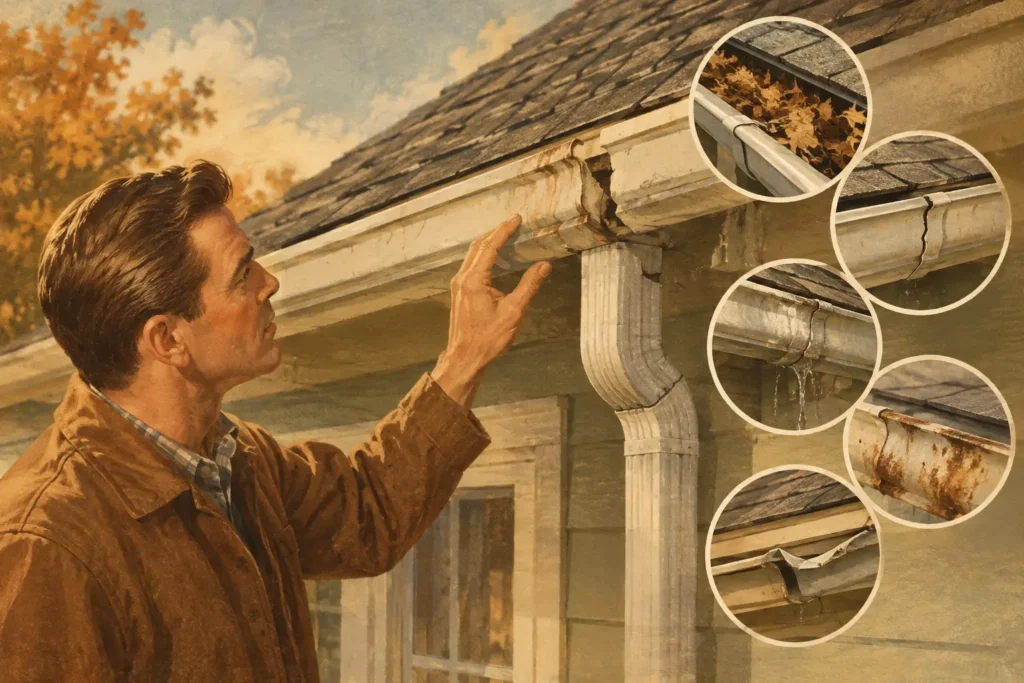
Water spilling over a gutter in heavy rain is easy to dismiss as a one-off. But if it happens repeatedly, it can soak brickwork, stain render, damage fascias and leave water collecting where it should not. Knowing the common gutter repair warning signs helps you deal with a small fault before it turns into damp, timber decay or an expensive call-out.
A blocked gutter is not always a broken gutter, and a thorough clean can often restore proper flow. However, cleaning will not fix cracked joints, failed brackets or a downpipe that has come away from the wall. The key is to look at what happens during and after rainfall, as well as the condition of the guttering itself.
1. Water overflows at the same point
Overflowing water is often caused by leaves, moss and silt building up inside the channel. If the overflow is limited to one area, a blockage may be the answer. But when the gutter has recently been cleared and water still pours over the same edge, there is usually an underlying repair issue.
The gutter may have sagged, lost its correct fall towards the downpipe, or been fitted with brackets that are too far apart. Water then sits in the low point instead of travelling away. On a typical Buckinghamshire home, this can quickly affect the fascia board beneath, particularly through a wet autumn and winter.
2. You can see gaps, cracks or split joints
Small drips at a joint can look harmless on a dry day. During prolonged rain, though, they can send a steady stream of water down an outside wall. Look closely at the joins between gutter lengths, end caps and outlets leading into downpipes.
Rubber seals can harden or shift over time, while plastic guttering can expand and contract with changes in temperature. A cracked section may need replacing; a loose joint may only need resealing or refitting. It depends on the age and condition of the system, but it is better to act before the leak reaches the fascia, soffit or wall cavity.
3. Gutters are pulling away from the roofline
Guttering should sit securely and evenly along the eaves. If it is visibly leaning forward, bowing between brackets or pulling away from the fascia, do not wait for the next storm to test it.
The cause could be a broken bracket, loose fixings, a rotten fascia board or the extra weight of standing water and wet debris. This is one of the more urgent gutter repair warning signs because a detached length of gutter can fall, causing injury or damage below. Avoid climbing ladders to push it back into place. A safe inspection can identify whether the repair is limited to brackets or whether the supporting timber also needs attention.
4. The fascia boards or soffits are stained and peeling
Paint peeling from the boards behind your guttering is not simply a cosmetic problem. It often suggests that water has been escaping, overflowing or sitting against the timber for some time.
On uPVC fascias and soffits, you may notice dark streaks, algae growth or marks beneath joints. Timber boards may feel soft, look swollen or show flaking paint. Cleaning can remove surface staining and improve the appearance, but it will not stop the cause. The guttering needs to be checked for poor alignment, leaks and blocked outlets before the area is cleaned and treated.
5. Damp patches appear inside near an outside wall
Not every indoor damp issue starts with the gutters. Problems with roofs, pointing, plumbing and ventilation can all be involved. Still, if a damp patch is close to an external wall, especially near the top of a room, failed guttering is worth investigating.
Water repeatedly running down the outside of a building can penetrate weak mortar, cracks and older render. Landlords and property managers should take this seriously, as a minor exterior fault can become a larger issue for occupants if left through several seasons. Checking the gutter line after rainfall often provides the clearest evidence.
6. There are puddles or washed-away soil below the downpipe
A downpipe should carry rainwater away in a controlled direction. If you regularly find a puddle at its base, a patch of eroded soil, splashes of mud on the wall or water spreading across a path, the drainage route may be failing.
The downpipe could be blocked, cracked or disconnected from its drain. In some cases, the underground gully is the problem rather than the pipe itself. This matters because water close to the building can contribute to damp, slippery surfaces and movement in paving. For commercial entrances, schools and shopfronts, pooling water also creates an obvious safety concern for visitors and staff.
7. Plants, moss or visible debris are growing from the gutter
A few leaves in a gutter are normal. Grass, weeds and thick moss are a clear sign that debris has been left long enough for soil-like material to form. The added weight holds moisture against the gutter and can distort plastic sections or strain their fixings.
This is often a cleaning issue first, but it should not end there. Once the debris has been removed, the gutter needs to be checked while clear. A professional clean makes it possible to spot cracks, failed seals and incorrect falls that would otherwise stay hidden under moss and leaf matter.
8. You hear dripping long after rain has stopped
A little residual dripping is expected after a shower. Persistent dripping, especially from one joint or corner, can mean water is trapped because the gutter is not pitched correctly. It may also point to a small split that only becomes obvious when the channel is full.
Listen and look after rainfall rather than relying on a quick visual check in dry weather. If safe to do so, stand back from ground level and follow the line of the gutter. You may spot water tracking behind it, dripping from an outlet or spilling over a low section.
When does a gutter need cleaning rather than repair?
The distinction matters. A gutter full of leaves may work perfectly once it is cleared, while a clean but badly aligned gutter will continue to overflow. In many cases, the sensible approach is to clean first, inspect the full run and then repair only what is necessary.
For example, high-reach gutter vacuuming can remove debris without unnecessary ladder work around the property. With the channel clear, a trained operative can assess brackets, joints, outlets and downpipes properly. This avoids paying for repairs based on guesswork and helps prevent avoidable damage during access.
Older systems can present a different decision. If there are multiple cracks, brittle sections and recurring leaks, replacing part or all of the guttering may offer better value than repeated small fixes. Where the fault is localised, a replacement bracket, resealed joint or new length of gutter can be enough.
Do not ignore a fault because the weather is dry
Gutter faults tend to stay out of sight until the next heavy downpour. By then, water may already be running over entrances, against walls or behind fascias. A brief visual check after rain, alongside regular cleaning, is one of the simplest ways to protect a property.
If you have noticed any of these signs, arrange an inspection before the problem worsens. For homeowners and property managers in Aylesbury and nearby areas, Spotless Cleans can clear accessible gutter debris safely and identify visible issues that may need repair, helping you keep water moving where it belongs.