
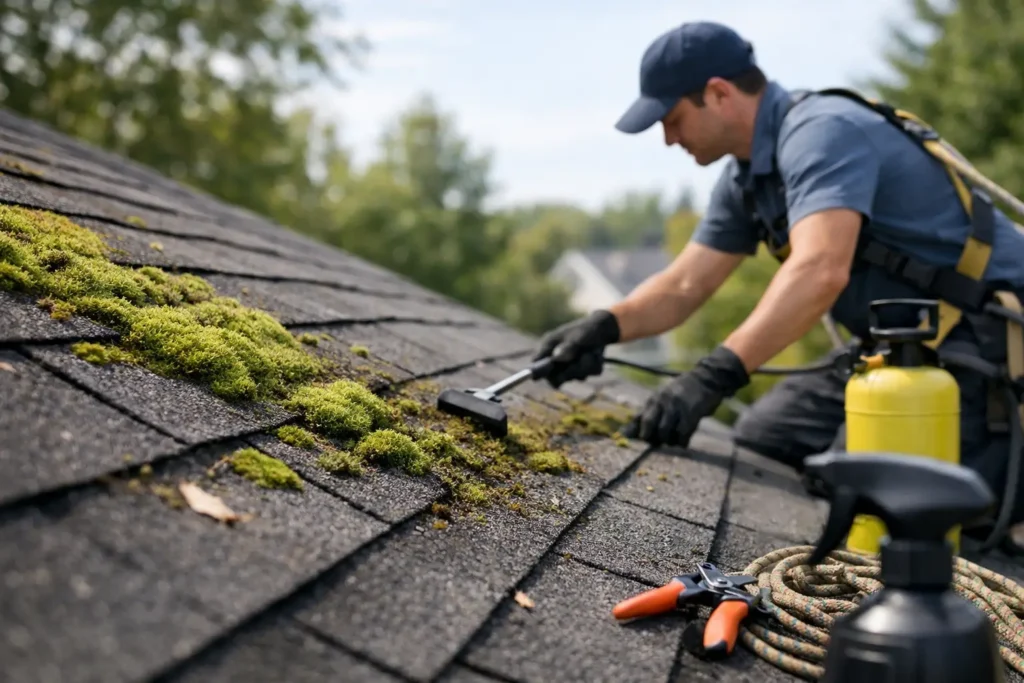
A roof can look perfectly sound from the ground while moss is quietly holding moisture against its tiles. This guide to roof moss prevention explains what causes the problem, which steps make a real difference, and when professional help is the safer option.
Why moss grows on roofs
Moss needs three things to establish itself: moisture, shade and something to grip. Roofs beneath overhanging trees, on north-facing elevations, or close to woodland often remain damp for longer after rain. Leaves, twigs and wind-blown dirt collect in roof valleys and behind chimneys, creating a wet surface where moss spores can settle.
Buckinghamshire’s changing weather does not help. Frequent rain followed by mild conditions can encourage growth for much of the year, especially where airflow is limited. Moss is not always a sign that a roof is failing, but leaving it unchecked can turn a manageable cleaning job into a wider maintenance issue.
As moss thickens, it retains water against tiles and can work its way under laps and edges. In freezing weather, trapped moisture may expand and put added stress on already weathered tiles. Moss also drops into gutters and downpipes, where it contributes to blockages and overflowing water.
Guide to roof moss prevention: start with moisture control
The best prevention is not a single treatment. It is a sensible routine that keeps the roof clear, lets it dry quickly and deals with growth before it becomes established.
Keep gutters and valleys clear
Gutters do more than carry rainwater away. When they are blocked with leaves, moss or silt, water can back up around the roof edge and keep the lower tiles damp. Overflowing gutters can also lead to staining on walls, saturated ground near the property and avoidable damage to fascias and soffits.
A regular gutter clean is particularly worthwhile in autumn and after periods of high wind. Roof valleys deserve attention too, as they naturally collect debris. A small pile of leaves in a valley can hold moisture for weeks, giving moss exactly the conditions it needs.
For many homes, annual gutter cleaning is a sensible starting point. Properties with mature trees nearby may need a second visit, usually after autumn leaf fall. Commercial buildings with flat or low-pitched roof areas should have a planned inspection schedule, as drainage issues are not always visible from ground level.
Cut back overhanging vegetation
Trees give a property character, but branches hanging over a roof bring shade, leaves and twigs. They can also scrape roof coverings in windy conditions. Pruning back vegetation to create a reasonable gap above the roof helps sunlight and moving air dry the tiles after rain.
There is a balance to strike. Do not remove healthy trees simply because there is a little moss on the roof, and check whether any trees are protected before arranging significant work. In most cases, a considered trim and regular debris removal are enough to reduce the conditions moss prefers.
Check that water is draining properly
Look for signs of poor drainage after heavy rain. These include gutters spilling over, water running down external walls, damp patches around the eaves, or persistent green growth at one end of the roof. Downpipes should discharge freely and drains should not be obstructed.
If water appears to be getting beneath tiles, do not assume moss is the only cause. Broken tiles, damaged flashing, worn mortar or an issue with the roof underlay may need a roofer’s assessment. Cleaning should never be used to disguise a repair problem.
Remove existing moss before it spreads
Prevention works best after existing heavy growth has been dealt with properly. A small amount of surface moss may be manageable with treatment, but thick mats around tiles, ridges and valleys need careful removal first. The goal is to clear the growth without damaging the roof covering or forcing water underneath it.
Pressure washing is often the wrong choice for domestic roofs. High pressure can strip protective surface material from concrete tiles, disturb mortar, crack old tiles and drive water into places it should not reach. It can make a roof look clean quickly, but the short-term result is not worth the risk where the roof is older, fragile or poorly accessed.
Professional roof cleaning normally starts with a visual assessment from a safe position. The method should suit the roof material, its condition and the amount of growth present. Careful manual removal, followed by a suitable soft-wash or biocidal treatment, is often a more controlled approach than blasting the roof with water.
A treatment does not always produce an instant colour change. It works over time, breaking down remaining organic growth so weather can gradually wash it away. This slower result can be a positive sign that the roof has been treated without aggressive cleaning.
Choose treatments with the roof in mind
Not every roof should receive the same product or process. Concrete tiles, clay tiles, slate, metal roofing and flat roof coverings all have different tolerances. Old or brittle roofs may require an especially cautious approach, while roofs with damaged tiles should be repaired before cleaning begins.
Biocidal treatments can be effective at preventing moss, algae and lichen from returning quickly, but they must be applied in line with the product instructions and with care around planting, ponds and watercourses. Run-off control matters. A responsible contractor will consider nearby surfaces, gutters and landscaping before starting work.
You may see zinc or copper strips marketed as a permanent fix. Rainwater flowing over these metals can discourage moss below them, but results vary according to roof shape, rainfall and the extent of existing growth. They are not a replacement for clearing debris, maintaining gutters or treating a heavily affected roof. They may also be unsuitable for some roof types or existing warranties, so it is worth taking advice first.
Do not make roof safety an afterthought
Roof work carries real risks, even on a single-storey extension. Wet moss is slippery, tiles can break underfoot, and ladders placed incorrectly can damage gutters or move unexpectedly. A fall from a low roof can still cause serious injury.
It is safer to carry out simple checks from the ground using binoculars, or from an upstairs window where possible. Look for visible moss build-up, debris in valleys, slipped tiles and overflowing gutters. Avoid climbing onto the roof, walking over tiles or attempting to scrape moss away from a ladder.
A professional cleaner should use appropriate access equipment and work methods for the property. That may include ladders with stabilisers, roof-safe access arrangements, gutter vacuums, water-fed poles or soft-wash equipment. Insurance and a clear plan for protecting the property below are just as important as the cleaning method itself.
Set a maintenance timetable that suits your property
There is no fixed schedule that suits every roof. A sunny, open property with clean gutters may only need an annual visual check and occasional preventative treatment. A shaded home near trees may benefit from gutter cleaning twice a year and a roof inspection before moss has time to build up.
For landlords and commercial property managers, planned maintenance is often more cost-effective than reacting to a blocked downpipe or a visibly green roof. Regular visits also create a record of the roof’s condition and can highlight loose tiles, damaged gutters or drainage concerns early.
A practical routine might include a gutter clean after autumn, a visual roof inspection in spring, vegetation trimming when needed, and a professional moss treatment at intervals based on the roof’s exposure. The right interval depends on shade, local tree cover, roof material and the treatment previously used.
When to arrange a professional roof clean
Arrange an assessment if moss is lifting tile edges, filling gutters, collecting in valleys or repeatedly returning after basic maintenance. It is also sensible to get advice where access is difficult, the roof is steep, there are solar panels, or you are unsure of the roof covering’s condition.
Spotless Cleans provides safety-focused roof cleaning and moss removal for homes and managed properties in Aylesbury and across Buckinghamshire. The emphasis should always be on a method that protects the roof, surrounding surfaces and people on site, rather than the fastest-looking clean.
A clear roof is easier to inspect, drains more effectively and gives small defects less opportunity to become expensive repairs. Deal with moss while it is still a maintenance task, and your roof has a far better chance of staying dry, tidy and dependable for years to come.