
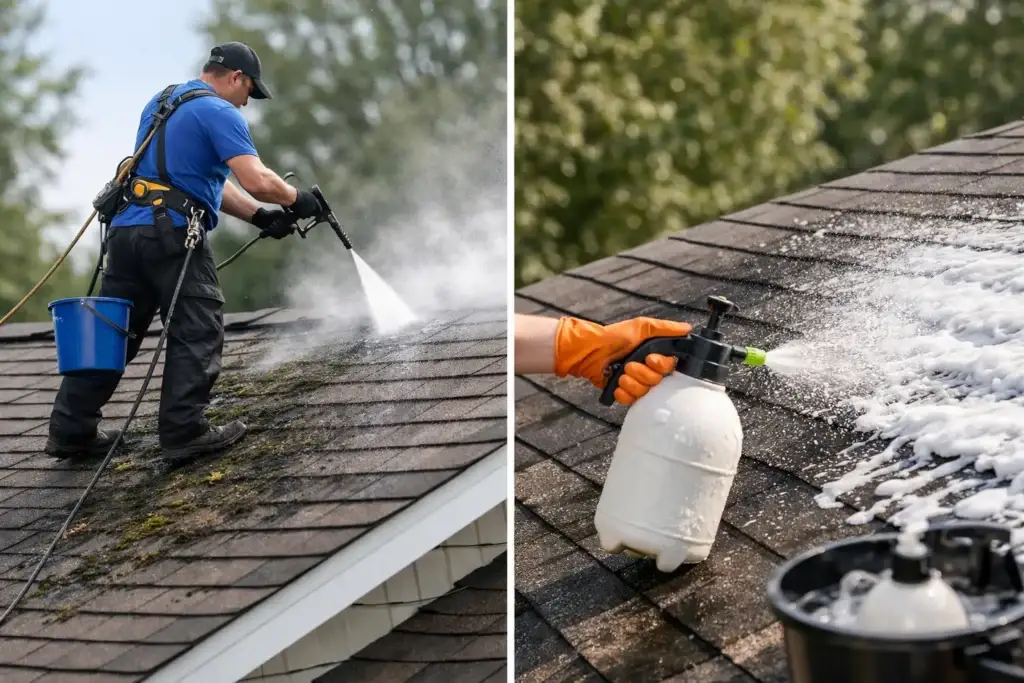
A roof rarely gets much attention until the moss is obvious from the street, the gutters start overflowing, or damp patches appear where they should not. Roof cleaning is one of those jobs that is easy to put off, but leaving it too long can turn a simple maintenance visit into a more expensive repair.
For most properties, the issue is not just appearance. Moss, algae, lichen and general debris all hold moisture against the roof surface. Over time, that extra moisture can affect tiles, slow drainage, block gutters and add unnecessary wear to the whole roofline. If you want your property to stay presentable and protected, keeping the roof clean makes practical sense.
Why roof cleaning matters
A clean roof does improve kerb appeal, but the bigger value is preventative maintenance. Moss acts like a sponge. In wet weather it absorbs water, and in colder spells that trapped moisture can contribute to tile damage as temperatures change. It also spreads into gaps, edges and overlaps where it does not belong.
Algae and lichen can be just as stubborn. They may not always build up as thickly as moss, but they can still leave staining and create a neglected look. On commercial properties, schools and shopfronts, that matters for presentation. On homes and rental properties, it can affect first impressions and make the whole exterior look tired even when the rest of the building is well kept.
There is also the guttering to think about. When moss loosens naturally, it tends to wash down into gutters and downpipes. That can lead to blockages, overflowing water and damp issues around walls and foundations. In many cases, roof cleaning works best when it is treated as part of wider exterior maintenance rather than a one-off fix.
The most common causes of roof build-up
Not every roof gets dirty in the same way. Some properties are far more prone to moss than others, and the reason usually comes down to conditions rather than neglect.
Shade is a big factor. Roofs under trees or on north-facing slopes tend to stay damp for longer, which gives moss and algae better growing conditions. Older roofs can also be more vulnerable because the tile surface may be slightly rougher or more weathered, making it easier for growth to take hold.
Nearby trees add another layer of trouble. Leaves, twigs and seeds collect on the roof and in the gutters, holding moisture and creating the sort of damp environment moss enjoys. In parts of Buckinghamshire, where many homes sit near mature trees or open green spaces, this can become a recurring issue rather than a one-off nuisance.
Roof cleaning methods and when they make sense
There is no single method that suits every roof. The right approach depends on the roofing material, the amount of growth present, access, and the general condition of the property.
Manual moss removal
For heavily affected roofs, manual removal is often the safest starting point. This involves physically clearing the bulk of the moss with tools designed not to damage the tiles. It is a careful process rather than a quick blast-and-go job.
The advantage is control. Thick moss can be removed without forcing water under tiles or putting unnecessary pressure on the roof covering. It also makes it easier to collect debris before it drops into gutters and downpipes.
Soft washing after roof cleaning
Once the main growth has been removed, a soft-wash treatment is often used to deal with remaining spores, algae and staining. This helps slow regrowth and gives a more complete finish.
Soft washing is especially useful when appearance matters, but it also has a practical role. If you only scrape away visible moss and leave the underlying spores behind, the roof can start greening up again sooner than you expect. The exact result varies with weather and surroundings, but treatment usually helps keep the roof cleaner for longer.
Why pressure washing is not always the answer
Many people assume pressure washing is the fastest route to a clean roof. Sometimes it is suggested because it gives immediate visual impact. The problem is that speed and suitability are not the same thing.
On some roofs, high-pressure cleaning can do more harm than good. It may strip protective surface finishes from tiles, dislodge pointing, force water into places it should not go, or disturb weak areas that were already under strain. On older roofs in particular, aggressive washing can create problems that were not there before.
That does not mean every use of pressure is wrong in every case. It depends on the roof type, condition and operator judgement. But as a general rule, any method should be chosen with the roof’s long-term condition in mind, not just the short-term before-and-after photo.
Safety is not the place to cut corners
Roof cleaning looks straightforward from the ground. In reality, working at height on a damp, uneven surface carries real risk. That is one reason many property owners choose a professional service rather than trying to manage it themselves.
There is also the issue of access and surrounding areas. Conservatories, extensions, delicate gutters, flower beds and parked vehicles all need to be considered. A careful contractor will think beyond the roof itself and plan how to protect the rest of the property during the job.
For commercial sites, safety matters even more. Public access, staff movements, safeguarding requirements and insurance all come into play. A properly insured, safety-focused team is not just a nice extra. It is part of doing the job responsibly.
Signs your roof needs attention
You do not need to wait until the roof is completely covered in moss. In fact, earlier intervention is usually better value.
If you can see clumps of moss along tile edges, dark streaks, green patches, or debris gathering in valleys and lower sections, it is worth getting it looked at. Overflowing gutters after rain can also point to roof debris washing down and causing blockages.
Inside the property, musty smells or damp around upper walls do not automatically mean the roof is dirty, but they can be part of a wider maintenance issue. A professional inspection can help separate a cleaning problem from a repair problem.
What good roof cleaning should include
A proper service should do more than remove what is visible from the street. The detail matters.
At a minimum, the roof should be assessed first so the cleaning method matches the material and condition. Moss and debris should be removed in a controlled way, not just knocked loose and left to clog the drainage. If treatment is applied, it should be suitable for the roof and used correctly.
It also makes sense to think about the rest of the roofline. Gutters often need clearing after roof cleaning, and fascias, soffits and downpipes may benefit from attention at the same time. When these jobs are handled together, the result is cleaner, tidier and more practical.
How often should a roof be cleaned?
There is no fixed answer because roofs age and weather differently. Some stay relatively clear for years, while others under heavy tree cover may need more regular attention.
For many properties, the sensible approach is periodic inspection rather than cleaning to a rigid schedule. If the roof is in a shaded spot or has a history of moss build-up, regular maintenance can prevent larger problems. For landlords and commercial property managers, planned upkeep is often easier to budget for than reactive call-outs after blockages or leaks appear.
This is where a dependable local service can make life easier. Spotless Cleans, for example, works with both one-off visits and ongoing maintenance, which suits customers who want the problem sorted now without having to remember every seasonal check themselves.
Choosing a roof cleaning service
Price matters, but it should not be the only thing you compare. Roof cleaning done badly can cost far more than roof cleaning done properly.
Look for a company that is insured, clear about its methods and realistic about results. If someone promises a perfect finish on every roof with no mention of condition, access or risks, that is not usually a good sign. A trustworthy contractor should explain what they recommend, why they recommend it, and whether any limits or trade-offs apply.
It is also worth asking whether they deal with related issues such as gutter clearing and moss removal from surrounding areas. A tidy, joined-up service tends to be more useful than a quick surface clean that leaves the rest of the mess behind.
A clean roof should never come at the expense of the roof itself. The aim is to protect the property, improve appearance and reduce future maintenance issues, all without unnecessary risk or damage. If the method is careful, the advice is honest and the service is reliable, roof cleaning becomes less of a hassle and more of a sensible part of looking after your building.