
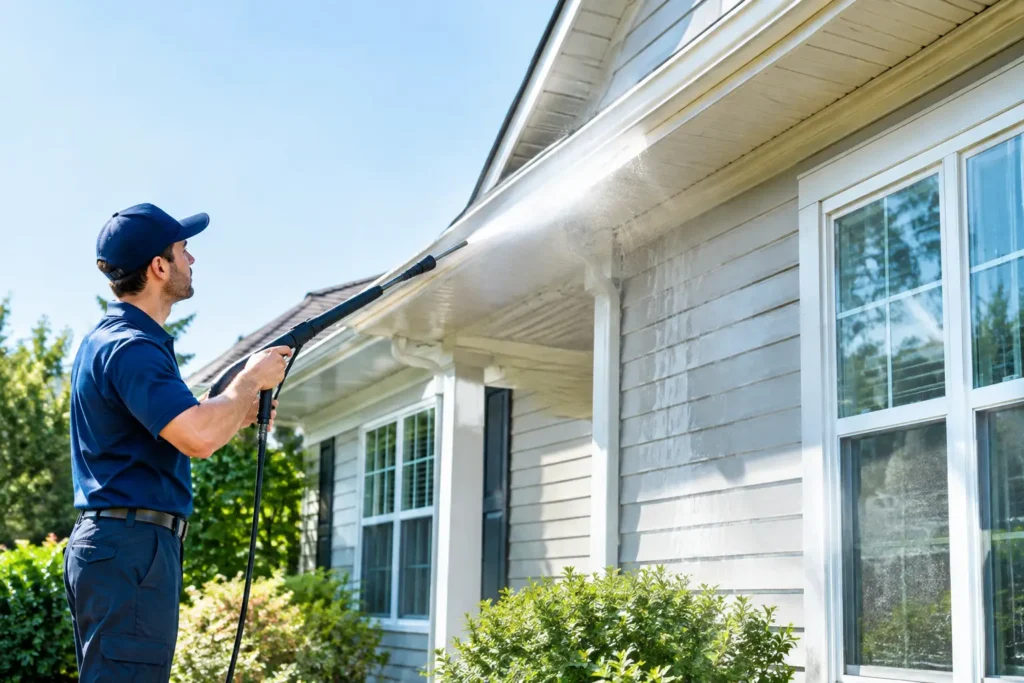
A blocked gutter can send rainwater down an exterior wall. Moss can hold moisture against a roof. Dirty windows and stained fascias can make an otherwise well-kept property look neglected. Exterior cleaning is not simply about making a home, shopfront or workplace look smarter. Done properly, it is practical preventative maintenance that helps spot small issues before they become expensive repairs.
For homeowners, landlords and commercial property managers, regular attention to the outside of a building protects its appearance, keeps key drainage areas working and removes the build-up that British weather leaves behind. The right approach depends on the surface, its condition and how safely it can be reached.
What exterior cleaning helps prevent
Exterior surfaces are exposed every day to rain, wind, traffic film, algae, bird mess, fallen leaves and airborne dirt. Around Aylesbury and Buckinghamshire, damp weather and shaded areas can also encourage moss and algae to establish quickly on roofs, paths, walls and conservatory roofs.
Left alone, this build-up does more than spoil kerb appeal. Gutters can overflow and saturate brickwork, while blocked downpipes may direct water where it should not go. Moss on a roof can retain moisture and obstruct the natural flow of rainwater. Algae on hard surfaces can become slippery, particularly through autumn and winter. Dirty glass reduces natural light and gives customers, visitors or tenants a poor first impression.
Cleaning will not fix damaged tiles, failing seals or a cracked gutter joint. It can, however, make these faults easier to see and stop dirt or organic growth from hiding the problem. That is why a routine visit is often better value than waiting until an overflow, leak or visibly overgrown roof demands urgent attention.
The exterior areas worth keeping on schedule
Windows, frames and sills
Windows are usually the most noticeable part of exterior cleaning because the result is immediate. Clean glass improves the look of a property and lets more daylight into rooms, offices and retail spaces. But the surrounding frames and sills matter too. Dust, cobwebs, algae and grime collect in corners and drainage channels, which can make even freshly cleaned glass look unfinished.
For upper-floor windows, pure-water cleaning with water-fed poles is often the safest and most effective option. Purified water lifts dirt and dries without leaving the mineral deposits that can cause spotting. It also allows a professional to clean high windows from ground level, reducing the need for ladders around your property.
The frequency depends on location. A quiet home may suit a regular clean every six to eight weeks, while a shopfront, school entrance or roadside office may need more frequent attention. There is no one-size-fits-all schedule, but consistency prevents heavy build-up and keeps each visit straightforward.
Gutters and downpipes
Gutters tend to be forgotten because they are out of sight. Unfortunately, they become very noticeable when rainwater spills over the edge. Leaves, moss, twigs and debris can create blockages that put extra strain on joints and brackets, while overflowing water can affect walls, soffits, fascias and the ground around the building.
A high-reach gutter vacuum can remove debris safely from ground level in many situations. This avoids unnecessary ladder work and allows the operator to work efficiently around homes, offices and other occupied premises. A visual check afterwards is useful, particularly where a property has overhanging trees or sections of guttering that regularly collect moss.
As a sensible starting point, gutters should be checked at least once or twice a year. Properties beneath mature trees, or buildings with mossy roofs, may need more frequent cleaning. It is also worth arranging a check after a particularly windy autumn, when debris can arrive quickly.
Roofs and moss removal
A moss-covered roof may look like a cosmetic issue, but it deserves a careful assessment. Moss retains water and can build up in valleys, behind chimneys and near gutters. As it sheds, it can block drainage below. On some roofs, aggressive methods can do more harm than good by disturbing tiles, damaging their surface or forcing water where it does not belong.
The safest method depends on the roof material, pitch, age and condition. Manual moss removal and controlled soft-wash treatments are often more appropriate than high-pressure cleaning. A professional should inspect the roof first, use safe access methods and explain what can realistically be achieved. If tiles are already loose, cracked or fragile, cleaning needs to be planned around that condition rather than treated as a standard job.
Conservatory roofs, fascias and soffits
These finishing details make a larger difference than many people expect. Green staining on a conservatory roof can reduce light inside, while dirty fascias and soffits can make a clean frontage look tired. They also sit close to gutters, so cleaning them at the same time can give the whole exterior a more cared-for finish.
The key is using the right pressure and cleaning solution for the material. UPVC, painted finishes and roof panels should be cleaned gently. A quick blast with unsuitable equipment may leave marks, loosen seals or drive water into places it should not reach.
Why method and safety matter in exterior cleaning
The best cleaning method is not always the fastest-looking one. High pressure has a place on suitable, durable surfaces, but it is not the answer for every roof, window frame or delicate fitting. Soft-wash methods use carefully selected treatments at low pressure to deal with organic growth while reducing the risk of surface damage. Pure-water systems are ideal for streak-free windows, while gutter vacuums provide safe reach without routine ladder access.
Safety also affects the quality of the service. Working at height, near fragile roof coverings or around public entrances requires proper planning. For commercial premises, this may include arranging work around staff, pupils, customers or deliveries. For homes, it means respecting gardens, gates, pets and vehicles while keeping work areas tidy.
When choosing an exterior cleaning provider, ask practical questions. Are they fully insured? Do they use equipment appropriate for the surface? Can they explain how they will access high areas safely? Will frames, sills, gutters or downpipes be included where needed? Clear answers are a good sign that the work will be carried out properly rather than rushed.
A maintenance plan saves hassle
One-off exterior cleaning is useful before putting a property on the market, after building work, before an event or when a neglected area needs bringing back under control. Ongoing maintenance is usually the easier option once everything is clean. Regular visits mean less build-up, more predictable costs and fewer jobs that become urgent after bad weather.
For landlords and property managers, scheduled cleaning also makes property upkeep easier to document. For businesses, it helps maintain a professional frontage without another task being added to the facilities list. Homeowners benefit from knowing that high windows and gutters are being dealt with safely, without spending a weekend balancing on ladders.
Spotless Cleans provides professional exterior cleaning for homes and commercial properties, with flexible one-off and regular visits arranged around what the building actually needs.
A clean exterior should not be a last-minute response to overflowing gutters or a roof covered in moss. A brief inspection now, followed by the right cleaning schedule, can keep your property safer, smarter and easier to maintain through every season.