
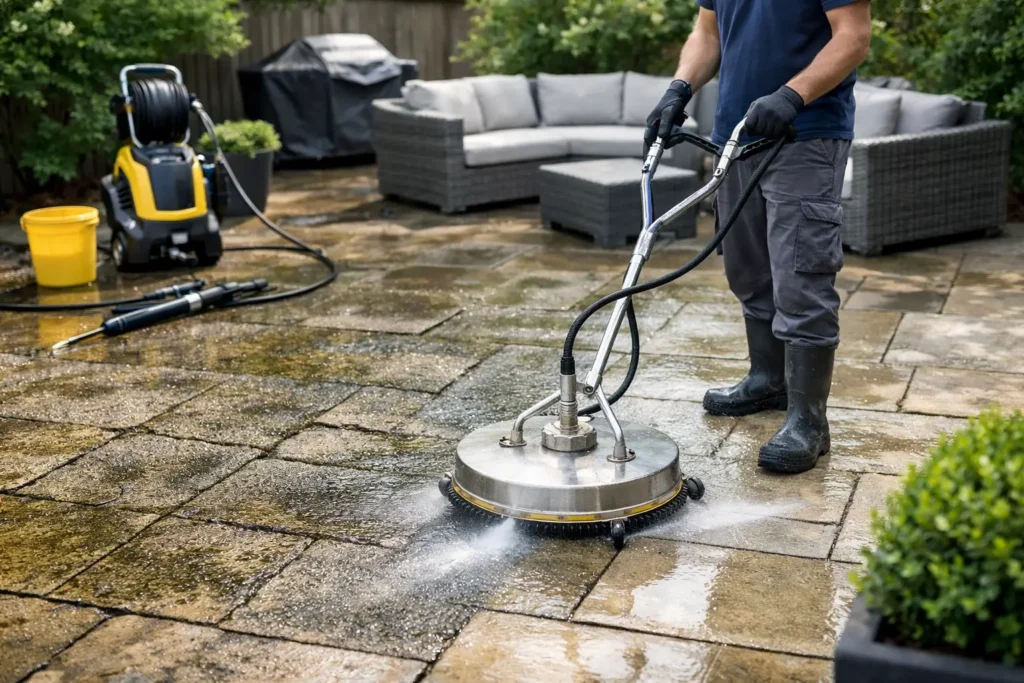
A patio can look tired long before the rest of a property does. Green algae on paving, black spotting in shaded areas and grime around furniture can make an otherwise well-kept garden feel neglected. Professional Aylesbury patio cleaning services restore the surface properly, without the unnecessary risks that come from using too much pressure or the wrong cleaning method.
For homeowners, landlords and commercial property managers, the aim is not simply a brighter patio for a few days. It is to remove the build-up that makes paths and seating areas slippery, protect the paving where possible, and keep the outside of the property presentable with less work to do later.
What builds up on patios in Buckinghamshire?
Patios are exposed to everything the British weather brings: rain, leaf fall, frost, muddy shoes and long damp periods. North-facing gardens and areas beneath trees are especially prone to algae, moss and lichen because they stay wet for longer.
Paving can also collect traffic film, soil, pollen, barbecue marks and stains from pots or garden furniture. Over time, these layers dull the original colour of the slabs and fill the joints. The problem is not always obvious when it starts, but it becomes noticeable once a surface turns green, patchy or slippery after rain.
Different materials need different care. Concrete slabs, block paving, natural stone, porcelain and composite surfaces do not all react in the same way to pressure, detergents or stiff brushing. A reliable cleaner will assess the surface before starting rather than treating every patio as if it were identical.
Aylesbury patio cleaning services: what a professional visit involves
A proper patio clean starts with preparation. Furniture, planters and movable items are moved where practical, while nearby walls, doors, plants and drainage points are considered before water is applied. This keeps the work tidy and reduces the chance of splashing dirt onto areas that have already been cleaned.
The surface is then cleared of loose debris. Depending on the condition of the paving, cleaning may involve controlled pressure washing, pre-treatment for organic growth, targeted stain treatment and manual attention around edges and joints. The right approach depends on the paving type, its age, and how heavily soiled it is.
High pressure has its place, but more force is not automatically better. On worn pointing, soft stone or loose block paving, excessive pressure can dislodge jointing material, mark the surface or drive water where it should not go. A professional service balances effective cleaning with care for the property.
Once the main clean is complete, the area is rinsed and checked. Any debris is cleared away, and the patio is left to dry naturally. Some surfaces may benefit from re-sanding or re-pointing afterwards, particularly block paving where jointing sand has been lost. This should be discussed clearly before work begins, rather than added as an unexpected extra.
Why treatment matters as well as washing
A pressure washer can remove visible green growth quickly, but it may not deal with the spores left behind in porous paving. That is why an appropriate treatment can make a worthwhile difference. It helps slow the return of algae and lichen, particularly on patios that receive little sun.
This does not mean a patio will stay spotless forever. Weather, shade and regular use all affect how quickly growth returns. However, cleaning the surface thoroughly and using suitable products can extend the period between deeper cleans and make routine sweeping easier.
When is the best time to clean a patio?
Spring is popular because people want to use their gardens again after winter. It is a sensible time to remove moss, leaf staining and accumulated grime before outdoor furniture comes out. Early autumn can also work well, especially after a dry summer and before heavy leaf fall begins.
In reality, patio cleaning can be carried out through much of the year when conditions are suitable. Very cold weather, persistent heavy rain or a forecast frost may affect both the cleaning process and drying time. For a patio used by customers, tenants, children or visitors, booking before a known busy period is usually the practical choice.
Regular maintenance is often more cost-effective than waiting until the entire area is heavily stained. A yearly clean suits many homes, while shaded gardens, rental properties and commercial entrances may need more frequent attention.
Safer access and a tidier property exterior
The main benefit people notice is the appearance: cleaner paving, clearer joints and a garden that feels ready to use. The practical benefit matters just as much. Algae and moss become slippery when wet, particularly on smooth slabs, steps and paths leading to a back door.
For landlords and property managers, a maintained patio or communal paved area supports a better first impression and helps reduce avoidable slip concerns. For cafés, offices, schools and shopfronts with outside areas, regular exterior cleaning helps keep customer and visitor spaces looking cared for without asking staff to handle equipment or chemicals themselves.
Patio cleaning can also be planned alongside window cleaning, gutter clearing, fascia cleaning or conservatory roof cleaning. Grouping exterior maintenance visits can be convenient, although it depends on the property, access and the work required. A good provider will recommend what makes sense rather than pushing services that are not needed.
Choosing a patio cleaner you can trust
A low price can be tempting, but patio cleaning is one of those jobs where the method matters. Before booking, ask what equipment and products will be used, whether the cleaner is insured, and how they will protect nearby surfaces and planting. You should also be clear on whether waste, re-sanding or treatment is included in the quoted work.
Look for straightforward communication. You should know when the cleaner is attending, what preparation is needed from you, and what the patio will look like immediately after the work. Some marks are permanent or have penetrated deeply into the material, so an honest professional will explain what can realistically be improved.
For example, rust marks from metal furniture, oil stains and long-standing tannin staining from leaves can require specialist treatment and may not disappear entirely. Natural stone may retain some variation even after cleaning. That is not poor workmanship – it is the nature and condition of the surface.
Spotless Cleans provides insured, safety-focused exterior cleaning for homes and businesses in and around Aylesbury. The focus is on dependable service, suitable cleaning methods and a clear quote before work begins, so customers know exactly what to expect.
Simple steps to keep your patio cleaner for longer
After a professional clean, a little routine care goes a long way. Sweep away leaves before they become wet and compacted, and avoid leaving pots in one place for months where moisture can be trapped underneath. If furniture has metal feet, use suitable protectors to help prevent rust staining.
Keep an eye on drainage too. Standing water encourages organic growth and can point to a blocked channel, uneven paving or a gutter and downpipe issue nearby. Addressing the cause is often more useful than repeatedly cleaning the same patch.
If you use a domestic pressure washer between visits, keep the setting controlled and avoid concentrating the jet on one point. Take extra care around joints, edges, doors and older slabs. For many properties, regular sweeping and an occasional professional clean are a safer combination than aggressive DIY washing.
A clean patio gives you a more welcoming place to sit, entertain and enjoy the garden. More importantly, it helps keep one of the busiest outdoor surfaces around your property looking cared for and safer to use when the weather turns wet.