
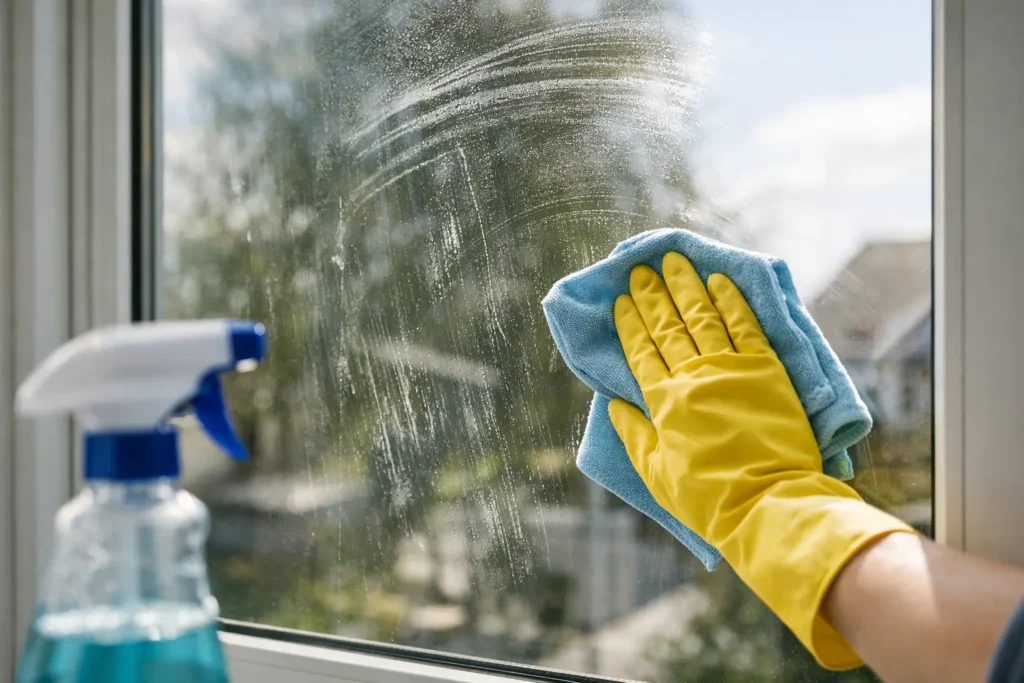
A window can look perfectly clean while it is wet, then reveal cloudy lines and drag marks as soon as the light changes. If you are asking why do windows smear after cleaning, the cause is usually not the glass itself. It is residue left behind by the water, cleaning product, cloth or surrounding frames.
Smears are frustrating because they can make a freshly cleaned home, shopfront or office look less cared for than it did before. The good news is that most streaking has a straightforward cause, and changing a few parts of the cleaning routine can make a noticeable difference.
Why do windows smear after cleaning?
A smear is a thin film on the glass that catches the light. It may look like broad cloudy patches, wipe marks, rainbow-like streaks or small lines following the direction of the cloth. In most cases, it happens because something has been spread across the glass rather than fully removed.
The most common culprits are too much cleaning solution, mineral-heavy water, a dirty cloth or squeegee, and cleaning in conditions that let the solution dry too quickly. Exterior windows can also pick up residue from dirty frames, trickle vents and sills during the clean.
Too much cleaning product
Using more spray does not normally mean cleaner glass. Many household window products contain detergents, fragrance or additives that leave a fine coating when over-applied. A cloth then moves that coating around, particularly if it becomes damp and overloaded.
This is especially common with pre-moistened wipes and general-purpose sprays. They may be convenient for a quick mark, but they are not always suited to cleaning a whole pane of glass without leaving traces behind.
Use a small amount of solution and change to a clean, dry finishing cloth before the first one becomes saturated. If smears remain, rinse the glass with clean water and start again with less product.
Hard water and dried mineral deposits
Buckinghamshire has hard-water areas, so tap water can contain minerals that remain on the glass once the water evaporates. These deposits are often mistaken for ordinary smears. They can appear as white spotting, a dull haze or pale marks around the edge of the pane.
A standard glass cleaner may improve the appearance temporarily but may not remove established limescale. On exterior glass, water run-off from a roof, a leaking gutter or an overflowing downpipe can keep depositing minerals and dirt in the same places. That is why a window may quickly look marked again after cleaning.
Professional pure-water window cleaning systems filter out the dissolved minerals that cause spotting. The purified water lifts dirt from the glass, frames and sills, then dries clear without leaving mineral residue. It is a practical option for upper-storey windows as well, where trying to reach from a ladder can be unsafe.
Dirty or unsuitable cloths
A cloth that looks clean is not always clean enough for glass. Fabric softener, washing detergent, grease from hands and old polish can all transfer to a window. Kitchen roll can also leave lint, while a cloth used on frames may carry grime straight back onto the pane.
Microfibre cloths work well, but only when they are properly maintained. Wash them separately from towels and avoid fabric conditioner. Keep one cloth for washing the glass and another dry one for buffing. Once either becomes wet, grey or greasy, swap it out rather than continuing to spread the residue around.
The same applies to a squeegee. A nicked, dry or dirty rubber blade will leave lines behind every time it passes over the glass. Wipe the blade after each pass and replace it when the edge no longer sits smoothly against the pane.
The conditions can make cleaning harder
Bright sunshine is good at showing dirt, but it is rarely ideal for cleaning glass. Heat can dry the solution before it has been properly removed, leaving streaks around the edges and in the middle of the pane. A warm conservatory roof or south-facing window is particularly prone to this problem.
Choose a cooler, overcast part of the day where possible, and clean one manageable section at a time. Avoid working in very windy conditions too. Wind carries dust onto damp glass and can make water dry unevenly.
Cold weather has its own challenges. If the glass is near freezing, water can sit on the surface for longer and may form marks as it dries. Do not pour hot water onto cold glass, as sudden temperature changes can put stress on the pane.
Frames and sills may be contaminating the glass
It is easy to focus only on the glass, but dirty frames, rubber seals and sills can be the reason a clean pane ends up streaked. When water runs down from the top edge, it picks up dust, cobwebs, traffic film, algae and insect marks from the surrounding surfaces.
Clean the frame first, then the top edge of the glass, and work downwards. This prevents dirty water from dripping onto a pane you have already finished. On external windows, include the sills and frames in the job rather than treating them as an afterthought. The result lasts better and looks cleaner from every angle.
How to get a streak-free finish
For routine household cleaning, keep the method simple. First remove loose dust and cobwebs from the frame. Next, use a light application of suitable glass cleaner or clean water with a small amount of washing-up liquid. Work from top to bottom, then remove the liquid with a clean squeegee or dry microfibre cloth.
The final buff should be gentle. Pressing hard with a dry cloth can create static and leave lint, while repeatedly polishing the same area can turn a small mark into a large smear. Check the window from inside and outside if you can. What looks like a streak on the exterior is sometimes a fingerprint or condensation mark on the inside pane.
For larger areas of glass, a squeegee is often more consistent than wiping with cloths alone. Keep the blade in contact with the glass and overlap each pass slightly. Wipe the blade between passes, especially if the window is very dirty.
When a smear is not a cleaning issue
Some marks cannot be cleaned away because they are not on the accessible surface of the glass. Failed double-glazed units can develop misting or cloudy patches between the panes when the seal breaks. Scratches, etched limescale and damage caused by harsh chemicals may also look like smearing, yet stay visible no matter how carefully the window is washed.
If a mark does not change when the glass is wet, dry or viewed from different angles, inspect it closely before trying stronger products. Abrasive pads and aggressive chemicals can permanently damage coatings, seals and surrounding uPVC. For commercial premises, using the wrong product on treated or tinted glass can create a costly problem.
When professional window cleaning is the sensible choice
A one-off professional clean can be useful when windows have built-up grime, hard-water spotting or difficult access. It is also a safer choice for upper-storey glass, conservatories, office fronts and awkward windows above extensions or sloping ground.
At Spotless Cleans, purified-water equipment and water-fed poles allow exterior glass, frames and sills to be cleaned from the ground where suitable. This reduces working-at-height risk while helping the glass dry clear. Regular visits can also stop traffic film, pollen, bird mess and water marks building into a bigger job.
If streaks keep returning in the same area, look beyond the pane. A blocked gutter, overflowing downpipe, leaking roof edge or heavy moss growth may be sending dirty water over the glass. Dealing with the source protects the appearance of the windows and helps prevent avoidable exterior maintenance issues.
Clean glass should disappear when you look through it, not announce itself with wipe marks in the afternoon sun. A clean cloth, modest amount of solution and mineral-free rinse are often all it takes – and when access or hard-water staining gets in the way, a reliable professional clean can save time, risk and repeat effort.