
If you’ve ever had your windows cleaned and found light smears as soon as the sun hits the glass, you’ve already seen why pure water window cleaning benefits matter. The difference is not just in how the windows look on the day. It is in how they dry, how long they stay cleaner, and how safely the job can be done.
For many homes and commercial properties, pure water cleaning has become the preferred method because it is practical. It allows cleaners to reach high windows safely from the ground, clean frames and sills at the same time, and leave a clear finish without soap residue. That sounds simple, but there is a bit more to it than that.
What pure water window cleaning actually means
Pure water window cleaning uses filtered water that has had minerals and impurities removed. In ordinary tap water, those minerals are what often leave spots and marks behind when the glass dries. When the water is purified properly, it can rinse dirt away and then dry naturally with a clear finish.
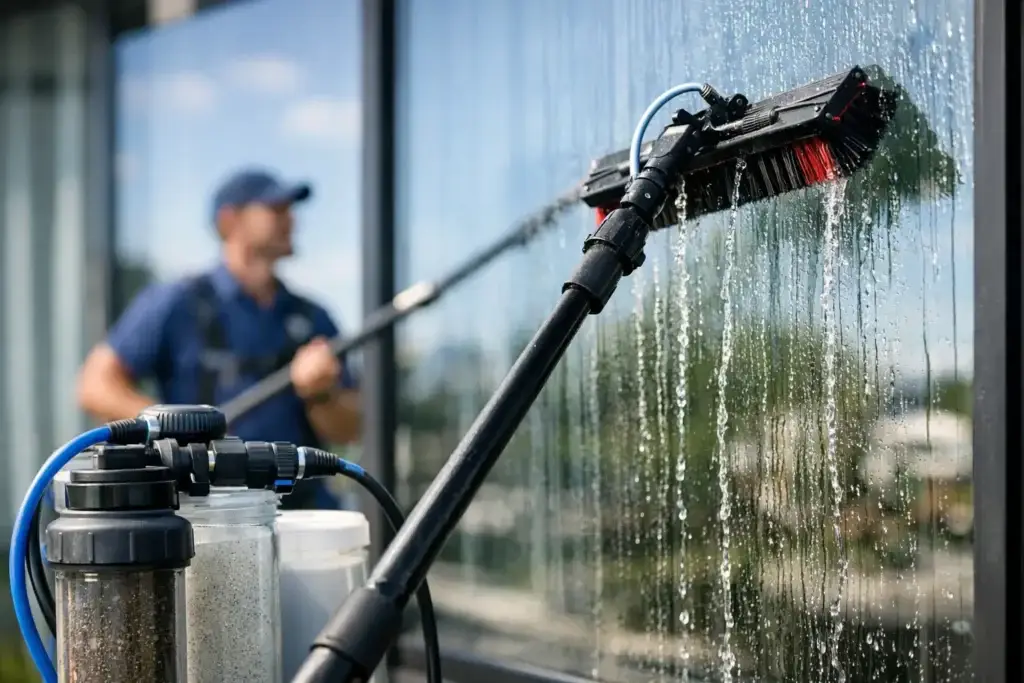
The system is usually paired with a water-fed pole. That means the cleaner can scrub the glass, frames and sills using a soft brush at the end of a long pole, then rinse everything thoroughly with the purified water. Because there is no detergent left behind, there is less chance of residue attracting fresh dirt.
This is one reason the method suits both domestic and commercial work. It is not a gimmick or a shortcut. It is a safer, more consistent way to clean many types of exterior glass.
The main pure water window cleaning benefits
The biggest benefit most customers notice is the finish. Pure water dries clear, so there is no need to wipe the glass dry with cloths or squeegees in many exterior situations. When the system is used properly, the result is clean glass without the spotting that untreated water can leave behind.
Another key advantage is that frames, sills and surrounds can be cleaned as part of the same process. Traditional methods often focus mainly on the glass itself. Pure water cleaning makes it easier to wash the full window area, which gives a better overall result and improves appearance from the outside.
Safety is another major reason this method is widely used. With upper-storey windows, awkward extensions and conservatory roofs, working from the ground with a water-fed pole reduces the need for ladders in many situations. That lowers risk for both the operative and the property below.
There is also a practical maintenance benefit. Because pure water leaves no soapy film, windows can stay cleaner for longer in some settings. Dirt has less residue to cling to, so regular cleans can help keep the finish sharper between visits.
Why pure water can leave a better finish
A lot of people are surprised the first time they see pure water cleaning in progress because the windows are left wet. It can look unfinished if you are used to someone drying the glass by hand. The important part is what happens next. Once the purified water evaporates, there should be no minerals left behind to create marks.
That is where the quality of the equipment and the operator matters. If the water is not purified properly, or the frames are heavily soiled and not rinsed well, the result may not be as clean as expected. This is why experience matters. A professional cleaner knows when a first clean may need extra attention, especially if there is built-up dirt, old detergent residue or years of neglected frames.
For first-time customers, the initial clean can sometimes be the hardest one. Dirt trapped around seals and vents may continue to wash out during the rinse. After that first proper clean, ongoing maintenance is usually much more straightforward and the results become even more consistent.
A safer option for higher and awkward windows
One of the most practical pure water window cleaning benefits is safer access. Many modern homes have difficult rear windows above conservatories, extensions or sloped areas. Commercial buildings often have glass above entrances, shopfronts or uneven ground. In these cases, ladders are not always the safest or most efficient choice.
Using a water-fed pole allows the cleaner to stay on the ground while reaching high-level glass. That reduces working at height and can help avoid accidental damage from ladder contact on gutters, cladding, flowerbeds or rooflines. For customers, that means less disruption and more peace of mind.
This matters even more for regular maintenance contracts. If a method is safer and repeatable, it becomes easier to keep windows on a dependable schedule rather than leaving them until they are visibly dirty or hard to manage.
Better for whole-window cleaning, not just the pane
Clean glass next to dirty frames never looks fully finished. One of the reasons pure water systems are so effective is that they are designed to clean more than the centre of the pane. The brush agitates dirt from the edges, frames and sills, then the purified water rinses it away.
That is especially useful on uPVC windows, doors, fascias and conservatory frames where grime tends to build up over time. On residential properties, it helps improve kerb appeal. On commercial properties, it gives a tidier, more professional look from the outside.
For landlords and site managers, this broader clean can also support general upkeep. Windows are part of the first impression of a building, but the surrounding frames often show neglect first. Keeping the whole area clean is a simple way to maintain standards.
Is pure water window cleaning right for every property?
Mostly, yes, but it depends on the building and the condition of the windows. For regular exterior cleaning on houses, offices, schools, retail units and similar properties, pure water is often the best option. It is efficient, safe and well suited to repeat visits.
There are some situations where traditional methods may still have a place. Interior window cleaning, low-level specialist detailing, or certain heavily marked panes may call for a different approach. Old, poorly sealed windows can also need extra care, particularly if there are concerns about leaks around damaged frames.
This is where a straightforward site assessment helps. A professional cleaner should be able to explain what method makes sense for your property rather than forcing one system onto every job.
Why regular cleaning gets better results than occasional cleans
Pure water cleaning works particularly well on a maintenance schedule. When windows are cleaned regularly, there is less time for traffic film, algae, dust and airborne grime to build up. That means each visit is more about maintaining the finish than trying to recover badly neglected glass.
For homeowners, that keeps the property looking cared for without the hassle of arranging one-off cleans every time the windows start to look tired. For commercial sites, it supports a more consistent appearance for staff, visitors and customers.
In areas with changeable weather and a mix of road dust, pollen and general environmental grime, regular cleaning often makes more financial sense than waiting for the problem to worsen. The work is quicker, the results are more predictable, and the building keeps its appearance year-round.
What to expect from a professional service
A proper pure water clean should not feel rushed. The cleaner should pay attention to frames and edges, not just pass quickly over the glass. On an initial visit, they may also explain that the first clean can produce slightly mixed results if old residue is still being flushed out. That is normal, and honesty about that builds trust.
You should also expect a safety-focused approach. Modern equipment is only part of the picture. The service matters just as much – insured professionals, sensible access decisions, and clear communication over what is being cleaned and how often.
For properties in places like Aylesbury and the wider Buckinghamshire area, where customers often want dependable upkeep rather than fuss, that combination of safe access, visible results and reliable scheduling is what makes the method so useful.
Pure water window cleaning is not about making the job sound more technical than it needs to be. It is simply a better fit for many modern properties. When it is done properly, you get cleaner glass, tidier frames, safer working methods and a result that holds up well after the visit. If you want your windows to look right without the usual hassle, that is a sensible place to start.