
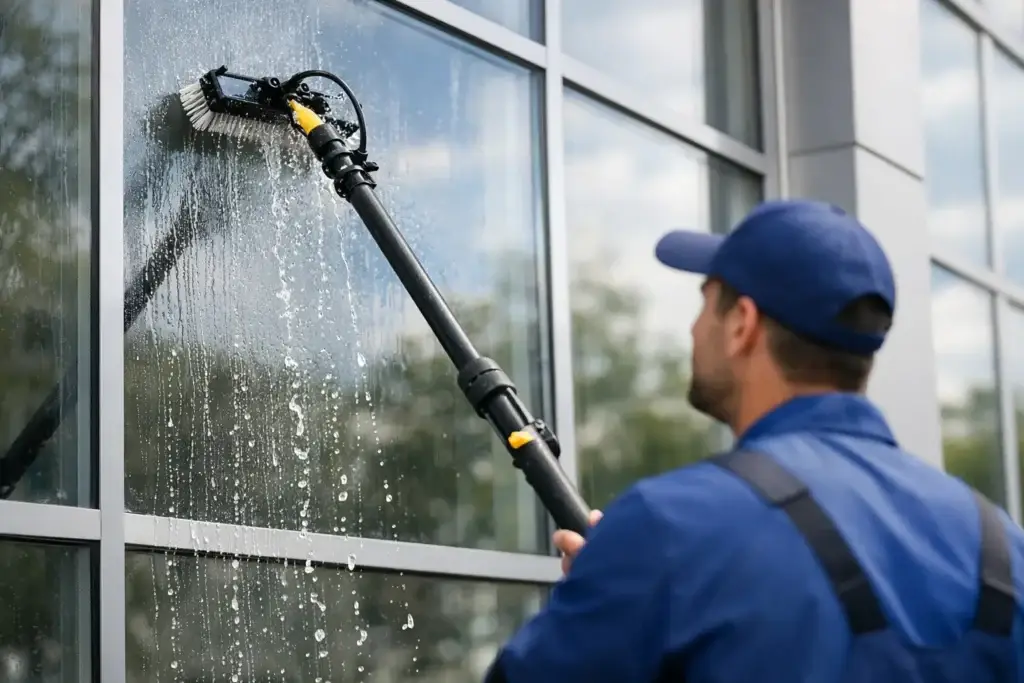
A lot of people first notice water fed pole window cleaning when they see a cleaner working safely from the ground, brushing upper windows with a long pole and no ladder in sight. It looks simple, but the method is a big step forward in both safety and results. For many homes and commercial properties, it is now the most practical way to keep glass, frames and sills clean on a regular basis.
The reason it works so well comes down to two things – pure water and safe access. Instead of relying on detergent and a squeegee, the system pumps purified water through a lightweight pole to a soft brush head. The brush loosens dirt, traffic film, dust, cobwebs and green build-up, and the pure water rinses everything away. Because the water has been filtered to remove minerals and impurities, it dries clear rather than leaving spots and streaks behind.
What is water fed pole window cleaning?
Water fed pole window cleaning is a method that uses telescopic poles and purified water to clean windows from the ground. The pole can reach upper storeys, awkward angles and windows above conservatories, extensions or sloping roofs without the cleaner needing to climb up with a ladder in many cases.
That makes a real difference on everyday jobs. A detached house with high bedroom windows, a row of shopfronts, office glazing above an entrance canopy, or windows tucked behind landscaping can all be cleaned more safely and more efficiently. It is not just about the glass either. One of the biggest advantages is that frames, sills and doors can be washed at the same time, which helps the whole property look better rather than leaving bright glass surrounded by dirty trim.
How the pure water system actually works
Ordinary tap water contains minerals such as calcium and magnesium. If that water dries on glass, it can leave marks. Pure water systems remove those dissolved solids through filtration, often using deionisation and reverse osmosis, so the water is left able to lift dirt and then evaporate without residue.
On the job, the cleaner scrubs the window with the brush head, paying attention to edges, seals and corners where grime tends to gather. The glass is then rinsed thoroughly with the purified water. It can look unusual if you are used to seeing a squeegee, because the glass is left wet. That is normal. As it dries, it should dry clear.
This does mean technique matters. Poor rinsing, dirty brushes, or a frame that has not been cleaned properly on an early visit can affect the finish. That is why first cleans sometimes need a bit more time and why regular maintenance usually gives the best results. Once old residue and built-up dirt are removed, later cleans tend to come up very well.
Why so many property owners prefer it
The biggest reason is safety. Reducing ladder work lowers risk for both the cleaner and the property. Ground-based cleaning is especially useful around fragile rooflines, conservatories, porches, flowerbeds and uneven surfaces where ladder positioning can be awkward.
There is also the quality of the clean itself. Traditional methods often focus mainly on the glass, but a water fed pole system can clean the surrounding parts at the same time. On many properties, dirty frames are what make windows still look tired even after the panes have been cleaned. Washing the full window unit gives a more complete finish.
Then there is practicality. For regular window cleaning rounds, the method is efficient and consistent. Commercial customers often value this because it allows scheduled cleaning with less disruption. Homeowners tend to appreciate the same thing for a different reason – it is straightforward, quick to set up and does not involve someone repeatedly moving ladders around the house.
Where water fed pole window cleaning works best
It is especially effective on upper-storey windows, modern homes with lots of glazing, office buildings, schools, shopfronts and properties with difficult access. It also suits conservatory roofs and glass above extensions where a ladder-based approach is less ideal.
In places like Aylesbury and across Buckinghamshire, where homes range from newer estates to older properties with awkward layouts, the flexibility is useful. Some houses have rear access issues, narrow side passages or garden features that make traditional access less convenient. A long-reach pole often solves that neatly.
That said, it is not a magic answer for every single pane of glass. Very low internal courtyard windows, heavily neglected first cleans, or glass with adhesive residue, paint specks or builders’ debris may need a different approach or extra specialist work. A good cleaner should be honest about that rather than pretending one method suits every situation.
Water fed pole window cleaning vs traditional window cleaning
Traditional window cleaning still has its place. A squeegee method can be useful for certain internal windows, some ground-floor panes, or detailing work where close hand-finishing is the better option. Experienced cleaners know that choosing the right method matters more than sticking rigidly to one system.
But for external upper windows, water fed pole cleaning usually has the edge. It is safer, reaches higher, and cleans frames and sills more thoroughly as part of the process. It can also be the better option on maintenance cleans because it delivers consistent results without the same level of access risk.
The trade-off is mostly perception. Some customers worry when they see windows left wet, assuming they have been left unfinished. Others may notice that the first clean does not always look perfect if old soap residue or oxidation is still washing out from the frames. In most cases, these issues settle after the initial visit and the finish improves noticeably on repeat cleans.
Common questions people ask before booking
One of the most frequent concerns is whether the method works in British weather. The short answer is yes, within reason. Light rain usually does not stop pure-water cleaning from being effective because the rainwater itself is relatively pure. Heavy wind, freezing conditions or very poor weather can affect safety and results, so those jobs may need to be rescheduled.
Another question is privacy. Because the cleaner is working from the ground, there is often less need to place ladders close to bedroom windows or move around roof areas. For many households, that feels less intrusive.
People also ask whether it is suitable for older properties. Often it is, but condition matters. If window seals, paintwork or frames are already failing, any cleaning method needs to be used with care. A professional should spot those issues and clean accordingly.
Why regular cleaning gives better results than occasional cleaning
Windows that are cleaned regularly are easier to keep in top condition. Dirt, algae, bird mess and traffic film do not get the same chance to build up, and the frames stay cleaner too. That means each visit is more about maintenance than recovery.
For landlords and commercial sites, regular cleaning is also a matter of standards. Clean windows help a property look cared for, which matters for tenants, visitors, staff and customers. For homeowners, it is often about saving time and avoiding the cycle where the windows are left too long and then need more intensive work.
This is where a dependable service matters as much as the equipment. The best system in the world is only useful if the cleaner turns up as agreed, works safely and leaves a consistent finish. That is why many customers look for practical trust signals such as insurance, clear communication and a professional approach rather than just the cheapest quote.
Choosing a window cleaner for the job
If you are comparing providers, ask how they purify their water, whether they clean frames and sills as standard, and what they recommend for your particular property. It is also reasonable to ask about insurance and whether they are comfortable working on residential and commercial sites.
For schools, offices and managed buildings, reliability is often as important as price. Missed visits and poor communication create more hassle than they save. For homeowners, peace of mind usually comes from knowing the work will be carried out carefully, with proper equipment and a straightforward service from start to finish.
At Spotless Cleans, that practical approach is exactly what matters most. Modern equipment is useful, but only when it is backed by safe working methods, dependable attendance and a proper standard of care.
Clean windows should not be a complicated job. If the method is right for the property and the work is done properly, water fed pole cleaning gives you a safer service, a clearer finish and one less thing to worry about.