
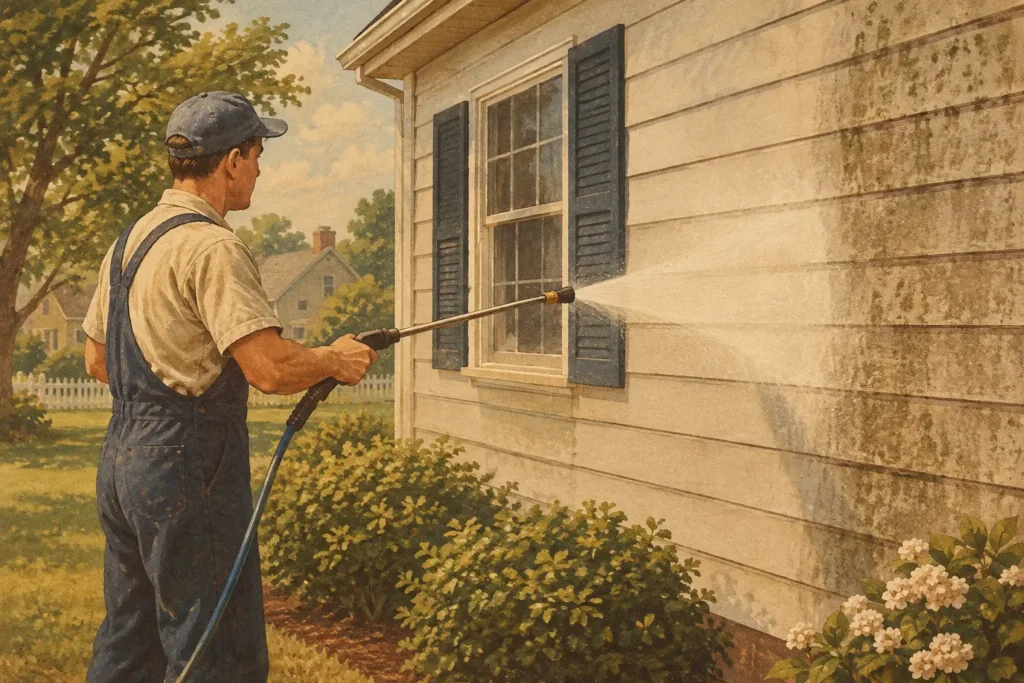
Green streaks on render, black spotting on brickwork and dull marks around gutters can make an otherwise well-kept property look tired. If you have searched for “what is softwashing exterior walls”, you are likely looking for a way to remove that growth without risking damage from a powerful pressure washer. Softwashing is often the sensible answer, particularly for delicate or painted exterior finishes.
What is softwashing for exterior walls?
Softwashing is a low-pressure exterior cleaning method that uses a carefully prepared cleaning solution to treat organic growth, followed by a controlled rinse where appropriate. Rather than relying on force to blast dirt away, it deals with the source of staining – typically algae, mould, mildew, lichen and airborne grime.
The equipment delivers solution at low pressure, closer to the pressure of a garden hose than a pressure washer. This makes it well suited to surfaces that could be marked, loosened or saturated by high-pressure cleaning. The aim is to clean thoroughly while protecting the wall finish, surrounding plants and the property itself.
For many homes and commercial premises, the visible change is immediate. Some heavier biological staining can continue to fade after treatment as the remaining growth breaks down naturally. That is normal, especially on textured render, older brickwork and shaded walls.
Why exterior walls develop green and black staining
Exterior walls are exposed to rain, dust, traffic pollution and changing temperatures throughout the year. North-facing elevations, areas beneath trees and walls with limited airflow tend to stay damp for longer. Those conditions give algae and other organic growth the moisture they need.
Render is a common trouble spot because its textured surface can hold moisture and fine debris. Painted walls may show green runs or black speckling, while brickwork can develop darker patches along mortar lines. Overflowing gutters, leaking downpipes and vegetation growing too close to the building can make the issue worse.
A wall may look dirty, but the staining is not always ordinary dirt. This matters because plain water or a quick rinse can leave the living growth behind. It may look better for a short time, then return as soon as weather conditions allow.
How softwashing works
A professional softwash starts with an assessment of the wall material, its condition and the source of the staining. This helps determine whether softwashing is suitable and how the area should be treated. Loose paint, damaged render, failing mortar or signs of persistent damp need to be identified before cleaning begins.
The operative then protects nearby surfaces and vegetation. Windows, doors, external sockets, painted features and planted areas all need proper care. Gutters and drainage routes are also considered, so runoff can be managed responsibly.
A suitable cleaning solution is applied at low pressure and allowed time to work. The exact product and dilution depend on the surface and the type of growth present. Professional exterior cleaning solutions commonly include a biocidal element to kill organic growth and a surfactant to help the treatment spread and cling evenly.
After the required dwell time, the surface may be rinsed gently. On some surfaces, a light rinse is all that is needed. On others, the treatment is allowed to work over time, avoiding unnecessary water use and disturbance to a delicate finish. The process should never be rushed simply to create a dramatic result on the day.
Softwashing compared with pressure washing
Pressure washing has its place. It can be effective on durable hard surfaces such as suitable paving, concrete and some robust brickwork. However, it is not automatically the best option for exterior walls.
High pressure can force water into cracks, behind render or into weak mortar joints. It may strip old paint, scar soft brick, dislodge loose render and spread staining across a porous surface. It can also remove the visible layer of growth without addressing spores beneath it, meaning the problem may return quickly.
Softwashing is designed for a different job. It is generally the preferred approach for painted render, coloured render, cladding, uPVC, fascias, soffits and walls with biological staining. Because it treats the growth rather than trying to remove it through force alone, it can provide a cleaner finish with less risk of surface damage.
That does not mean every wall should be softwashed. A heavily soiled industrial wall, dense graffiti or mineral staining may require a different method. The right approach depends on the material, contamination and condition of the property.
Which wall surfaces can be softwashed?
Softwashing is commonly used on render, painted masonry, brickwork, stone, cladding and exterior trim. It is especially useful where algae has spread across a broad area or where a wall has a coating that could be damaged by aggressive cleaning.
Older properties need extra care. Soft, handmade brick, lime mortar, historic stone and flaky paintwork should be assessed closely before any cleaning solution is used. A professional may recommend a test patch in an inconspicuous area first. This provides a clear indication of how the finish is likely to respond.
The same caution applies to newly applied render or paint. These surfaces need adequate curing time before cleaning. Cleaning too soon can affect the finish or create patchiness that is not caused by the treatment itself.
Is softwashing safe for your property and garden?
When carried out correctly, softwashing is a controlled, safety-focused method. The key is not simply the product used but how it is selected, diluted, applied and contained. A trained cleaner will use the right protective equipment, follow product instructions and take precautions around drainage, pets and planting.
Plants should be pre-wetted where needed, covered or moved if practical, and rinsed again after cleaning. Sensitive materials such as untreated timber, metal finishes and certain natural stones may need additional protection. Windows and frames should also be rinsed carefully to avoid residue.
For homeowners, the practical point is simple: do not treat softwashing as a stronger version of spraying household bleach from a ladder. Incorrect mixing, overspray and poor runoff control can cause damage and create unnecessary risk. Safe access matters as much as the cleaning solution, particularly on upper-storey walls.
How long do softwashed walls stay clean?
There is no fixed timetable, because every property faces different conditions. A sunny, open wall may stay cleaner for several years, while a shaded elevation beneath overhanging trees may need attention sooner. Nearby vegetation, gutter condition, local pollution and the wall material all make a difference.
As a guide, many properties benefit from reviewing exterior walls every 12 to 24 months. Early treatment is usually easier and more affordable than waiting until staining becomes widespread. Regular gutter clearing can also help by preventing overflows that keep walls damp and encourage growth.
For landlords, property managers and commercial site operators, a planned maintenance schedule helps keep entrances, shopfronts, schools and shared areas presentable without arranging urgent cleans at short notice.
When to arrange professional softwashing
It is worth arranging a professional assessment when staining covers a large area, the wall is high or difficult to access, or you are unsure what the surface is made from. The same applies if there are signs of loose render, damp, failing paint or leaking gutters. Cleaning should not hide a maintenance problem that needs repairing.
Spotless Cleans provides exterior cleaning across Aylesbury and Buckinghamshire with a practical focus on safe access, suitable cleaning methods and care for surrounding surfaces. A clear quote and an honest view of what can be achieved are more useful than a one-size-fits-all treatment.
A clean wall can lift the appearance of a property, but the best result comes from treating the cause of the staining as well as the stain itself. If moisture, overflowing gutters or overgrown vegetation are part of the problem, addressing them alongside softwashing will help the finish last longer.