
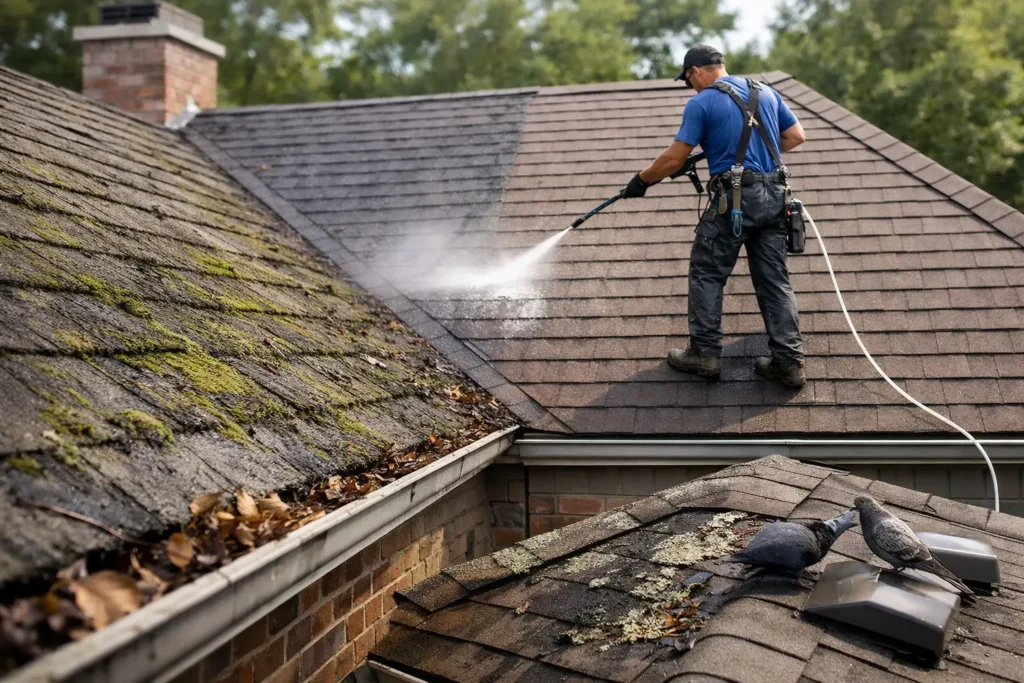
A roof does not need to be visibly falling apart to need attention. A green patch spreading across tiles, dark streaks beneath a ridge, or gutters filling faster than usual can all point to a build-up that is affecting more than kerb appeal. Knowing the top signs your roof needs cleaning helps you deal with organic growth before it creates avoidable maintenance work.
For homeowners, landlords and site managers, the right response is rarely to climb up with a brush or pressure washer. Roofs are steep, fragile in places and difficult to inspect safely. A professional assessment can establish whether cleaning is appropriate, which method suits the roof covering, and whether an underlying repair needs attention first.
1. Moss is spreading across the tiles
Moss is one of the clearest signs a roof needs cleaning. It often begins in shaded areas, around chimney stacks, beneath overhanging trees or on north-facing roof slopes where the surface stays damp for longer. Left alone, small clumps can join together and retain even more moisture against the roof.
Moss does not automatically mean a roof is leaking or structurally unsound. Many older roofs in Buckinghamshire develop some growth over time. The concern is what happens as it thickens. Moss can lift slightly at tile edges, work into gaps and shed into gutters and downpipes, where it contributes to blockages.
The best timing depends on the roof’s condition. If tiles are cracked, loose or nearing the end of their life, repairs should come before cleaning. Removing growth from damaged tiles without addressing the cause will not solve the bigger issue.
2. Dark streaks or green staining are becoming more obvious
Black, grey or green marks are often algae, lichen or a mixture of organic growth and surface dirt. On a light-coloured roof, the change can be particularly noticeable from the road. On darker tiles, staining may be easier to miss until it becomes widespread.
Algae tends to create flat, dark streaks rather than the raised cushions associated with moss. Lichen can look crusty, pale green, white or yellow, and it can cling firmly to tile surfaces. Each needs a considered approach. Aggressive cleaning may damage tile coatings, disturb pointing or force water where it should not go.
A soft-wash treatment is often the safer option for suitable roofs. It is designed to treat organic growth at a controlled pressure, rather than blasting the roof surface. Results can continue to improve after treatment as remaining growth naturally breaks down and weathering clears it away.
3. Your gutters are blocking more often
A blocked gutter is not always a roof-cleaning problem. Leaves, twigs and windblown debris can build up even on an otherwise clean roof. But when gutter clearing repeatedly reveals moss, grit and fragments of lichen, it is worth looking higher up.
Moss absorbs water and becomes heavy. During rainfall, pieces can loosen and travel into gutters, collect around outlets and obstruct downpipes. Water may then overflow onto fascias, brickwork, paths or entrances. Over time, this can lead to damp patches, staining and unnecessary wear to exterior finishes.
If a roof has visible moss and the gutters need clearing more frequently than normal, arranging both services together is sensible. A clear gutter system works best when the roof above is no longer continually feeding it debris.
4. Water is running over the gutter edge
Water pouring over the front or back of a gutter in heavy rain deserves prompt attention. The cause could be a blockage, an incorrectly positioned gutter, a failed joint or an issue with the roof’s drainage. It should not be assumed that cleaning alone will fix it.
However, a build-up of roof debris is a common contributor. Look for water marks below the gutter line, green staining on fascias, wet patches near doorways or soil being washed away beneath downpipes. On commercial premises, overflowing gutters can also create slip risks around entrances and affect the appearance of the building.
A professional exterior clean can include checking visible gutter flow and removing accessible debris using high-reach equipment. If the inspection suggests a damaged fitting or a roofing fault, that can be identified rather than covered up.
5. Tiles look dull, patchy or uneven from ground level
Roofs weather naturally, so a slightly varied finish is not necessarily a problem. Clay, concrete and slate age differently, and a roof exposed to trees or shade will usually discolour faster than one in full sun. What matters is a clear change in appearance.
When one section becomes much darker, greener or more textured than the rest, moisture and organic growth are often involved. This is especially common on extensions, garages, conservatories and low-pitched roofs where fallen leaves can sit undisturbed.
Do not rely on a close-up inspection from a ladder. Apart from the safety risk, walking on a roof can crack tiles or dislodge components. Clear photographs from a safe position, combined with a professional inspection where needed, provide a much more reliable view.
6. There are overhanging trees or persistent shade
A roof beneath trees does not inevitably need cleaning every year, but it normally needs closer monitoring. Branches drop leaves, seeds and small twigs, while shade slows drying after rain. That creates the damp conditions moss and algae prefer.
Autumn can be particularly demanding, yet debris is not only a seasonal issue. Pine needles, blossom and bird activity can create a steady build-up at different times of year. Properties near mature trees may benefit from a regular roof and gutter maintenance plan rather than waiting for a visible blockage.
There is a practical balance here. Tree pruning may reduce leaf fall and shade, but it should be carried out properly and with consideration for nesting birds, boundaries and the health of the tree. Cleaning remains useful even where tree cover cannot or should not be changed.
7. Moss is appearing around roof details
Pay attention to valleys, roof windows, chimney bases, solar panel edges and junctions between different roof levels. These areas catch debris and often dry more slowly than open tile runs. Moss collecting in a valley can interfere with the route rainwater takes off the roof, particularly during prolonged downpours.
Growth around flashing or mortar should not be scraped away carelessly. These are critical details that help keep water out. If mortar looks loose, flashing has lifted or a valley appears damaged, the roof may require repair work as well as cleaning.
A dependable contractor should be clear about that distinction. Cleaning improves the condition and appearance of suitable roof surfaces, but it is not a substitute for replacing broken tiles, repairing leadwork or correcting drainage faults.
8. You are preparing to let, sell or maintain the property
A roof covered in moss or streaks can make an otherwise well-kept property look neglected. For landlords, it may also raise questions from tenants about gutter overflows and exterior upkeep. For commercial sites, a clean roofline, clear gutters and tidy fascias help support the professional standard visitors expect.
This does not mean every roof should be cleaned purely for appearance. Very old, delicate or heavily damaged roof coverings may need specialist roofing advice first. But where the structure is sound, careful cleaning can make a noticeable difference without the cost and disruption of larger works.
What a safe roof clean should involve
The right method depends on the roof material, pitch, condition and extent of growth. Pressure washing is not a one-size-fits-all answer. On many tiled roofs, high pressure can strip surface protection, dislodge tiles and drive water beneath overlaps. It can also leave a clean-looking surface that quickly regrows if the organic source has not been treated.
A professional service should assess access, use safe working methods and explain the proposed approach before starting. This may involve manual moss removal where appropriate, controlled soft washing for algae and lichen, and gutter clearing afterwards to remove loosened debris. Surrounding areas such as patios, plants, windows and drainage should also be considered.
Spotless Cleans provides safety-focused roof cleaning and moss removal for suitable properties in Aylesbury and across Buckinghamshire, using methods chosen to protect the roof as well as improve its appearance. Fully insured, professional work offers reassurance when the job involves working at height and around vulnerable roof materials.
If moss, staining or repeated gutter blockages have become part of your property’s routine, act before the next spell of wet weather turns a manageable clean into a more complicated maintenance issue.