
A solar panel cleaning review should answer one practical question: will cleaning make a worthwhile difference to your system? For many homes and commercial properties, the answer is yes, but not because panels need constant attention. It comes down to the type of dirt on the panels, how accessible they are and whether they can be cleaned safely without leaving residue or risking damage.
Solar panels are designed to sit outside in all weathers, but rain does not always remove grime. Dust, pollen, bird mess, traffic film, leaves and airborne debris can settle on the glass, particularly around the lower edge of each panel. Over time, this can create shaded areas that reduce the amount of light reaching the cells.
Solar Panel Cleaning Review: What Professional Cleaning Delivers
A good professional clean is not simply a quick rinse from a ladder. The aim is to remove surface contamination while protecting the panel glass, frames, roof and electrical equipment. The result should be clean panels with no detergent film, hard-water spotting or scratches.
For properties in and around Aylesbury, the most common causes of build-up are seasonal pollen, dust from roads or building work, bird droppings and moss or leaf debris from nearby trees. A panel array close to farmland, a busy road or overhanging branches will usually need more attention than panels on an open, unobstructed roof.
The visible difference can be immediate. Panels often look brighter once dirt and mineral marks have been removed, and owners may see improved generation where contamination had been blocking light. The size of any improvement varies. A light layer of ordinary dust may have little noticeable effect, while bird mess, thick grime or partial shading can have a more meaningful impact.
That is why honest solar panel cleaning reviews should avoid promising a fixed percentage increase in output. Every roof, system and season is different. Cleaning is sensible preventative maintenance, not a substitute for checking a fault, damaged panel, failing inverter or serious shading issue.
The right equipment matters
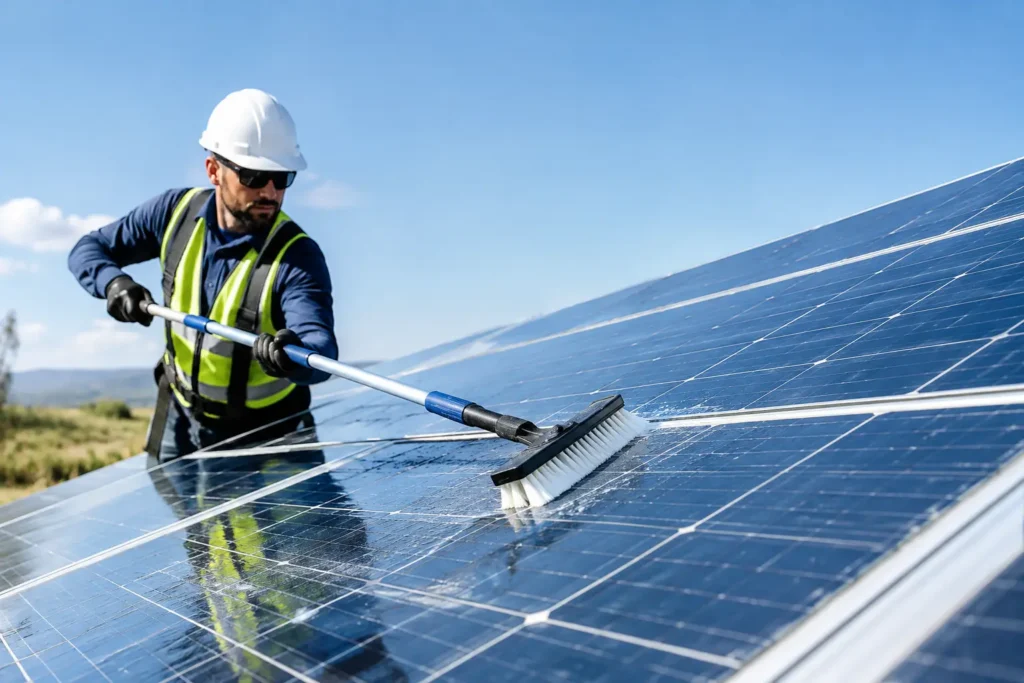
Pure-water cleaning systems are well suited to solar panels. Filtered water is applied through a soft brush on a water-fed pole, lifting dirt before rinsing clean. Because the water has had minerals removed, it dries without the chalky spotting that untreated tap water can leave behind.
This method allows the technician to work from ground level in many cases, reducing the need to walk on a roof. It is a safer approach for the person carrying out the work and helps avoid unnecessary pressure on tiles, slates, gutters and the panels themselves.
A professional should use soft equipment only. Abrasive pads, harsh chemicals, pressure washers and household glass cleaners can cause problems. Pressure can disturb seals or force water into areas it should not reach, while some products can leave a film that attracts more dirt. If a cleaner proposes either method as standard, it is reasonable to ask why.
When Is Solar Panel Cleaning Worth Booking?
The most useful trigger is what you can see. If the panels have obvious bird droppings, grime streaks, fallen leaves or a dull film that has survived several periods of rain, a clean is worth considering. Generation figures can also provide a clue. If output is lower than expected for the same time of year and weather conditions, cleaning may help, although system performance should be checked before assuming dirt is the sole cause.
A visual inspection from the ground is often enough to identify a problem. There is no need to climb onto the roof to investigate. In fact, homeowners should avoid doing so. Roof access brings obvious fall risks, and stepping in the wrong place can crack tiles, damage flashing or put weight on panels and their fixings.
For most properties, an annual clean is a sensible starting point. Some sites benefit from a six-monthly visit, particularly where birds regularly perch above the array or where there are nearby trees, fields, construction works or heavy traffic. Conversely, a clear roof in an exposed location may stay clean for longer.
Commercial properties can benefit from a planned maintenance schedule. Larger arrays are more difficult to inspect from the ground, and presentation matters where panels are visible from a customer entrance, school grounds or office car park. Regular visits also make it easier to spot accumulated debris around the roofline before it becomes a bigger maintenance job.
What a Reliable Solar Panel Cleaning Service Should Include
Before work begins, the cleaner should assess access, the roof condition and any obvious hazards. They should be clear about whether the job can be completed safely from the ground or whether specialist access equipment is needed. The cheapest quote is not always the best value if it relies on unsafe shortcuts.
Look for a fully insured provider that uses appropriate high-reach equipment and can explain their cleaning method in plain language. For homeowners, it also helps to know that the person working around the property is dependable and respectful. DBS checks, clear communication and agreed arrival times provide reassurance, especially where access is through a garden or side gate.
A proper visit should focus on the panels and their immediate surroundings. Loose leaves and debris near the array may be removed where safe to do so, but roof repairs, electrical testing and fault diagnosis are separate services. A trustworthy cleaner will say when a concern needs an electrician, solar installer or roofer rather than trying to solve every issue with a brush.
It is also sensible to ask whether frames are cleaned as part of the service and whether the quote covers the full array. A clear price avoids uncertainty on the day, particularly for larger roofs or multiple panel groups.
Questions worth asking before you book
Ask how the panels will be reached, what water and tools will be used, and whether the provider is insured for the work. You can also ask whether they need access to an outdoor tap, though professional pure-water systems often arrive with their own water supply.
If your panels are still under a manufacturer or installer warranty, check the care guidance first. Most systems can be cleaned safely with the right approach, but following the specific recommendations for your equipment is always sensible.
The Trade-Off: Cleaning Cost Versus Likely Benefit
Solar panel cleaning should make practical sense, not become another unnecessary household expense. The case is strongest when contamination is visible, output appears affected, access is difficult or you want the reassurance of safe routine maintenance. It is less urgent when the panels are clean, generation is normal and the roof presents no obvious debris issue.
There is also value beyond electricity output. Regular external care gives you a reason to look at the condition of the roofline, gutters and nearby trees. Blocked gutters, moss growth and overhanging branches can all create separate problems if left unattended. Combining suitable exterior cleaning jobs can be more convenient than arranging several different visits.
Spotless Cleans uses safety-focused, pure-water methods to clean reachable solar panels without unnecessary roof access. The approach is straightforward: assess the property, use suitable equipment and leave the glass clean and residue-free.
Clean panels are not about chasing perfection after every shower of rain. They are about dealing with the build-up that rain cannot shift, using a method that respects both your solar system and your roof. If the panels look neglected or their output has raised questions, a professional assessment is a sensible next step.