
Roof Moss Removal Before After Results Explained
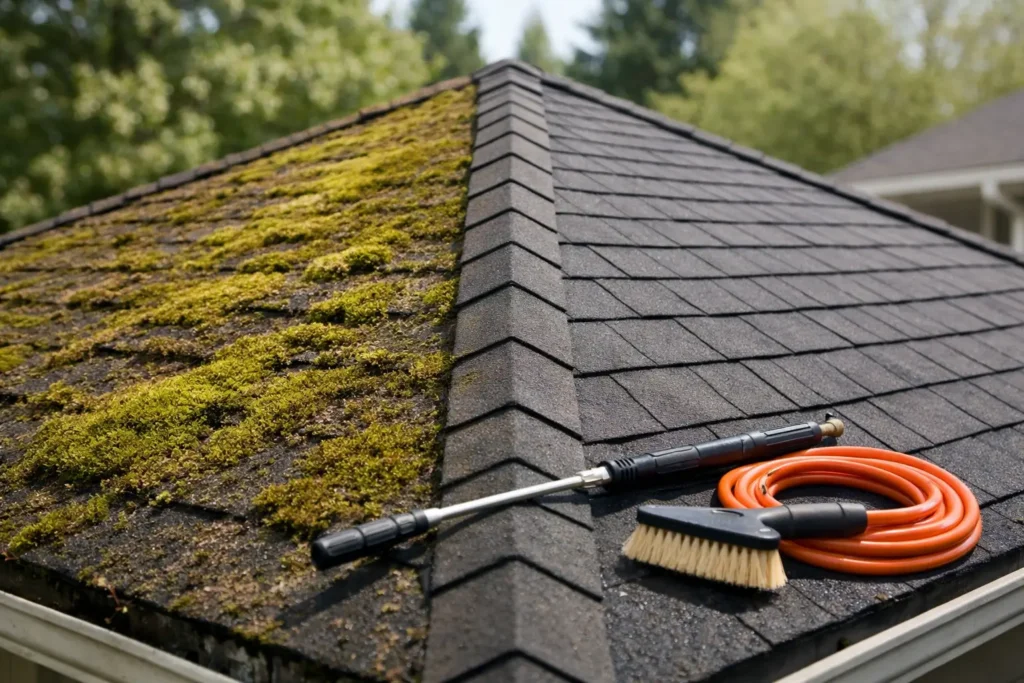
A roof can look older than it is once moss takes hold. When people search for roof moss removal before after results, they usually want to know two things: will the roof genuinely look better, and can the work be done without damaging the tiles? Both depend on the roof’s condition, the cleaning method and whether the job includes proper treatment after the visible moss has been removed.
For homeowners, landlords and site managers, moss removal is not simply a cosmetic job. Thick growth holds moisture against the roof surface, sheds into gutters and can leave a property looking uncared for. A professional approach should improve the appearance of the roof while protecting tiles, pointing, gutters and surrounding areas.
Roof moss removal before after: what should change?
The most obvious before-and-after change is the removal of thick green moss, loose clumps and debris gathered between tiles. Roof lines look cleaner and more defined, while ridges, valleys and lower edges are no longer hidden beneath growth. Gutters also benefit, as there is less moss waiting to wash down and cause blockages.
The result is not always an instantly uniform, brand-new-looking roof. This is worth understanding before booking any work. Moss can be removed on the day, but darker staining, lichen marks and ingrained organic residue may take longer to fade after a biocidal treatment. Rain and normal weathering help the treatment continue working over the following weeks and months.
A trustworthy before-and-after result shows a cleaner roof, not an unnaturally stripped one. Older tiles may still show age, colour variation or historic staining. That is normal. The aim is to remove damaging organic growth and restore a well-maintained appearance without being overly aggressive with the roof covering.
Why moss needs attention
Moss thrives where roofs stay damp or shaded, especially beneath overhanging trees and on north-facing slopes. It absorbs water like a sponge and can remain wet long after rain has stopped. Over time, this moisture can encourage surface deterioration and create problems around tile laps, valleys and gutters.
As moss grows, small pieces break away and collect in guttering. A blocked gutter can then overflow onto fascias, walls and paths, creating a separate maintenance issue. On commercial buildings, debris can also affect drainage routes and make exterior upkeep more difficult.
Not every dark patch is moss, and not every roof needs immediate cleaning. Light discolouration may be harmless for the time being. However, visible clumps of moss, blocked gutters or repeated debris build-up are clear signs that it is sensible to arrange an inspection.
The safest route to a cleaner roof
The right method depends on the roof material, pitch, age and overall condition. A careful contractor should inspect these factors before deciding how to proceed. Brittle tiles, loose ridge sections, damaged flashing or fragile older roofs need a more cautious approach than a sound, modern tiled roof.
For many properties, the preferred process is manual moss removal followed by a suitable soft-wash or biocide treatment. Moss is carefully scraped or brushed away using equipment designed for roof work, then collected rather than left to enter the gutters. The treatment deals with remaining spores and organic growth that cannot be removed by hand alone.
High-pressure washing is not the default answer. Used incorrectly, it can dislodge tiles, force water beneath the roof covering, remove protective surface finishes and create a large amount of mess around the property. There are cases where controlled washing may be appropriate, but it should only be considered after a proper assessment and with the correct equipment.
Safe access matters just as much as the cleaning method. Working on a roof carries obvious risks, and walking across tiles unnecessarily can cause damage. Professional roof cleaners plan access carefully, use suitable safety equipment and work with care around conservatories, solar panels, gardens and neighbouring properties.
What happens during a professional moss removal visit?
A well-organised visit begins with a visual survey. The cleaner checks the tile type, growth level, gutter condition and access requirements. Any visible damage should be noted before work starts, so there is a clear record of the roof’s condition.
Moss is then removed gradually, usually from the upper roof areas downwards. Loose material is bagged or gathered for disposal rather than pushed into downpipes. Guttering is cleared afterwards, because even a careful removal process can release fine debris.
Once the roof is clear of the bulk of the moss, a treatment can be applied to address remaining biological growth. The roof should then be left to weather naturally. This avoids unnecessary force on the tiles and gives the treatment time to do its job.
At Spotless Cleans, roof and exterior cleaning work is approached with the same priorities as window and gutter cleaning: safe methods, suitable equipment and clear communication about what the property needs. Before-and-after photographs can be particularly useful where customers cannot safely see the full roof from ground level.
How long do before-and-after results last?
There is no fixed timetable because moss returns according to the environment around the property. A sunny, open roof may stay clear for several years, while a shaded roof under mature trees can develop fresh growth much sooner. Nearby vegetation, local weather, roof material and drainage all make a difference.
The treatment stage is what helps extend the result. Removing only the visible moss can make a roof look better straight away, but spores left behind may allow growth to reappear quickly. A suitable biocidal treatment reduces that risk and is one reason professional work often delivers a longer-lasting finish.
Regular gutter clearing also helps. When gutters overflow or hold damp debris, the lower roof edge stays wetter for longer. Combining moss removal with gutter maintenance is a practical way to protect the overall result and reduce preventable drainage problems.
Before booking, check what is included
Quotes for roof cleaning can vary widely because the scope of work varies. A lower price may cover only a quick scrape, while a more complete service includes moss collection, gutter clearance, treatment and careful clean-up around the building. It is sensible to ask how debris will be managed and whether gutters and downpipes are included.
You should also check that the contractor is fully insured and willing to explain their method in plain language. Be cautious of anyone promising to make an ageing roof look completely new in a single visit, or proposing high-pressure cleaning without inspecting the tiles first.
Good roof moss removal is measured by more than a dramatic photograph. The best after-result is a cleaner roof, clear gutters and the reassurance that the work has been carried out carefully. If your roof is showing visible moss or your gutters are regularly filling with green debris, arranging a professional assessment now can be far easier than dealing with a blocked drainage system or neglected roof later.