
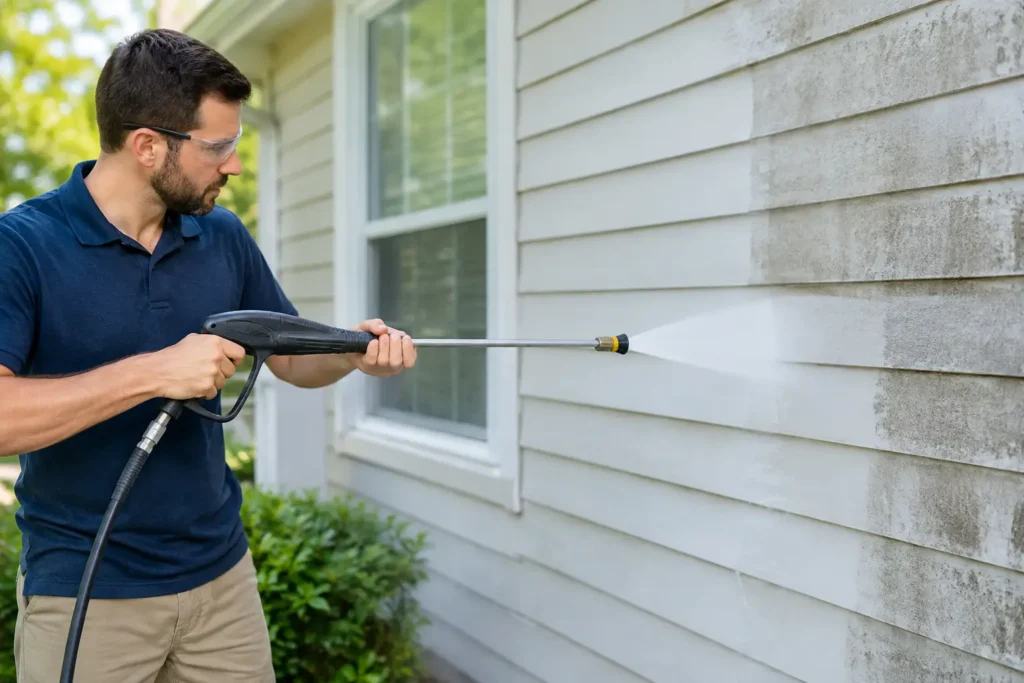
A blackened patio or algae-covered path can make an otherwise well-kept property look neglected. Pressure washing is often the fastest way to remove years of surface grime, but more force is not always better. Used carefully, it can restore hard surfaces safely. Used on the wrong material, at the wrong setting, it can leave permanent marks, loosen joints and force water where it should not go.
For homeowners, landlords and commercial property managers, the best result comes from matching the cleaning method to the surface and the cause of the staining. That means looking beyond how clean it appears on the day and considering how to protect the property for the months ahead.
What Pressure Washing Is Best For
Pressure washing uses a concentrated flow of water to lift dirt, algae, moss, traffic film and loose surface deposits. It is particularly effective on durable exterior materials that can tolerate mechanical cleaning, such as concrete paths, block paving, suitable paving slabs, brickwork and some rendered walls.
It is useful where build-up creates a practical problem as well as an appearance issue. Algae on a shaded path can become slippery after rain. Grime around a shopfront can undermine a professional first impression. A clean, well-maintained entrance also makes it easier to spot cracks, failed pointing and drainage problems before they worsen.
The visible improvement can be dramatic, especially on patios and driveways that have not been cleaned for several years. However, a clean surface should not be confused with a repaired one. Pressure washing will remove dirt that hides defects, but it cannot fix loose blocks, damaged pointing, crumbling concrete or poor drainage.
Why Surface Type Matters
Every exterior surface has a different tolerance for water pressure, heat and abrasion. Before cleaning begins, a professional should inspect the material, its condition and the surrounding areas.
Concrete is generally hard-wearing, but older or poor-quality concrete may have a weak top layer. Aggressive cleaning can expose aggregate and leave a patchy, rough finish. Block paving often responds well to controlled washing, although jointing sand can be displaced and may need replacing once the area is fully dry.
Natural stone needs more care. Sandstone, limestone and similar porous materials can be softer than they look. High pressure may create visible lines, damage the face of the stone or leave it more open to future staining. In these cases, a gentler treatment and appropriate cleaning solution may be safer than trying to blast away every mark.
Brickwork also deserves a measured approach. Sound bricks can often be cleaned successfully, but damaged mortar, flaking faces and older walls are warning signs. Water pushed into weak joints can contribute to damp issues, particularly where walls already have defects.
The Difference Between Cleaning and Damage
A pressure washer can be deceptively powerful. The nozzle setting, distance from the surface and angle of the spray all change the result. Holding a narrow jet too close to paving may cut a clean-looking stripe into it, while uneven passes can leave obvious swirls or tiger-striping once the area dries.
The risk is not limited to the surface itself. Water can be driven under door thresholds, into air vents, behind cladding, beneath loose paving and into damaged window seals. Nearby plants, painted finishes, electrical fittings and delicate render also need protecting before work starts.
This is why the quickest-looking approach is not always the most cost-effective one. A lower-pressure clean with the correct detergent can take more preparation, but it may produce a more even finish and reduce the risk of costly remedial work. It depends on the surface, the extent of the contamination and whether there are existing faults.
When Soft Washing Is the Better Choice
Not every exterior cleaning job should involve high pressure. Soft washing combines low-pressure application with a suitable treatment to break down organic growth such as algae, moss, lichen and mould. It is often the safer option for rendered walls, painted surfaces, conservatory roofs, fascias, soffits and more delicate stone.
Soft washing is particularly useful when the staining is biological rather than simply muddy. Pressure can remove the visible green layer, but spores may remain in pores and crevices. A properly applied treatment helps address the underlying growth, which can keep surfaces cleaner for longer.
Care is still required. Cleaning products must be selected for the material, applied at the right dilution and managed responsibly around planting, ponds and drains. A professional service should take time to protect surrounding areas, control runoff and rinse where needed.
Preparing a Patio, Driveway or Path
Good preparation makes pressure washing safer and more effective. Loose furniture, pots, doormats and vehicles should be moved away from the work area. Windows and doors should be closed, and any vulnerable items nearby should be covered or protected.
It is also worth checking drainage before work starts. A build-up of leaves, silt or moss around gullies can prevent dirty water from clearing properly. If the area repeatedly pools after rain, cleaning alone will not solve the issue. The drainage may need attention first.
For block paving, it is sensible to plan for re-sanding after cleaning. Once the surface has dried thoroughly, kiln-dried jointing sand can be brushed into the joints to help stabilise the blocks and reduce movement. Sealing may be appropriate in some cases, but only after the paving is clean, dry and in sound condition. A sealant applied too soon can trap moisture or highlight uneven areas.
Professional Pressure Washing for Commercial Sites
Commercial premises have additional considerations. Retail entrances, office paths, school grounds and industrial units need to remain safe and presentable without disrupting staff, visitors or customers. Work may need to be scheduled outside trading hours or planned in sections so access remains available.
A reliable contractor will consider pedestrian routes, slip risks, signage, water management and the presence of parked vehicles or delivery areas. For larger sites, regular maintenance is often more practical than waiting until surfaces become heavily stained. Lighter, planned cleans can help preserve appearance and reduce the chance of slippery organic growth becoming a recurring problem.
For landlords and managing agents, this approach also creates a clearer record of upkeep. Regular exterior cleaning can sit alongside gutter clearing, window cleaning and roof moss management as part of sensible property maintenance rather than a last-minute response to complaints.
How Often Should Exterior Surfaces Be Cleaned?
There is no fixed timetable for every property. Shaded gardens, north-facing paths, mature trees and nearby traffic can all cause grime to return more quickly. A patio in full sun may stay cleaner for much longer than a damp walkway beneath overhanging branches.
For many homes, an annual inspection and clean when needed is enough. High-use areas, communal walkways and commercial entrances may benefit from more frequent attention. The aim is not to wash surfaces unnecessarily, but to deal with build-up before it becomes slippery, deeply embedded or difficult to remove safely.
After cleaning, simple habits make a difference. Sweep away leaves, keep drainage channels clear, trim back vegetation that prevents surfaces from drying and deal with small moss patches before they spread. These steps help preserve the result without relying on repeated heavy cleaning.
Choosing a Pressure Washing Service
Ask how the contractor will assess the surface before starting, not simply what machine they use. The right equipment matters, but judgement matters more. A good service should explain whether pressure washing, soft washing or a combination of methods is suitable, and be clear about any limits to what cleaning can achieve.
Look for appropriate insurance, safe working practices and a willingness to protect your property. For work around entrances, glazing, drains and landscaped areas, careful preparation is part of the service, not an optional extra. Clear pricing and a straightforward explanation of the work also make it easier to compare quotes fairly.
For properties in Aylesbury and across Buckinghamshire, Spotless Cleans takes this practical approach: assess the surface, use the safest effective method and leave the area looking properly cared for. A well-cleaned path or patio should do more than look brighter. It should make the property safer, easier to maintain and ready to welcome people in.