
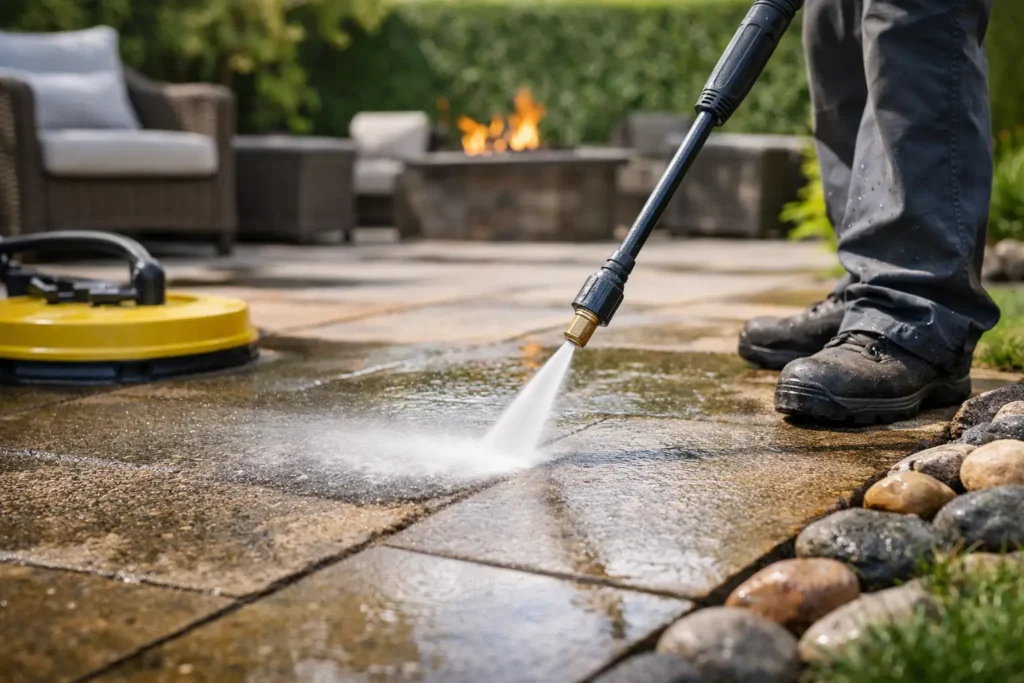
A patio can look tired long before the paving itself has reached the end of its life. Green algae in shaded corners, black spotting on slabs and slippery moss around steps all build up gradually. Professional patio cleaning removes that unwanted growth and ground-in dirt, giving the space a cleaner finish while making it safer to use.
For homes, rental properties and commercial premises, it is not simply a matter of appearance. A neglected patio can become hazardous in wet weather, encourage weeds to take hold in joints and make an otherwise well-kept property look uncared for. The right cleaning method depends on the surface, its condition and what is growing on it.
Why patios become slippery and stained
Patios in Buckinghamshire have to cope with a fair share of rain, frost, leaf fall and damp weather. North-facing areas and spaces beneath trees often stay wet for longer, creating the ideal conditions for algae, moss and lichen. These organisms hold moisture against the paving and can leave surfaces slick, particularly on smooth slabs, porcelain tiles and steps.
Dirt also settles into the texture of concrete, sandstone and block paving. Over time, barbecue grease, soil from pots, fallen leaves and general foot traffic can create uneven staining that a quick sweep will not shift. Black lichen spots are especially stubborn. They attach firmly to the surface and usually need appropriate treatment as well as careful cleaning.
Weeds are a separate but related issue. They tend to grow in sand-filled joints rather than through the paving itself. Once established, their roots can displace loose jointing material and make the patio look untidy. Cleaning can remove surface growth, but lasting results often rely on addressing the joints afterwards.
Patio cleaning is not one method for every surface
It can be tempting to hire a pressure washer and use the strongest setting across the whole patio. That may work on some durable concrete paving, but it can also cause avoidable damage. High pressure used too closely can etch soft stone, loosen pointing, strip jointing sand from block paving and force water beneath slabs.
Natural stone needs particular care. Sandstone, limestone and older paving can be more porous than it looks. Aggressive cleaning may leave visible lines, rough patches or a patchy colour once dry. Porcelain is generally hard-wearing, yet its grout lines and surrounding areas still need sensible pressure and controlled rinsing.
A professional assessment should consider the paving material, age, drainage, joint condition and level of biological growth. In many cases, a suitable cleaning treatment does much of the work before rinsing begins. This allows the surface to be cleaned more gently and reduces the need for excessive pressure.
What a professional patio clean should include
A proper job starts with preparation, not the washer. Loose furniture, pots and removable items should be moved where possible, while nearby walls, doors, drains and planting are considered before treatment is applied. The patio is then cleared of loose debris so the cleaner can see the full condition of the surface.
Moss, algae and lichen may be treated with an appropriate exterior cleaning solution. The product and dilution must suit the surface and be handled responsibly, especially where pets, children, lawns and flower beds are nearby. The aim is to break down organic growth without damaging paving or surrounding areas.
Once the treatment has had time to work, controlled washing lifts dirt and residue away. This is where equipment and experience make a real difference. The cleaner needs enough power to remove contamination, but enough control to protect the patio. Edges, steps, drains and fragile joints are usually approached more carefully than open areas.
After cleaning, the surface should be checked once it has started to dry. Some stains may need further treatment, while loose debris should be cleared from drainage channels. If block paving has lost significant jointing sand, re-sanding may be advisable once the area is fully dry. This helps keep blocks stable and makes it harder for weeds to return quickly.
When pressure washing is useful – and when it is not
Pressure washing can deliver a dramatic improvement on concrete slabs, block paving and heavily soiled hard surfaces. It is effective at removing loose moss, surface grime and embedded dirt, particularly where there is good drainage and sound jointing.
However, pressure alone is not always the answer. It does not reliably kill every trace of algae or lichen, which means green growth may return sooner than expected. It can also spread dirty water onto walls, fencing, windows and doors if the work is rushed.
For delicate stone, areas with weak pointing or patios close to planted borders, a lower-pressure approach and suitable cleaning treatment may be the better choice. There is a trade-off: a gentler process can take more time, but it avoids turning a cleaning job into a repair job.
Keeping the patio cleaner for longer
No exterior surface stays spotless forever, especially through autumn and winter. Regular light maintenance is the most practical way to extend the results of a deep clean. Sweep leaves before they become wet compost, keep gutters and downpipes working properly, and avoid allowing soil or mulch to wash across paving during heavy rain.
Pay attention to shade and drainage. If one corner is always green, overhanging branches may be limiting sunlight, or water may be collecting there after rainfall. Improving drainage or reducing overgrowth can make a meaningful difference to how quickly algae returns.
Move pots occasionally too. They trap moisture underneath and often leave dark rings or concentrated moss growth. Using pot feet allows air to circulate and makes cleaning easier around them.
For many properties, an annual professional clean is enough to restore the patio after winter. Heavily shaded gardens, communal areas, schools, retail entrances and commercial premises may benefit from more regular maintenance. The best schedule is based on how the area is used, how quickly growth returns and the standard the property needs to maintain.
Safety matters around outdoor cleaning
Wet paving is slippery even before cleaning starts. A responsible contractor will manage hoses carefully, keep walkways clear where possible and avoid creating a hazard for residents, customers or passers-by. On commercial sites, timing the work around opening hours or lower footfall can reduce disruption.
Cleaning products also need proper handling. They should not be allowed to run unchecked into ponds, water features or sensitive planted areas. Good preparation, correct application and thorough rinsing are part of a professional standard, not optional extras.
If the patio sits beside conservatory glass, rendered walls, timber decking or a lawn, the surrounding materials need protecting too. Exterior cleaning is rarely just about one surface. The best results come from treating the whole area with care.
Choosing a patio cleaning service
Price matters, but it should not be the only consideration. Ask how the contractor will clean your particular paving, whether they are insured and what they will do to protect nearby surfaces. A clear explanation is a good sign. If someone promises to blast every patio clean in minutes without asking what it is made from, proceed carefully.
For landlords and property managers, reliability matters just as much as the initial finish. A scheduled service, clear communication and a team that can work safely around tenants, visitors or staff can save time and prevent repeated call-outs. Spotless Cleans provides practical exterior cleaning with a focus on safe methods, dependable service and visible results.
A clean patio makes the garden, entrance or shared outdoor area more inviting straight away. More importantly, dealing with moss, algae and drainage-related dirt early gives you a safer surface to use when the weather turns wet.