
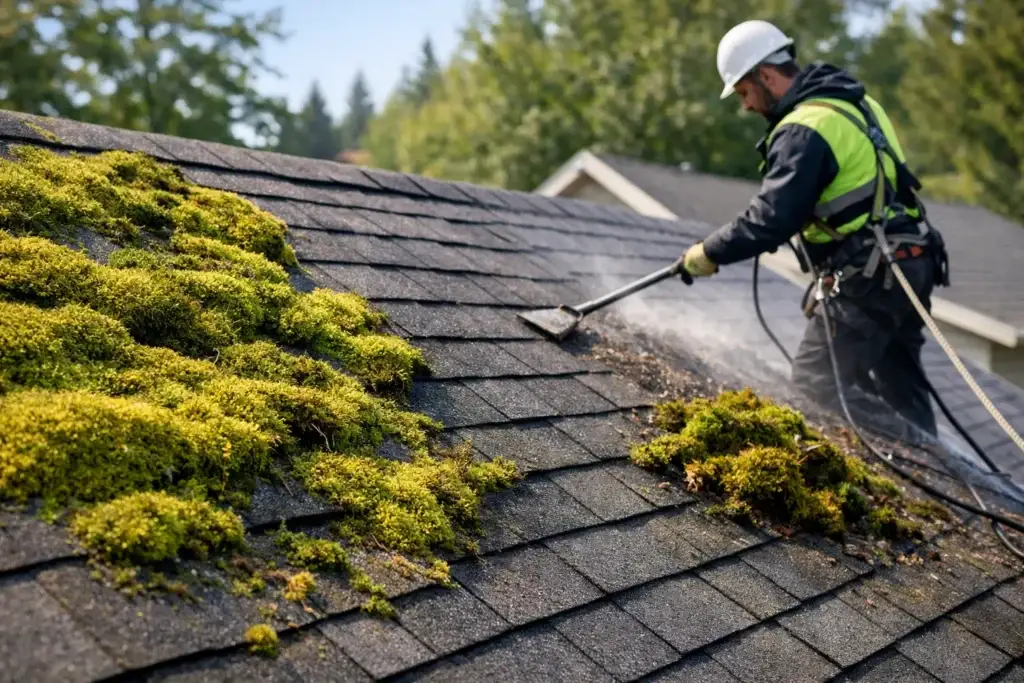
You usually notice roof moss when it has already gone past being a small cosmetic issue. It starts as a bit of green shading on the tiles, then turns into thicker clumps, blocked gutters and damp debris washing down onto patios and paths. So, is roof moss removal worth it? In many cases, yes – but the real answer depends on how much moss is there, what type of roof you have, and whether you deal with it early or leave it until repairs are needed.
When roof moss is more than just an eyesore
A little discolouration on a roof is not the same as heavy moss growth. Moss holds moisture, and that matters because roofs are meant to shed water, not retain it. When moss thickens, it can sit between tiles, lift edges slightly and slow down drainage. Over time, that trapped moisture can put extra strain on the roof surface, especially during colder weather when freeze-thaw cycles come into play.
That does not mean every patch of moss is causing immediate damage. Some roofs carry light moss for years without obvious problems. The issue is that moss rarely stays light if the conditions suit it. Shade, overhanging trees, damp weather and north-facing roof slopes all help it spread. What starts as a cosmetic issue can quietly become a maintenance problem.
For homeowners and landlords, the value of removal is often in prevention. Paying for moss treatment or removal is usually a lot more manageable than paying for roof repairs, internal damp investigations or repeated gutter clearing caused by moss fallout.
Is roof moss removal worth it for every property?
Not automatically. If the growth is very light, the roof is draining properly and there is no sign of blocked gutters, slipped tiles or damp trouble, a full removal may not be urgent. Monitoring the roof and keeping gutters clear could be enough in the short term.
Where it becomes worth it is when moss is clearly established. If you can see thick clumps from the ground, if bits regularly fall into the gutters, or if rainwater is not flowing away properly, the balance shifts. At that stage, removal is less about appearance and more about protecting the roof system as a whole.
Commercial properties and managed sites often have an added reason to act sooner. Moss dropping onto entrances, walkways and car parks can create mess and slip risks, and a neglected roof does not help the overall presentation of the building. For schools, offices, shops and rental properties, practical upkeep usually matters more than waiting to see if the problem gets worse.
What moss can actually do to a roof
There is sometimes confusion around this point. Moss does not usually bore through tiles or somehow eat a roof away. The problem is more indirect than that. It holds water against the surface, encourages debris build-up and can interfere with how the roof drains.
On tiled roofs, dense moss can work into gaps and edges. As it expands and contracts with moisture levels, it can help loosen the surface layer of some tiles, particularly older ones. It can also contribute to gutters and downpipes filling with broken moss, silt and small bits of roof debris. Once gutters start overflowing, water can run where it should not – down walls, behind fascias and around the base of the property.
That is why roof moss removal often has value beyond the roof itself. It can reduce strain on gutters, lower the chance of overflow and help the rest of the exterior stay in better condition.
The cost question: removal versus doing nothing
Most people asking if roof moss removal is worth it are really asking whether the cost is justified. That is fair. Not every maintenance job gives an obvious return the next day.
The best way to look at it is this: moss removal is rarely about boosting the roof beyond its original condition. It is about reducing avoidable wear, preventing blocked drainage and keeping small issues from becoming expensive ones. If a roof is already heavily affected, delaying action often means paying for repeated gutter clearance, more extensive cleaning and a greater chance of tile or water-related problems later.
There is also the practical value of appearance. A moss-covered roof can make an otherwise well-kept property look tired. For landlords preparing a tenancy, homeowners thinking about selling, or businesses wanting the site to look presentable, that visible improvement has real value even if it is not a structural emergency.
Why the method matters as much as the decision
If you are deciding whether roof moss removal is worth it, it is important to separate proper removal from rough treatment. The wrong approach can do more harm than the moss itself.
Aggressive pressure washing is the main concern. On the right surface, and in the right hands, controlled cleaning has its place. But many roofs, especially older tiled roofs, can be damaged by high pressure. It can strip protective finishes, dislodge tiles, force water into places it should not go and shorten the life of the roof rather than protect it.
A safer approach is usually manual moss removal followed by a suitable soft wash or biocide treatment where appropriate. That removes the bulk of the growth and helps deal with remaining spores, reducing how quickly the moss returns. It is slower and more careful, but that is often the point. Good roof cleaning should focus on preserving the roof, not just making it look instantly bright.
DIY or professional roof moss removal?
For most properties, professional removal is the safer option. Roof work carries obvious risks, and those risks go beyond falling. Walking on the roof can crack tiles, disturb ridges and create new problems that were not there before. Even ladder work around gutters and roof edges needs proper care.
A professional service should assess the roof type, the condition of the tiles, access requirements and the best cleaning method before starting. Insurance matters too. So does using the right equipment to reduce risk to the property and the people carrying out the work.
For householders, the biggest benefit is often peace of mind. You are not just paying for someone to scrape moss off. You are paying for a safer process, a method suited to the roof and a lower chance of accidental damage.
How long does roof moss removal last?
This is where the honest answer is: it depends. Moss can return, especially on shaded roofs or properties surrounded by trees. Removal is not a once-and-never-again fix.
That said, proper treatment can keep a roof clearer for a good period, particularly when it is paired with sensible maintenance. Keeping gutters clean, trimming back overhanging branches where possible and dealing with early regrowth before it becomes heavy all help. Some properties benefit from periodic maintenance rather than waiting for a full build-up every few years.
That is often the most cost-effective approach. A little planned upkeep usually works out better than repeated catch-up jobs on a neglected roof.
Signs it is worth booking sooner rather than later
If moss is sliding into the gutters, collecting at ground level after rain, or visibly sitting thick across sections of the roof, it is usually worth acting. The same applies if you have had overflowing gutters, staining on outside walls, or concerns about water not draining away cleanly.
Older roofs deserve extra caution. They may not need aggressive cleaning, but they do benefit from careful inspection and maintenance before minor wear turns into something more serious. In areas like Aylesbury and across Buckinghamshire, where periods of damp weather can encourage growth, roofs that are shaded for much of the day often need closer attention.
The real answer to is roof moss removal worth it
For a heavily affected roof, yes, roof moss removal is usually worth it. It helps protect tiles, supports proper drainage, reduces gutter problems and improves the look of the property at the same time. For very light moss, the answer may be not yet – but even then, keeping an eye on it is worthwhile.
The key is acting based on the roof’s actual condition, not guessing from the ground and not waiting until overflow, damp or visible damage forces the issue. A reliable contractor will tell you if the roof needs full removal now, lighter treatment later or simply monitoring for the time being. That kind of straight answer is what matters most.
If your roof is starting to look more green than grey, it is usually cheaper and simpler to deal with it while it is still a maintenance job, not a repair job.