
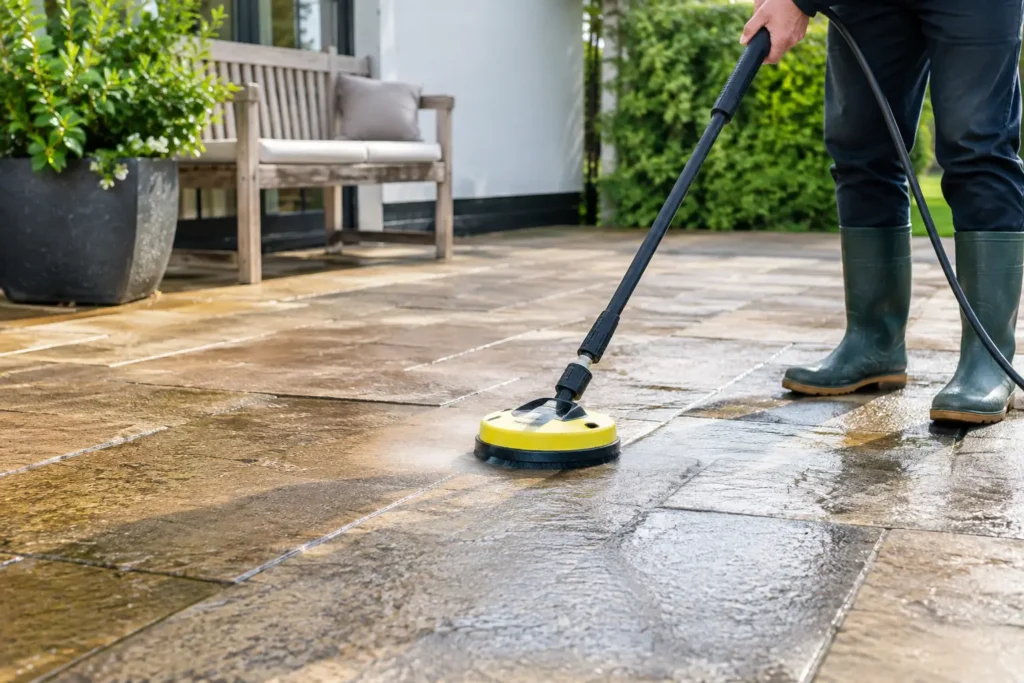
A patio can look tired long before the paving itself needs replacing. Green algae, black spots, mud and everyday grime build up slowly, particularly on shaded areas that stay damp after rain. Knowing how to wash patio slabs properly helps restore the appearance of your outdoor space without loosening joints, damaging the surface or sending dirty water where it should not go.
The right method depends on the type and condition of your paving. Concrete flags can usually handle more vigorous cleaning than sandstone, limestone or block paving. If you are unsure what your slabs are made from, start with the gentlest option and test a small, hidden area first.
Before you wash patio slabs, check the surface
Take a few minutes to inspect the patio before reaching for a pressure washer or cleaning product. Look for loose or cracked slabs, crumbling mortar, damaged pointing and areas where the jointing sand has already washed away. Strong water pressure can turn a minor issue into a repair job.
Clear pots, furniture, toys and loose debris from the area. Sweep thoroughly with a stiff outdoor broom, paying attention to leaves and soil caught in corners and joints. Removing dry debris first means the cleaning solution can reach the dirt beneath it, rather than creating a muddy mess.
It is also sensible to cover delicate plants nearby, especially if you plan to use a patio cleaner. Move potted plants where possible and avoid allowing cleaning chemicals to enter ponds, drains or watercourses. Read the product label carefully and only use it at the stated dilution.
What you need for a safe patio clean
For most patios, simple equipment and a little patience are enough. You will need:
- A stiff-bristled outdoor brush, not a wire brush
- A bucket and clean water
- A suitable patio cleaner or mild detergent
- Gloves and suitable footwear with good grip
- A garden hose or pressure washer, if appropriate for the paving
Avoid using household bleach, washing-up liquid or strong acid-based products as a quick fix. Bleach can harm nearby planting and may discolour some stone, while washing-up liquid can leave a slippery residue. Acid cleaners are particularly risky on calcareous stone such as limestone and can permanently etch the surface.
How to wash patio slabs by hand
Hand cleaning is slower than pressure washing, but it is often the safest choice for older paving, natural stone and patios with weak joints. It also gives you better control around edges, steps, drainage channels and planted borders.
Start by wetting the slabs with clean water. This prevents the surface from absorbing cleaning solution too quickly, especially if the paving is porous. Apply a patio cleaner that is suitable for your slab material, following the instructions on the container. Do not assume one product suits every surface.
Allow the cleaner to sit for the recommended time, but do not let it dry out. On a warm day, work in small sections so you can scrub and rinse before the product dries. Use a stiff brush to work the cleaner across the slabs, concentrating on the darkest areas and slippery green growth.
Rinse thoroughly with a hose once the dirt has lifted. Check that the water is draining away freely rather than pooling around the house or outbuildings. A second light scrub may be needed on heavily stained areas, but avoid repeatedly attacking one spot, particularly on softer stone.
For routine maintenance, a brush and clean water may be all that is needed. Regular sweeping and occasional gentle washing stop dirt becoming embedded, which reduces the need for stronger chemicals later.
Using a pressure washer on patio slabs
A pressure washer can produce excellent visible results, but it is not automatically the best answer for every patio. Used too close to the surface, it can leave striping, roughen the face of concrete slabs, remove jointing material and encourage faster regrowth of algae. High pressure can also expose aggregate in older concrete paving, leaving it permanently patchy.
If your slabs are sound and you choose to use a pressure washer, begin on a low setting. Hold the lance at an angle rather than pointing directly down into joints. Keep it moving in steady, overlapping passes and maintain a consistent distance from the surface. Starting around 30 centimetres away is a sensible approach, then adjust only if necessary.
A rotary patio-cleaner attachment is often a safer option than a narrow jet nozzle. It helps distribute pressure more evenly and contains much of the dirty spray. This is useful near windows, doors, painted fences and neighbours’ boundaries.
Do not pressure wash loose, cracked or flaking slabs. It is also wise to avoid high pressure on sandstone, limestone, clay pavers and newly laid paving unless the installer has confirmed it is suitable. These materials can be more vulnerable to surface damage or loss of jointing.
Removing algae, moss and black spots
Green algae and moss thrive where patios receive little sun, such as beside fences, under trees or on north-facing sides of a property. They can make slabs dangerously slippery, so treat them as a safety issue as well as a cosmetic one.
For light green growth, brushing with a suitable cleaner is usually effective. Moss should be scraped or brushed away after treatment, then collected rather than washed into a drain. Once clear, look at why the area remains damp. Overhanging vegetation, blocked gutters, poor drainage and a build-up of leaves can all keep a patio wet for longer than it should be.
Black spots are different. These stubborn marks are often caused by lichen and can take more than one treatment to fade. Do not expect an instant result from every product, particularly on textured or porous slabs. A purpose-made black spot remover, used exactly as directed, is usually more effective than simply increasing the pressure of the washer.
Patience matters here. Repeated aggressive pressure washing may make the patio look cleaner for a day, but it can damage the surface and make it easier for dirt and growth to take hold again.
Take care with natural stone and block paving
Natural stone needs a more cautious approach because its composition varies. Sandstone is absorbent and may darken temporarily when wet. Limestone can react badly to acidic products. Slate is generally hard-wearing but can still be damaged by unsuitable cleaners or harsh scrubbing. If you have sealed stone, check whether the sealant manufacturer recommends a particular cleaning method.
Block paving has another consideration: the joints. Pressure washing can remove the kiln-dried sand that locks blocks in place. If this happens, allow the paving to dry fully, then brush fresh kiln-dried sand into the joints. Skipping this step can allow blocks to move and weeds to establish themselves.
For patios with resin-bound joints, brush-in compounds or decorative gravel joints, follow the supplier’s care guidance. A standard cleaning method may not be suitable, and the wrong approach can affect the finish or warranty.
Make the clean last longer
The best way to keep a patio presentable is to prevent the conditions that cause staining. Sweep leaves and soil away regularly, especially through autumn and after windy weather. Trim back plants that block light and airflow, and make sure nearby gutters and downpipes are not overflowing onto the paving.
A patio does not need intensive cleaning every month. For many homes, a thorough wash once or twice a year, with regular sweeping in between, is enough. Shaded patios or areas beneath trees may need more frequent attention. Commercial premises, rental properties and shared outdoor spaces may benefit from a planned maintenance schedule so slippery growth is dealt with before it becomes a complaint or hazard.
Sealing can help some types of paving resist staining and reduce water absorption, but it is not right for every surface. The patio must be completely clean and dry before sealing, and the product needs to match the material. A poor application can leave a shiny, patchy finish or trap moisture beneath the surface.
When it is better to call a professional
Professional help is worthwhile where the patio is large, badly stained, uneven or close to delicate surfaces. It can also save time where black spot treatment, re-sanding or careful cleaning of natural stone is required. A trained exterior cleaner can select the right pressure, cleaning solution and equipment for the surface, while protecting surrounding windows, planting and drainage.
For homeowners and property managers in Aylesbury and across Buckinghamshire, a reliable exterior cleaning visit can be especially useful before letting a property, hosting an event or preparing a commercial site for customers. Spotless Cleans uses practical, safety-focused methods to help keep outdoor areas clean, tidy and safer underfoot.
A clean patio should still look like its original material, not stripped, scarred or artificially bright. Work gently, deal with growth before it spreads, and give the surface time to dry fully before deciding whether another treatment is needed.