
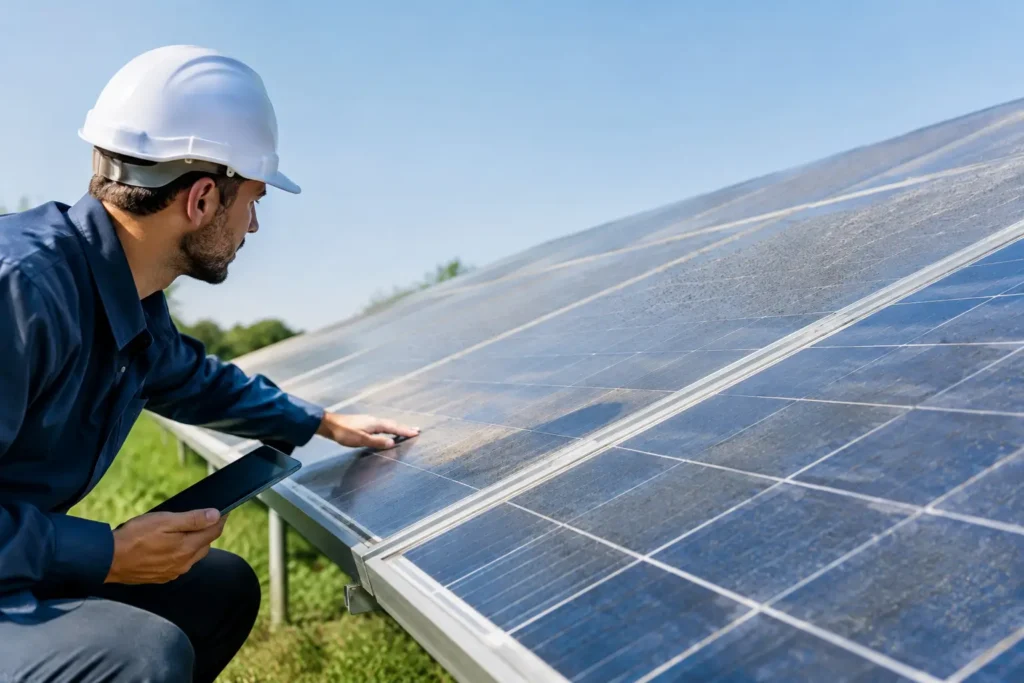
A solar array can look only slightly dusty from the ground while carrying a stubborn film of pollen, traffic grime and bird mess. So, do dirty panels reduce output? Yes, they can. Anything that blocks sunlight from reaching the cells reduces the electricity a panel can generate, although the size of the loss depends on the type of dirt, the weather and how the system is positioned.
For homeowners and site managers, the useful question is not whether every speck of dust needs removing. It is whether the build-up is heavy enough to make safe, professional cleaning worthwhile.
Do dirty panels reduce output in the UK?
Solar panels are designed to work outside, and a normal shower will often rinse away loose dust. In Buckinghamshire, regular rain means a lightly soiled, well-angled array may lose very little production between cleans. That is why cleaning on a fixed monthly schedule is not always necessary.
However, rain is not a complete solution. It does not reliably shift dried bird droppings, sticky pollen, algae, soot, leaf residue or mineral deposits. It may also wash dirt down the glass, leaving a dirty line at the lower edge of each panel. If a coating remains after rain, it continues to limit the light reaching the cells.
The effect can be greater than it appears because solar panels are made up of interconnected cells. A thick patch of bird mess or a leaf shadow across part of a panel can affect more than the small area it covers. Modern systems are built to manage partial shading better than older designs, but repeated or heavy shading is still unwanted.
Which types of dirt cause the biggest problem?
Loose dust is usually the least concerning. It may soften output slightly during a dry spell, but it is often removed naturally when the weather changes. The deposits that deserve more attention are the ones that cling to the surface or create concentrated shade.
Bird droppings are a common issue, particularly on roofs near trees, open fields, chimneys and popular perching points. They are dense, sticky and slow to wash away. A few small marks may not cause a noticeable change, but repeated deposits across several panels can.
Pollen can also form a film in spring, especially where homes sit near mature trees or green spaces. Once mixed with rainwater and airborne dust, it can dry onto the glass. Nearby building work, busy roads and agricultural activity can leave a similar layer of fine grime.
Leaves and moss fragments are different again. They tend to collect around panel edges, beneath frames and in lower corners, where rainwater may not clear them properly. While the panel itself is not a roof gutter, debris around the array can hold moisture and make routine roof maintenance more difficult.
Hard-water spotting is another consideration. Using untreated tap water can leave mineral marks as it dries, particularly in bright conditions. This is one reason professional cleaning methods matter. The wrong approach can leave panels looking cleaner but still streaked.
Signs your solar panels may need attention
The most reliable sign is a sustained drop in generation compared with similar weather conditions in previous weeks or years. Check your inverter, monitoring app or smart meter data before assuming dirt is to blame. Shorter winter days, cloud cover, system faults and shading from growing trees can all reduce production.
A visual check from ground level can help. Look for obvious bird mess, a dull film, leaf build-up or a distinct dirty band along the bottom of the panels. Never climb onto a roof or lean a ladder against the panels to inspect them closely. Roof work carries real risks, and panels, cables and roof coverings can be damaged by poor access.
For commercial sites, regular visual checks are sensible as part of wider exterior maintenance. Larger arrays may collect more dirt simply because of their location and size, while factories, schools and premises near main roads may experience more airborne contamination than a typical home.
When cleaning is likely to be worthwhile
There is no single cleaning interval that suits every property. A lightly dusty array in an open, exposed position may need very little intervention. A low-pitched roof beneath overhanging trees, or panels regularly marked by birds, may benefit from more frequent checks and occasional cleaning.
Cleaning is more likely to offer value after a long dry period, during high-pollen months, after nearby construction work, or when visible deposits remain after several rainy days. It can also make sense before the brighter part of the year, when each extra unit of generation has more opportunity to add up.
It is worth being realistic about returns. Cleaning cannot fix a failed inverter, a damaged panel, poor system design or shade from a new extension or mature tree. If output has fallen sharply or suddenly, ask a qualified solar installer or electrician to rule out a technical fault before treating it as a cleaning issue.
Safe cleaning matters as much as clean glass
Solar panels have toughened glass, but they are not a surface to scrub aggressively. Abrasive pads, harsh chemicals, pressure washers and strong detergents can cause damage, leave residue or affect manufacturer warranties. Walking on panels can crack cells or disturb mounting equipment, even if no damage is immediately visible.
The safer approach is gentle cleaning with suitable soft equipment and purified water. Pure water helps lift dirt without leaving the mineral spotting associated with ordinary tap water. Soft brushes and water-fed poles allow trained operatives to clean from a safer position where access permits, rather than putting unnecessary weight on a roof.
Timing matters too. Cleaning very hot panels with cold water can create an avoidable temperature shock, while washing in strong sunshine can cause water to dry before it has been rinsed away properly. A professional will assess the conditions, the roof pitch, access points and the condition of the surrounding roofline before starting work.
If panels sit close to gutters, roof valleys or a conservatory roof, it is sensible to consider the whole area. Blocked gutters, moss build-up and overhanging branches can contribute to debris collecting around an array. Addressing those issues safely may help keep the panels cleaner for longer while protecting the property itself.
A sensible maintenance routine
For most households, a seasonal ground-level check is enough to spot changes before they become a larger issue. Use your generation data alongside what you can see. If the panels look clean and output is in line with the weather, there is rarely a reason to clean simply for the sake of it.
Where your property is affected by birds, trees, road dust or repeated grime, plan a professional clean when there is visible build-up or a clear, unexplained dip in performance. Property managers may prefer to include solar panels within a scheduled exterior maintenance visit, alongside window, gutter and roofline checks. This keeps access planning straightforward and helps identify problems such as overflowing gutters or encroaching vegetation early.
Before booking anyone, ask how they will access the panels, what water and equipment they use, and whether they are insured for the work. A dependable contractor should be clear about the method, avoid risky shortcuts and treat the roof as carefully as the panels.
Clean panels are not about chasing a perfect shine. They are about allowing daylight to do its job, spotting persistent dirt early and keeping roof-level maintenance safe. A quick look at your monitoring data and a safe visual check after the next dry spell can tell you whether your array needs attention.