
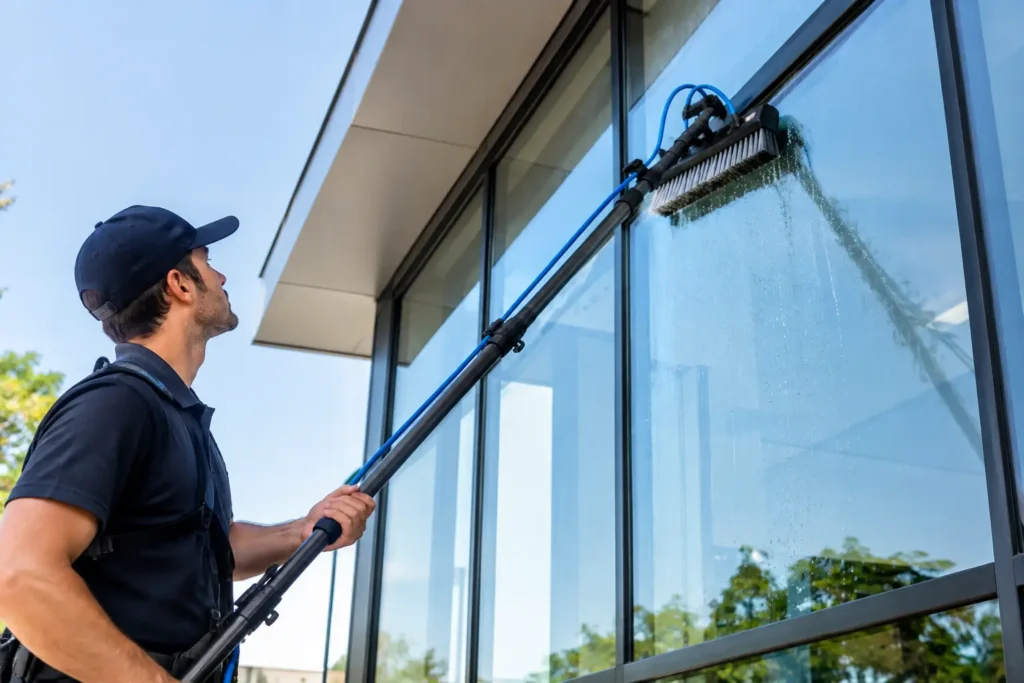
A ladder against an upstairs window can look routine, but it creates one of the most common risks in exterior cleaning. So, are water fed poles safe? When they are used by trained professionals with suitable equipment, sensible site checks and the right technique, they are one of the safest ways to clean many windows.
A water fed pole allows the cleaner to work from ground level while purified water is pumped through a lightweight pole to a brush head. The glass, frames and sills can be cleaned without repeatedly climbing, moving ladders or leaning across awkward spaces. That reduces risk, but it does not remove the need for care. Safe results still depend on the property, the weather and the person using the system.
Why water fed poles are generally safer
The main benefit is simple: the cleaner can stay on the ground. Falls from height remain a serious hazard in exterior work, particularly when ladders are used on uneven paving, sloping ground, wet surfaces or around conservatories. Water fed poles reduce the need for ladder access on first-floor windows and many higher windows.
They also make it easier to reach areas that are otherwise awkward, such as windows above porches, conservatory roofs, bays and ground-level extensions. Instead of putting weight on a roof panel or trying to position a ladder at an unsafe angle, the cleaner can work at a distance with a controlled brush.
For householders and site managers, there is another practical safety gain. A professional can clean windows with less disruption around entrances, paths and planted borders. This is particularly useful at schools, offices, shopfronts and busy homes, where a ladder can obstruct access or create a trip risk.
Are water fed poles safe in every situation?
No cleaning method is safe in every setting, and a reliable contractor should be clear about that. A water fed pole is not a reason to ignore overhead cables, fragile surfaces, poor access or bad weather.
Before work starts, the area should be checked for overhead electrical lines, loose paving, vehicles, pedestrians and obstacles such as garden furniture. Water and electricity do not mix. Poles must never be used close to overhead power lines, and the safest option may be to postpone the work or use a different access method where electrical clearance cannot be assured.
Wind matters too. Long poles can become difficult to control in strong gusts, especially at height. Heavy rain may also make paths slippery and reduce visibility. A responsible cleaner will adjust the job, change the order of work or rearrange the visit when conditions make safe working difficult.
Some windows need extra consideration. Old leaded glass, damaged frames, loose seals, flaking paint and poorly fitted panels may not tolerate vigorous brushing. Conservatory roofs can be especially vulnerable if they are brittle, cracked or unsupported. The right approach is to inspect first, use suitable brush pressure and explain any existing condition before cleaning begins.
What makes a water fed pole system safe?
The pole itself is only one part of the system. Good practice combines well-maintained equipment, purified water and a methodical approach to the property.
Pure water is filtered to remove the minerals that cause spotting. It lifts dirt from the glass and dries clear, so there is usually no need for detergents or for a cleaner to wipe high windows by hand. The brush should be soft enough for glass and window frames, while still effective at removing everyday grime, dust and cobwebs.
Pole material also matters. Lightweight carbon fibre poles are easier to control over longer reaches and reduce fatigue for the operator. However, carbon fibre is conductive, which makes awareness of electrical hazards even more important. Safe working means identifying overhead power lines before the pole is raised, not relying on guesswork once work has started.
Hoses need managing properly as well. A trailing hose can become a trip hazard if it is pulled across a public path, doorway or car park without thought. Professional cleaners keep the work area tidy, position hoses carefully and remain aware of people moving around the property.
Safe cleaning starts with the operator
A water fed pole is safer than unnecessary ladder work, but it still takes skill. The operator needs to judge reach, maintain control of the brush, avoid overreaching and use the correct amount of water. Trying to stretch a pole beyond a comfortable working position can strain the back, shoulders and wrists, while poor brush control can knock into gutters, vents or delicate fittings.
Training and experience also help prevent property damage. Window cleaning is not just about the pane of glass. Frames, sills, trickle vents, fascias and surrounding surfaces all need to be treated with care. A cleaner should recognise where dirt is likely to run, where water may collect and when a window needs a gentler approach.
At Spotless Cleans, safe access is part of the job rather than an afterthought. That means assessing each property, using modern equipment appropriately and working in a way that protects people, glass and surrounding surfaces.
What customers can do before the visit
You do not need to prepare the whole property, but a few simple steps make the visit safer and more efficient. Keep pets indoors where possible, move fragile items away from windows and let the cleaner know about loose gates, uneven ground or known damage to glass and frames.
If access is through a side gate, make sure it can be opened and that there is a clear route to the rear of the property. For commercial premises, it helps to tell staff or visitors when cleaning is taking place, particularly where hoses may cross a service yard or entrance.
It is also worth mentioning anything unusual before work begins. This could include a pond beneath a window, a recently repaired conservatory roof, an overhead cable, solar panels, a restricted access area or a window that does not appear secure. Small details allow the cleaner to plan the safest method rather than make decisions under pressure.
Questions to ask a window cleaner
Price matters, but safety and reliability should come first when someone is working around your home or business. Ask whether the company is insured, whether they carry out a site assessment and how they handle difficult access. A straightforward professional will be happy to explain the method they intend to use.
You can also ask whether the water is purified, whether frames and sills are included, and what happens if weather conditions are unsuitable. Clear answers are a good sign. Promises to clean every window in every condition are not. There are occasions when postponing a job is the safest and most professional decision.
For regular cleaning, water fed poles are particularly useful because routine visits prevent heavy build-up. Less ingrained dirt means gentler cleaning, quicker appointments and consistently clear glass. For many homes and commercial properties, that makes a scheduled service safer and more practical than waiting until windows are heavily soiled.
Water fed poles are not a shortcut around safety rules. Used properly, they are a sensible way to achieve clean, streak-free windows while keeping the cleaner on the ground and reducing disturbance around your property. If you are unsure about access at your home or premises, point it out when requesting a quote – a careful assessment is the best place for safe, dependable cleaning to start.