
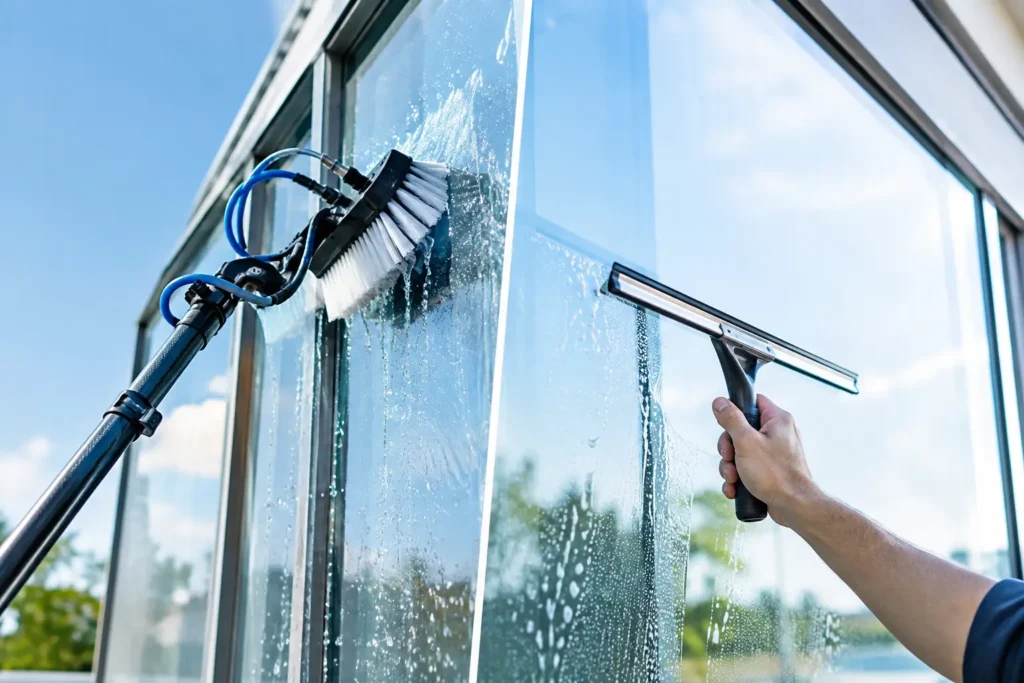
A ground-floor window can look simple to clean, but the right method changes once there are upstairs panes, awkward conservatory glass, busy premises or delicate access around the property. Pure water versus squeegee cleaning is not simply a question of old versus new. Both methods can give excellent results when used properly, but each is better suited to particular windows, conditions and sites.
For homeowners and property managers, the useful question is: which method will clean the glass well, protect the property and allow the work to be completed safely and reliably?
What is pure water window cleaning?
Pure water cleaning uses filtered water that has had its natural minerals and dissolved solids removed. Ordinary tap water contains minerals that can remain on glass as spots when the water dries. Purified water dries clear, leaving no residue behind.
A professional uses a water-fed pole with a soft brush head to agitate dirt on the glass, frames and sills. Clean water is fed through the brush, rinsing away the loosened grime. The window is then left to dry naturally rather than being wiped dry with a blade.
This system is especially useful for upper-storey windows, skylights, conservatories and glass above extensions where ladders would otherwise be needed. The operator works from the ground in many cases, reducing the risk associated with working at height.
Pure water cleaning is also thorough around the window itself. Because the brush reaches the frames, sills and surrounding edges, it can remove the dirt that often runs onto freshly cleaned glass after a shower. That makes it a strong choice for regular domestic cleaning and scheduled commercial maintenance.
How traditional squeegee cleaning works
Squeegee cleaning is the familiar hand-cleaning method. The cleaner applies a cleaning solution to the pane with a mop or applicator, loosens the dirt, then removes the water with a rubber squeegee blade. Edges and corners are detailed with a clean cloth.
In experienced hands, this produces a sharp, streak-free finish immediately. It remains an excellent method for internal windows, shopfronts, ground-floor glass and smaller areas where the cleaner can safely work close to the pane.
It is also useful when a window needs close attention. A cleaner can spot and treat small marks, paint specks or stubborn fingerprints directly, provided the surface and frame material allow it. On internal glass, where water-fed poles are not practical, a traditional squeegee is usually the obvious option.
The limitation is access. Cleaning high windows by hand can require ladders, which adds time and risk. Ladders are still appropriate in some circumstances when used correctly, but they are not automatically the safest or most efficient answer for every property.
Pure water versus squeegee cleaning: the key differences
The visible result can be equally good with either method. The difference is mainly in how the cleaner reaches the window and how much of the surrounding area is cleaned at the same time.
Pure water is generally the better option for external upper-storey windows. It allows the work to be carried out from ground level, reaches glass over roofs and conservatories, and cleans frames and sills as part of the process. For homes with several levels or commercial buildings with regular cleaning requirements, this often means a safer and more consistent service.
Squeegee cleaning is often preferable for inside windows and accessible external panes that need hand detailing. It can also be the practical choice for a small shopfront, a single ground-floor property or glass that needs an immediate dry finish before opening hours.
Neither method should be judged by whether water is left on the glass during the clean. With pure water, the final rinse is meant to dry naturally. With a squeegee, the blade removes the water straight away. Both approaches can be streak-free, provided the water is properly purified or the squeegee technique is sound.
Which method is safer for your property?
Safety should be part of the decision, not an afterthought. Water-fed poles reduce the need for ladders on many external window cleaning jobs. This helps protect the cleaner, avoids repeated ladder placement against walls or guttering, and is particularly helpful around sloping ground, flower beds, conservatory roofs and busy walkways.
That does not mean a pole is suitable for every task. Very tight access, enclosed courtyards and certain recessed windows may call for hand cleaning. A professional should assess the property rather than force one method onto every window.
For commercial sites, safe access matters even more. A school, office entrance or retail unit may have staff, visitors and deliveries moving nearby. Ground-based pure water cleaning can reduce disruption, although the work area still needs to be managed carefully to avoid slips and keep pedestrians clear of hoses.
Why first cleans sometimes need extra attention
If external windows have not been cleaned for some time, the first visit can reveal dirt hidden in the frames, vents and rubber seals. Pure water cleaning may rinse this material out, and in a few cases a follow-up clean is needed before the glass reaches its best finish.
This is not a fault with the method. It is simply the difference between cleaning only the pane and giving the full window area a proper wash. Once frames and sills are maintained on a regular schedule, the results usually become more consistent from visit to visit.
Windows with failed seals, damaged coatings, oxidised frames or existing scratches also need realistic expectations. Cleaning can improve their appearance, but it cannot repair defects within double-glazed units or reverse permanent weathering. A reliable cleaner will point out issues rather than promise a result that the glass cannot deliver.
Weather, water and streaks
Rain does not normally make clean windows dirty. It is dirt already sitting on the glass, frames or surrounding surfaces that creates the marks seen after rainfall. Properly cleaned windows can be washed in light rain, though heavy rain, high winds or freezing conditions may make the job unsafe or affect the quality of the work.
Pure water systems must be maintained correctly. If the water is not sufficiently purified, it can leave mineral spotting as it dries. The equipment should be checked regularly, and the brush heads kept clean so that dirt is not transferred from one property to the next.
Squeegees also rely on good maintenance. Worn or nicked rubber can leave lines, while dirty applicators and cloths can smear glass. Professional results come from clean tools and careful technique, not just from choosing one method over another.
Choosing the right approach for your windows
For most modern homes, a combination works best: pure water for the exterior, particularly upstairs windows and conservatories, and traditional hand cleaning for internal glass or close-detail work. This gives good coverage without taking unnecessary risks.
A small ground-floor shopfront may be best served by a squeegee clean before trading begins. A three-storey office with large external panes is likely to benefit more from a regular pure water service. A landlord preparing a property for new tenants may need both, alongside cleaning of frames, sills and accessible conservatory glass.
At Spotless Cleans, the method is chosen around the property, access and condition of the windows rather than convenience alone. Fully insured, safety-focused work and clear communication matter just as much as the finish on the glass.
Clean windows should not require a choice between a good result and sensible working practices. Ask how your windows will be accessed, what is included around the frames and sills, and whether regular maintenance would prevent dirt building up again. A straightforward conversation before the visit helps ensure the cleaning method fits the property from the start.