
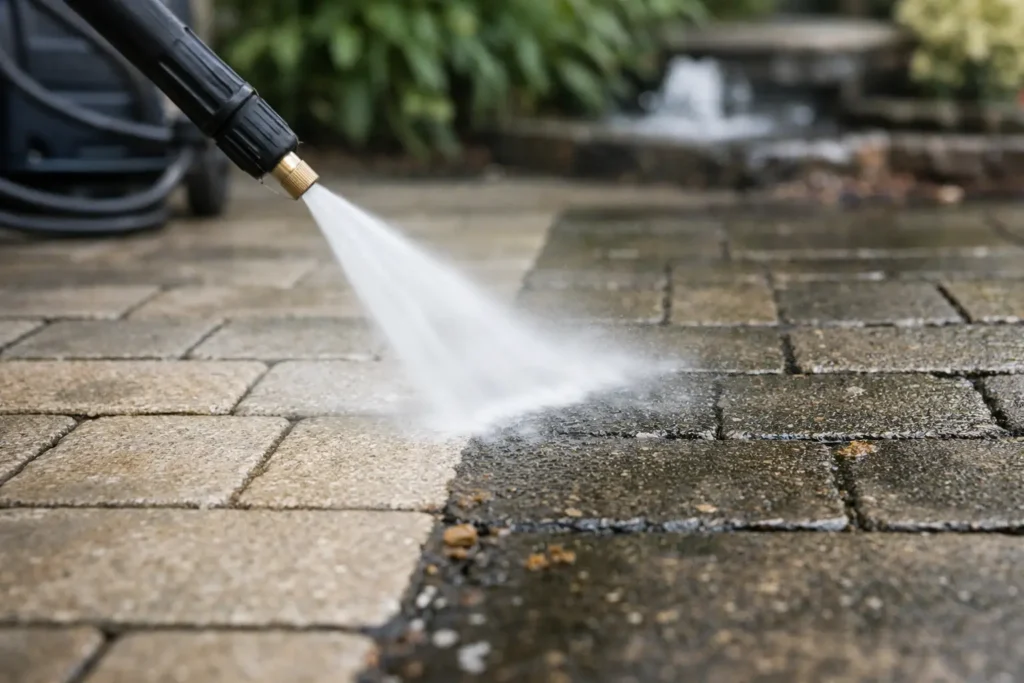
A patio can look dramatically better after a clean, but stripping away moss and black spots is not worth damaging the surface underneath. Does pressure washing damage paving? It can, particularly when the pressure is too high, the nozzle is held too close, or the paving is already worn, loose or poorly pointed. Used correctly, though, it is an effective way to freshen many paths, patios and driveways.
The difference comes down to the paving material, its condition and the cleaning method. A professional clean should remove organic growth and surface grime without blasting out joints, roughening the finish or forcing water where it should not go.
Does pressure washing damage paving?
Pressure washing does not automatically damage paving. Sound concrete slabs, block paving and many hard-wearing natural stone surfaces can usually be cleaned safely with the right pressure, a wide fan setting and sensible working distance.
Problems begin when a powerful jet is treated as the solution to every stain. A narrow nozzle concentrates the force into a small area. Held close to the surface, it can etch softer stone, remove the top layer of concrete, dislodge jointing material and expose the aggregate below. The result may look clean on the day, but the paving can become rougher, patchier and more likely to hold dirt afterwards.
Older paving needs particular care. Years of weather, frost, vehicle use and movement in the ground can weaken mortar and joints. Moss may also be hiding loose slabs or crumbling edges. Washing over these issues aggressively can turn a minor repair into a larger job.
What affects the risk of damage?
There is no single safe pressure setting for every outdoor surface. The right approach depends on the material and how it has been laid. The age and condition of the paving matter just as much as the equipment being used.
Block paving
Block paving is tough, but its joints are vulnerable. High-pressure cleaning can wash out the kiln-dried sand between blocks, leaving them less stable and creating gaps where weeds quickly return. If this happens, the area should be allowed to dry fully before the joints are re-sanded properly.
Cleaning can also reveal colour differences, especially on a driveway that has not been maintained for several years. This is not always damage, but it can make an uneven finish more noticeable. A controlled, even method is far better than concentrating on one dark patch until it looks different from the surrounding blocks.
Concrete slabs and manufactured paving
Concrete paving can tolerate cleaning well when it is in good condition, but it is not indestructible. Very high pressure can remove the smoother surface layer and leave a grainy, open texture. That roughened finish is more difficult to keep clean and may weather unevenly.
Pay close attention to the mortar joints between slabs. If they are cracked, missing or soft, water pressure can remove more of the jointing and allow water to sit beneath the paving. Repointing should come before cleaning where joints are already failing.
Natural stone and porcelain
Natural stone varies greatly. Dense granite and some slate can be more forgiving than softer sandstone, limestone or travertine. Softer stone may mark, flake or lose its natural finish if cleaned too aggressively. Acidic products can also cause permanent damage to certain stones, so the cleaning product matters as much as the pressure.
Porcelain paving is generally non-porous and easy to maintain, but the grout or jointing compound still needs protection. Dirt usually sits on the surface, meaning it often responds well to a lower-pressure clean and suitable cleaner rather than force.
Tarmac and resin-bound surfaces
Tarmac is not paving in the traditional sense, but it is often cleaned in the same way by mistake. Direct high pressure can loosen the surface and remove fine material. Resin-bound driveways can also be damaged if the resin bond is disturbed. These surfaces need a gentler, manufacturer-appropriate approach.
How pressure washing causes problems
The most common mistake is using a turbo or pencil jet at close range. These attachments are useful for certain hard surfaces in experienced hands, but they are not suitable for sweeping across every patio or driveway. The jet can cut lines into concrete and stone that are impossible to hide once dry.
Working too close to the joints is another issue. On block paving, the water can act like a miniature excavation tool, removing sand quickly. On slabbed patios, it can break weak mortar or lift loose pointing. Water driven underneath unstable paving may contribute to movement, especially where drainage is already poor.
Over-cleaning is less obvious but equally damaging. Repeatedly attacking a stubborn mark can change the surface texture or create a clean circle that stands out. Oil, rust and paint stains do not always come out with pressure alone. A suitable treatment, patience and realistic expectations are usually safer than more force.
A safer way to clean patios and driveways
A good clean begins with an inspection. Look for rocking slabs, cracks, loose blocks, failed pointing, damaged drainage channels and areas where water pools. These faults should be repaired or taken into account before any cleaning starts.
Sweep away loose leaves, gravel and debris first. This makes it easier to see the surface and prevents material being dragged across it. A suitable biocide or patio cleaner can then be applied where algae, lichen or ingrained grime need time to break down. This reduces the temptation to compensate with excessive pressure.
When pressure washing is appropriate, use a fan-shaped spray rather than a concentrated jet. Keep the nozzle moving, maintain a consistent distance from the surface and test an inconspicuous spot first. Work methodically in overlapping passes so the finish is even. It is better to make two gentle passes than one harsh pass.
Take extra care around edges, steps, drains, doors and rendered walls. Water can carry dirty splashback onto nearby surfaces, while a direct jet can force moisture into weak seals or gaps. Avoid washing in freezing conditions or when heavy rain is expected, as the surface needs time to dry and any repairs may be harder to assess.
After cleaning, inspect the joints again. Re-sand block paving where needed and arrange repointing for slabs with damaged mortar. If a sealant is being considered, only apply it to a clean, fully dry surface and only where it suits that specific paving type. Sealers are not a cure for loose paving or poor drainage.
When professional cleaning is the sensible option
DIY pressure washers can produce excellent results, but the risk rises when the paving is old, expensive, delicate or already showing signs of wear. Natural stone, large driveways, commercial forecourts and areas with poor drainage are all worth assessing carefully before starting.
A professional exterior cleaner can select the appropriate method for the surface rather than relying on maximum pressure. In many cases, a soft-wash treatment or controlled surface cleaning provides a better result with less risk to joints and finishes. This is especially useful for homeowners and property managers who need a tidy, presentable surface without creating a repair issue.
If your patio or driveway in Aylesbury has heavy moss, loose jointing or stains that will not shift, Spotless Cleans can provide straightforward advice and a free quote based on the condition of the area.
A clean path or patio should feel like an improvement, not the start of a maintenance problem. Start gently, deal with repairs first, and choose a method that respects the surface as well as the dirt on it.