
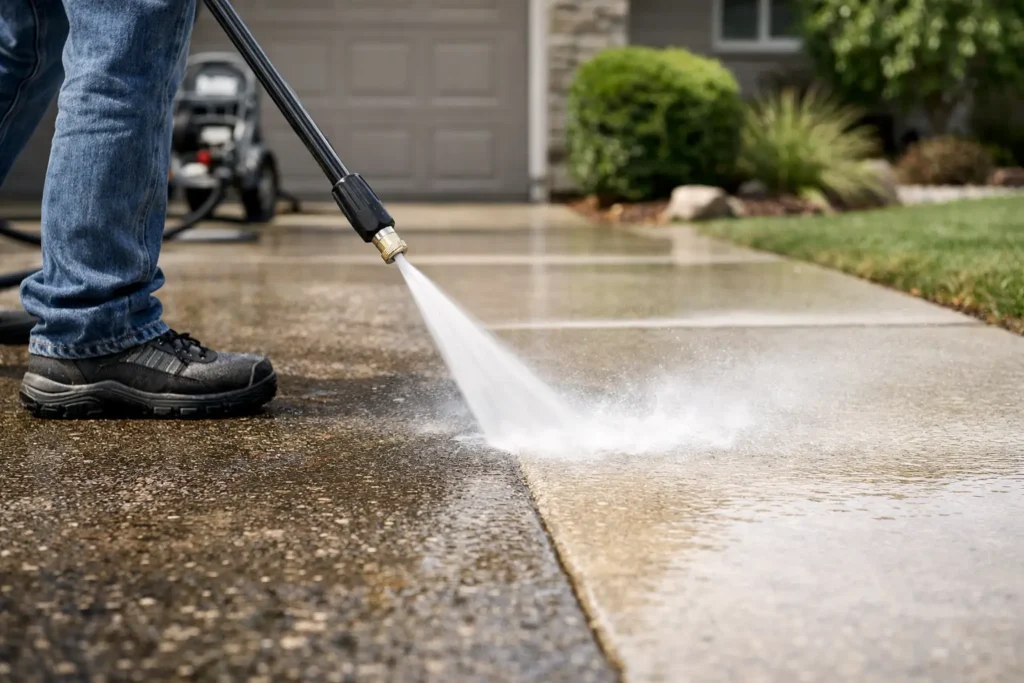
A driveway can look tired long before the rest of a property does. Tyre marks, algae, oil spots and ingrained dirt build up gradually, then become impossible to ignore after a spell of wet weather. Knowing how to pressure wash driveways properly helps you get a cleaner finish without stripping jointing sand, scarring concrete or turning a manageable job into a repair bill.
For many homes and commercial premises, pressure washing is an effective way to improve kerb appeal and reduce slippery growth. The key is not simply using the most powerful setting. It is choosing the right preparation, pressure, nozzle and cleaning method for the surface under your feet.
Check the Driveway Material Before You Start
The correct approach depends on the driveway. Block paving, concrete, natural stone, resin-bound surfaces and tarmac all react differently to water pressure and cleaning products.
Block paving is usually suitable for pressure washing, but the process can remove sand from between the blocks. That sand needs replacing once the surface has dried, otherwise the blocks may move over time. Concrete is durable, although a concentrated jet held too close can leave visible lines or expose the aggregate. Natural stone varies considerably, so softer stones need a cautious test area and a lower-pressure clean.
Tarmac needs particular care. High pressure can loosen the surface, especially if it is older, cracked or already soft in warm weather. Resin-bound driveways should not be blasted at close range either, as this can damage the resin bond or dislodge the stone. In these cases, a gentler wash and suitable treatment are usually the safer option.
If you are unsure what your driveway is made from, or it is showing signs of wear, treat a small hidden area first. A professional assessment is sensible where the surface is valuable, uneven or already deteriorating.
Prepare the Area Properly
Good preparation makes the wash safer and gives the equipment a better chance of working evenly. Move cars, bins, planters and furniture away from the driveway. Sweep off loose leaves, gravel, soil and litter so they do not clog drains or get pushed across the surface by the water jet.
Cover or move delicate pots and keep doors, air bricks and low-level vents protected from spray. Close nearby windows. If you are cleaning close to a garage, make sure water is not being forced beneath the door or towards stored belongings.
It is also worth checking where the water will run. Heavy dirt, moss and detergent should not be pushed into a surface-water drain without thought. Keep debris contained where possible and follow the product instructions for any cleaning solution used. On commercial sites, this matters even more because drainage arrangements can be more complex.
Before switching on the machine, inspect the hose, trigger gun and fittings. Never use damaged pressure-washing equipment. Wear sturdy footwear with grip, along with eye protection and gloves. A wet driveway, especially one covered in algae, can become very slippery.
How to Pressure Wash Driveways Properly
Start with a broad fan nozzle rather than a narrow, aggressive jet. A narrow nozzle concentrates pressure into a small area and is far more likely to damage paving, cut lines into concrete or remove jointing material. A rotary surface cleaner is often the best choice for large, flat areas because it produces a more even finish and controls overspray.
Begin at the highest point of the driveway and work towards the drainage point. This allows dirty water to move away naturally instead of being pushed repeatedly over the cleaned area. Keep the nozzle moving in steady, overlapping passes. Do not stop in one place with the trigger held down.
Hold the lance at a consistent distance from the surface, usually around 20 to 30 centimetres to begin with, then adjust carefully. The right distance depends on the machine and the material. If dirt remains, do not immediately move closer or turn the pressure to maximum. Slow down your passes first, or apply a suitable pre-treatment and allow it time to work.
Work in manageable sections so you can see where you have cleaned. On concrete, alternating directions slightly can help prevent striping. On block paving, avoid aiming directly into the joints for long periods. The goal is to lift surface dirt and organic growth, not excavate the sand between every block.
Treat Moss, Algae and Lichen Before Washing
Pressure alone may remove visible green growth, but it does not always deal with the spores that cause it to return. A driveway in shade, beneath trees or close to damp planting will usually need a suitable biocide or exterior cleaning treatment before or after washing.
Use a product designed for the driveway material and follow its dilution, dwell-time and safety guidance exactly. More chemical is not automatically better. Overuse can discolour some surfaces, harm nearby planting and create unnecessary runoff concerns.
For thick moss, remove the bulk of it with a stiff brush or scraper first. This reduces the amount of debris being washed towards drainage channels and makes the main clean more efficient.
Deal With Oil Stains Separately
Oil stains are rarely removed fully by plain water. A proper degreaser formulated for outdoor hard surfaces is normally needed. Apply it to the dry or lightly damp stain as directed, agitate with a stiff brush and give it time to break down the oil before rinsing.
Old oil marks may lighten rather than disappear completely, particularly on porous concrete or block paving. Repeating a gentle treatment is often safer than attacking the area with excessive pressure. Fresh spills should be dealt with promptly using an absorbent material before they soak in.
Rinse, Inspect and Restore Block Paving
Once the main wash is complete, rinse the driveway from top to bottom to move remaining residue and dirty water towards the intended drainage area. Inspect the surface while it is still wet for missed patches, tyre marks or uneven cleaning. It is easier to correct these before everything dries.
Block paving needs an extra step. Allow it to dry fully, then brush kiln-dried jointing sand back into the gaps between blocks. Do not skip this because the joints help lock the paving in place and reduce movement. Sweep the sand evenly across the area and brush it into the joints until they are properly filled.
Some homeowners choose to seal block paving or concrete afterwards. Sealing can make future cleaning easier and may improve colour, but it only works when the surface is completely dry, clean and structurally sound. It is not a cure for sinking blocks, failed edging or cracked concrete. If there are movement issues, address those first.
Common Mistakes That Damage Driveways
The most common mistake is using too much pressure too close to the ground. A powerful machine can make quick work of dirt, but it can also leave permanent marks that only become obvious once the driveway dries.
Another problem is cleaning a driveway without treating the cause of recurring growth. If tree cover, poor drainage or shade keeps the surface damp, algae will return quickly unless it is treated and the area is maintained. Clearing nearby gutters, downpipes and drains can also help prevent water from continually spilling onto the same section of paving.
Avoid washing loose, cracked or unstable paving until it has been repaired. Water can get beneath the surface and worsen the problem. Similarly, do not pressure wash in freezing conditions, during heavy rain or when you cannot keep pedestrians, children and pets clear of the work area.
When It Is Better to Call a Professional
A hired pressure washer can be suitable for a small, sound concrete or block-paved driveway, provided you are confident using it safely. Larger areas, heavily stained surfaces and commercial forecourts are different. They often benefit from professional equipment, controlled cleaning treatments and a surface cleaner that avoids the patchy finish caused by a hand-held lance.
Professional help is also worthwhile for delicate stone, tarmac, resin-bound surfaces, difficult drainage, stubborn oil staining or driveways that need re-sanding and treatment after cleaning. An insured exterior cleaning team can assess the surface first and select a method that prioritises the condition of the driveway, not just the speed of the job.
At Spotless Cleans, that careful approach matters as much as the visible result. A clean driveway should look presentable, feel safer underfoot and remain protected from avoidable damage.
A regular sweep, prompt attention to spills and a periodic treatment for organic growth will keep the next clean far simpler. The best driveway wash is not the most aggressive one – it is the one that leaves the surface clean, stable and ready to stand up to the weather.