
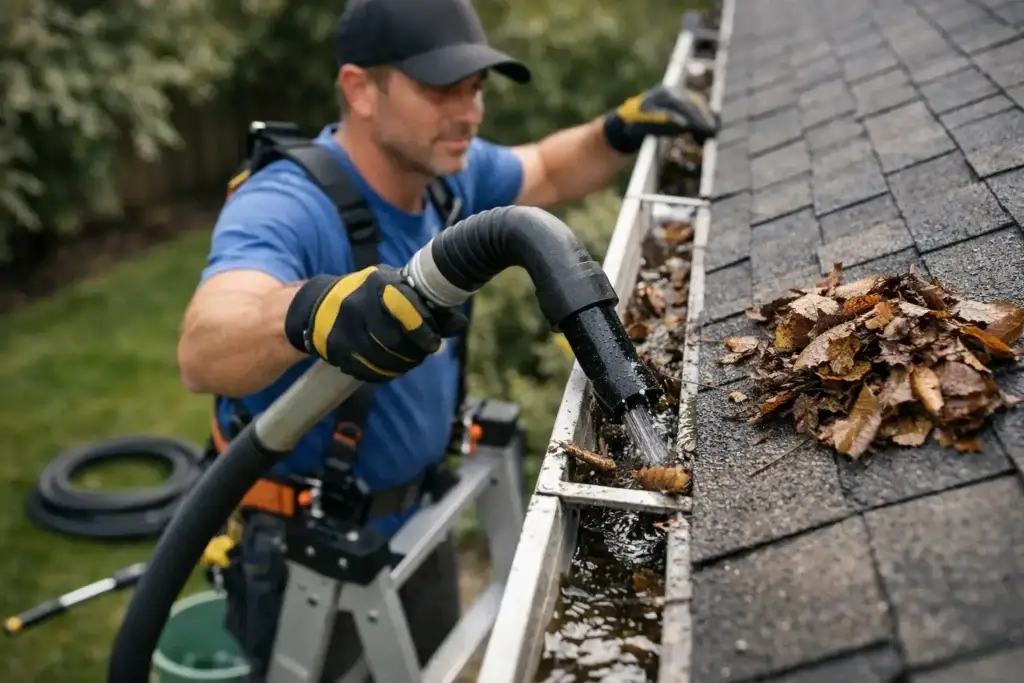
A gutter can look clear from the ground while a compacted layer of wet leaves, moss and roof grit is quietly holding water against the property. That is why the best way to clean gutters is about more than removing what you can see. It means clearing the full run, checking that water can reach the downpipe, and doing the work without taking unnecessary risks.
For many homeowners, the sensible choice is a professional clean using high-reach equipment. It gives a thorough result without the repeated climbing, balancing and ladder repositioning that makes gutter work risky. If you are considering doing it yourself, the method below will help you decide what is practical and when to call in an insured professional.
Why clean gutters before they become a problem?
Gutters are designed to move rainwater away from the roofline, walls and foundations. When leaves and moss build up, water can overflow behind the gutter or spill down the outside of it. Over time, that can leave staining on brickwork, encourage damp around vulnerable areas and put extra weight on brackets and joints.
In Buckinghamshire, autumn leaf fall is an obvious trigger for blockage, but it is not the only one. Moss from tiled roofs, small twigs, seed pods and windblown grit can collect throughout the year. A blocked downpipe is particularly frustrating because the gutter may appear tidy until a heavy shower reveals the problem.
Regular cleaning is preventative maintenance. It is usually quicker, safer and more affordable than waiting for overflowing water to expose a fault.
The best way to clean gutters: a safe, thorough method
Start by looking at the property from ground level. Check for plants growing from the gutter, dark water marks on walls, sagging sections, loose joints and water pouring over the edge during rain. Also look at where the downpipe discharges. If the ground below it stays unusually wet, there may be a blockage lower down.
Only work from a ladder if you are confident, the access is straightforward, and the ground is firm and level. Never lean a ladder against a fragile plastic gutter, work alone, or stretch sideways to reach the next section. Constantly moving a ladder is slower than people expect, but it is far safer than overreaching.
With gloves on, remove loose debris by hand or with a small plastic scoop. Begin close to the downpipe and work away from it, so you do not push material into the outlet. Put waste into a bucket rather than dropping it onto paths, patios or planted beds. Wet gutter debris is heavy, messy and can stain surfaces.
Once the larger material has gone, use a hose at a controlled flow to rinse the gutter towards the downpipe. This is the part that shows whether the system is actually draining. Water should move freely, without pooling or leaking at connections. Avoid using a pressure washer from a ladder. The recoil can affect your balance, and high pressure can dislodge seals, force water behind fascias or damage older guttering.
If water backs up at the outlet, clear the downpipe carefully. A simple blockage near the top can sometimes be removed by hand. For a deeper blockage, a drain rod used gently from the lower end may help. Stop if there is resistance or you are unsure where the obstruction is. Forcing tools through a downpipe can separate joints or create a bigger issue.
Finally, rinse away any debris left on the roof edge, then check brackets, clips and joints. Cleaning is an ideal time to spot a section that has started to sag, a cracked outlet, or a downpipe that has come loose from the wall.
Why a gutter vacuum is often the safer option
Professional high-reach gutter vacuums allow debris to be removed from the ground using carbon-fibre poles and a powerful wet-and-dry vacuum. This approach is especially useful for two-storey homes, conservatories, awkward side passages and commercial buildings where safe ladder placement is limited.
A vacuum is not just about convenience. It reduces the time spent working at height and can remove compacted moss and wet debris that is difficult to reach by hand. Camera inspection equipment can also confirm that the gutter is clear, rather than relying on a view from below.
There are limits. If gutters are damaged, heavily overgrown or hidden behind roof details, closer inspection may still be needed. A good service should explain what has been found and flag repairs separately rather than treating cleaning as a cure for every drainage problem.
When should gutters be cleaned?
Most homes benefit from a gutter clean at least once a year. Properties near mature trees often need attention twice yearly, commonly after autumn leaf fall and again in late spring. Homes with mossy roofs may also require more frequent checks because moss can wash into gutters after heavy rain.
Commercial sites need a schedule based on their surroundings and the consequences of an overflow. A shopfront entrance, school walkway or office building can quickly become untidy or slippery when gutters fail. Planned maintenance helps property managers avoid urgent call-outs and keeps drainage issues from becoming a disruption.
Do not wait for a visible cascade during a storm. Signs such as drips from gutter joints, damp patches on exterior walls, overflowing corners, peeling paint on fascias and weeds growing from the gutter all justify a prompt inspection.
Common mistakes that create more work
The biggest mistake is treating gutter cleaning as a quick job at the top of a ladder. Rushing leads to missed downpipe blockages, poor ladder positioning and debris left in corners. Another common error is using a pressure washer to blast everything clear. It may look effective for a moment, but it can move debris into the downpipe and put strain on gutter seals.
Gutter guards can help in the right setting, but they are not maintenance-free. Fine roof grit, moss and seeds can settle on top or collect beneath them. Before fitting guards, consider the type of trees nearby, the pitch of the roof and whether the system can still be easily inspected and cleaned.
It is also worth separating cleaning from repair. Clearing a gutter may reveal that the fall is wrong, a bracket has failed, or an outlet has cracked. Those defects need fixing if the system is to drain properly in the next downpour.
When to book a professional gutter clean
Professional help is the right call where the property is more than one storey, access is awkward, gutters sit above a conservatory, or you have any doubt about working safely at height. It is also sensible when gutters are full of wet moss, downpipes are blocked, or water is already affecting walls and roofline timber.
Look for a local company that is fully insured, uses suitable access equipment and can explain the condition of the gutters in plain terms. For landlords and commercial property managers, reliable scheduled visits can be particularly useful. They create a simple record of ongoing upkeep and reduce the chance of a tenant or site user reporting an avoidable overflow.
Spotless Cleans uses high-reach gutter vacuum equipment to clear gutters safely from ground level where possible, helping homeowners and businesses keep drainage working without the hassle and risk of repeated ladder work.
A final check after every heavy spell of rain
The clearest test of a clean gutter is how it performs in real weather. After the next heavy shower, take a minute to look for smooth water flow at the downpipes and dry walls below the gutter line. That small check can catch a developing issue early, before a simple clear-out turns into a repair job.