
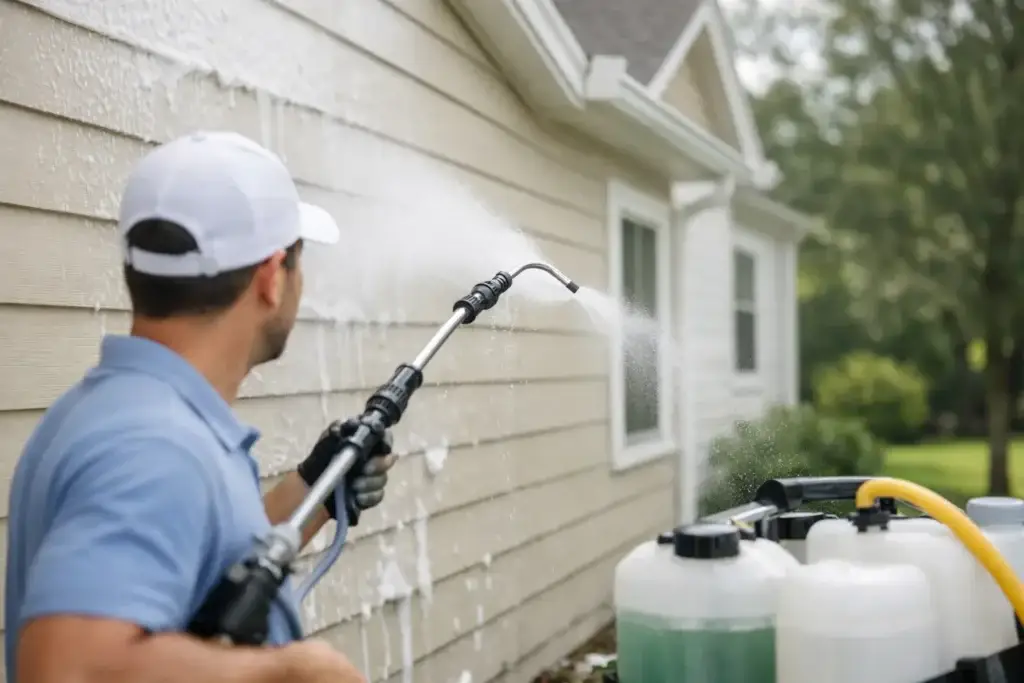
A wall covered in green staining or a roof streaked with algae can make an otherwise well-kept property look tired long before anything is actually broken. That is where soft wash exterior cleaning comes in. It is designed to deal with organic growth, surface staining and general build-up without the force of traditional pressure washing, which is not always the right choice for more delicate materials.
For many property owners, the question is not whether the outside needs attention. It is how to clean it properly without causing damage, creating a mess, or simply seeing the same staining come back a few weeks later. Soft washing answers that problem by focusing on treatment as well as cleaning.
What soft wash exterior cleaning actually means
Soft wash exterior cleaning is a low-pressure cleaning method used on outside surfaces such as render, roofs, cladding, fascias, soffits, gutters and some paved areas. Instead of relying on high force to blast dirt away, it uses specialist cleaning solutions and controlled water application to remove contamination and kill the organic growth causing the problem.
That distinction matters. A surface may look dirty, but often the real issue is algae, lichen, mould or mildew rooted into the material. If you only remove the visible layer, it can come back quickly. Soft washing is often the better option because it treats the cause rather than just the symptom.
This is one reason it is widely used on painted finishes, render, roof tiles and other surfaces that can be marked, stripped or weakened by aggressive pressure. Lower pressure means less risk to pointing, coatings and fragile areas, while still producing a clear visual improvement.
Why pressure washing is not always the answer
Pressure washing has its place. On solid, hard-wearing surfaces such as some driveways or heavy-duty concrete, it can be very effective. But it is not a one-size-fits-all solution.
Used on the wrong material, high pressure can force water into cracks, lift paint, disturb mortar, damage roof coverings or leave visible lines across render and cladding. It can also scatter moss and debris across the property, which means more clearing up afterwards.
Soft wash exterior cleaning is usually the safer approach where the surface is more sensitive, the staining is biological, or a longer-lasting result is the goal. It is a more controlled method, and that tends to suit homeowners, landlords and site managers who want the job done properly rather than quickly for the sake of it.
Where soft washing works best
One of the main strengths of soft washing is versatility. It can be used across a wide range of exterior surfaces, although the exact method should always be matched to the material and its condition.
Roofs are a common example. Moss, algae and lichen do more than spoil the look of the property. They can hold moisture against the roof surface, interfere with drainage and add to long-term wear. Soft washing is often used after careful moss removal to treat remaining growth and help slow regrowth.
Render is another surface where a gentler method makes sense. Coloured render, painted render and modern finishes can be especially vulnerable to damage from overly aggressive cleaning. Soft washing can lift staining and improve appearance without etching the surface.
Cladding, fascias, soffits and gutter exteriors also respond well when cleaned with the right low-pressure method. On commercial premises in particular, these areas affect first impressions more than many people realise. A clean frontage suggests a site that is looked after.
What the process usually involves
A proper soft wash job starts with assessment, not spraying. The cleaner needs to check the surface type, level of contamination, access, surrounding landscaping and any areas that may need protection.
If there is heavy moss, loose debris or thick surface build-up, that may be removed first by hand or with appropriate tools. The treatment is then applied at low pressure and given time to work. Depending on the surface and the product used, this may break down staining, kill biological growth and loosen residue so it can be rinsed away or weather away gradually.
That last point surprises some customers. Not every soft wash result is instant in the same way as pressure washing. Some treatments continue working after application, with the finish improving over time as rainfall and normal weathering carry away dead organic matter. In many cases, that is part of what makes the result longer-lasting.
The benefits go beyond appearance
Most people first look into exterior cleaning because the property looks dirty. That is fair enough. Cleaner roofs, walls and external fittings can make a home feel cared for and help commercial premises look more professional.
But appearance is only part of it. Organic growth can hold moisture on surfaces, make paths or steps more slippery, and contribute to gradual deterioration if left unchecked. Regular exterior maintenance helps spot issues earlier and reduces the chance of bigger repair costs building up unnoticed.
For landlords and property managers, that preventative side matters a great deal. Keeping outside surfaces clean and maintained supports tenant satisfaction, protects asset value and makes inspections easier. For commercial operators, it also helps maintain standards for staff, visitors and customers.
Safety and technique matter
Soft washing is not simply a matter of buying chemicals and giving the wall a spray. The wrong product, wrong dilution, or wrong application method can damage surfaces, affect nearby plants, or create avoidable risk.
That is why equipment, training and insurance matter. Professional exterior cleaners use controlled application methods and know how to work around windows, doors, drainage points and access challenges. They also understand when soft washing is suitable and when another method would be better.
For taller properties, roof areas and awkward access points, safe working practices are just as important as the cleaning result. Using the correct high-reach equipment can reduce the need for unsafe ladder work and make the whole process more controlled.
How long do the results last?
That depends on the surface, the environment and the type of contamination. A shaded wall under trees will usually see regrowth faster than a sunny elevation with good airflow. Roofs, render and north-facing walls are often more prone to recurring algae and staining.
In general, soft washing tends to last longer than cleaning methods that only remove visible dirt, because it tackles the biological growth as well. That does not mean permanent results, but it often means a longer clean period and slower return of staining.
For some properties, a one-off treatment is enough for quite a while. Others benefit from periodic maintenance, especially where appearance is important or the site is prone to repeated build-up. This is often the most cost-effective approach in the long run because lighter, regular treatments are easier to manage than leaving surfaces until they are heavily affected.
Is soft wash exterior cleaning right for every property?
Not always, and a good contractor should be honest about that. Some surfaces are better suited to hot water cleaning, careful pressure washing or manual removal. In other cases, a combination works best.
The right method depends on material, age, condition and the type of staining involved. A roof with heavy moss may need scraping before any treatment is applied. A paved area with deep, ingrained dirt may benefit from pressure cleaning first and treatment afterwards. A painted wall may need the gentlest possible approach.
That is why there is real value in an on-site assessment rather than guesswork. A dependable exterior cleaning company will explain what is suitable, what risks need managing and what sort of result you can realistically expect.
Choosing a contractor you can trust
When someone is working on the outside of your property, especially around roofs, upper windows and access points, trust matters. Look for a company that is insured, clear in its communication and willing to explain the method it recommends.
It also helps if they offer broader exterior maintenance rather than treating the job in isolation. If the gutters are blocked, the fascias are dirty and the roof is covered in moss, dealing with each problem as part of a joined-up service can save time and produce a better overall result. For property owners in Buckinghamshire, that practical, no-fuss approach is often what makes the difference.
A company such as Spotless Cleans will typically assess the surface, choose the safest method and set out what is included before work starts. That clarity is worth a lot, particularly for busy homeowners and site managers who simply want things handled properly.
If your property exterior is looking weathered, stained or green with growth, leaving it rarely improves matters. The right cleaning method can restore appearance, protect surfaces and take one more maintenance worry off your list. A careful soft wash is often the sensible middle ground – effective enough to make a visible difference, gentle enough to respect the building.