
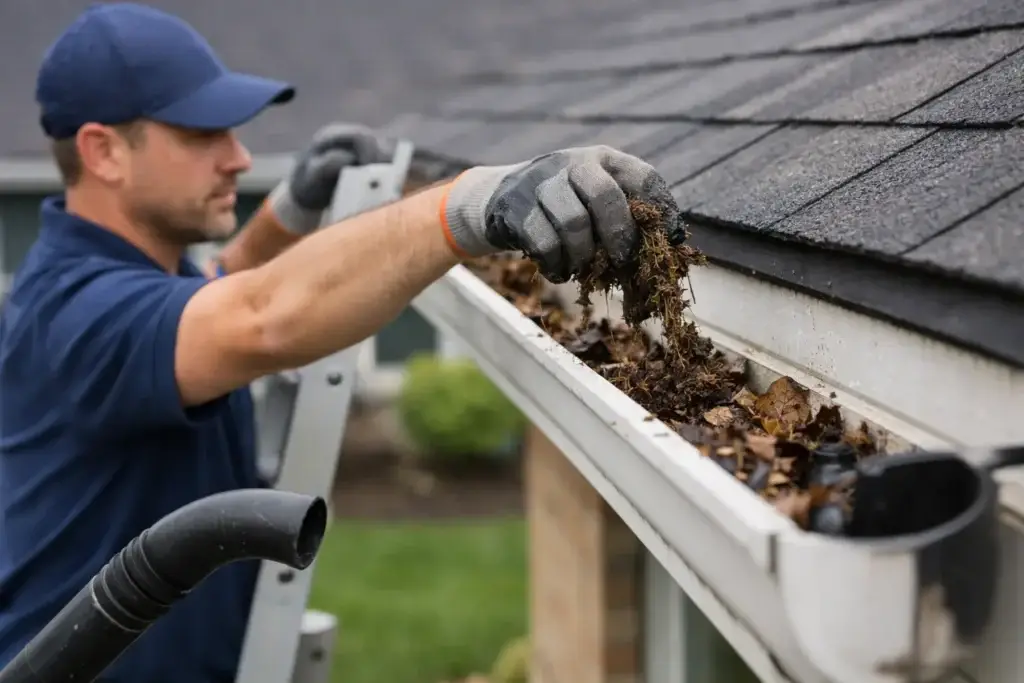
The first sign is usually not dramatic. Rain starts spilling over the gutter edge instead of running to the downpipe, or you notice a damp patch forming where it should not be. By the time you search for a gutter unblocking service near me, the problem has often been building for months.
Blocked gutters are easy to put off because they sit out of sight. The trouble is that overflowing water rarely stays a gutter problem for long. It can mark brickwork, soak fascias and soffits, cause slippery paths, and in some cases contribute to internal damp around rooflines and upper walls. For landlords, homeowners and site managers, it is usually cheaper and far less disruptive to deal with it early.
What a gutter unblocking service near me should actually do
Not every service on the market means the same thing. Some providers simply remove the visible blockage from one section and move on. A proper gutter unblocking service should check the full run, clear packed debris, test the flow where needed, and make sure the downpipes are not blocked further down.
That matters because the blockage is often not where the overflow appears. Water might be backing up from a clogged outlet, a compacted stretch of moss, or a downpipe packed with leaves. If only the obvious bit is cleared, the same issue can come back with the next spell of rain.
For most properties, modern high-reach gutter vacuum systems are the safest and most efficient option. They allow the team to clear gutters from ground level in many cases, reducing the need for ladders and the risks that come with them. On some buildings, access equipment may still be required, but the method should suit the property rather than the contractor using a one-size-fits-all approach.
Why gutters block in the first place
In Buckinghamshire, a common cause is moss washing down from the roof after wet weather. Add leaves, twigs and general grime, and gutters can clog surprisingly quickly. Trees close to the building make things worse, but even homes without overhanging branches are not immune.
Commercial sites have their own issues. Shopfronts, schools, offices and industrial units often have long gutter runs, awkward access, and maintenance schedules that focus on urgent repairs rather than prevention. By the time a blockage is spotted, there may already be staining on external walls or water pooling around entrances.
It also depends on the building itself. Older properties can have guttering that is more prone to sagging or collecting debris, while some newer systems have narrow outlets that block faster if they are not checked regularly.
Signs you need gutter unblocking now, not later
Overflow during rain is the obvious one, but there are quieter warning signs too. Plants growing from the gutter, dark streaks on walls, green staining near downpipes, and damp around the roofline all suggest that water is not draining properly.
You might also notice that one section of gutter stays full long after rain has stopped. That can point to a blockage in the outlet or downpipe. On commercial premises, puddles near the building after wet weather can also mean rainwater is not being channelled away as it should be.
If you can hear dripping or running water in odd places, it is worth getting it checked. What sounds minor from the ground can be a steady overflow soaking the same area of wall day after day.
What to look for when choosing a local service
When people search for a gutter unblocking service near me, speed is usually part of the reason. There is nothing wrong with wanting a fast booking, but it should not come at the expense of safety or quality.
Start with the basics. The company should be insured, clear about how the work will be carried out, and willing to explain what is included. If a property has awkward access, conservatories, extensions or fragile roofing details, the method matters. A dependable contractor will talk through that rather than giving a vague promise to sort it.
It is also sensible to ask whether they only unblock the gutter or whether they inspect related parts such as downpipes, joints, fascias and soffits while they are there. You do not necessarily need a full exterior clean every time, but it helps to know if the water issue has caused staining or highlighted a maintenance problem elsewhere.
Trust matters just as much as equipment. For many customers, especially families, landlords and schools, knowing the team is professional, vetted and respectful on site makes a real difference. You are not just paying for debris to be removed. You are paying for the job to be handled safely, properly and without hassle.
Is DIY gutter clearing worth it?
Sometimes, for a low bungalow with easy access and a very minor build-up, a confident property owner may be able to clear a small section. Even then, the main risk is not always the debris itself. It is working at height, overreaching on a ladder, or missing a blockage hidden in the downpipe.
For anything above easy ground-floor reach, professional equipment is usually the better call. It is safer, more thorough, and often quicker than trying to manage it yourself. There is also less chance of damaging brackets, joints or the gutter lining by forcing tools into places they should not go.
The same goes for commercial buildings and multi-storey homes. The potential cost of a fall, a damaged roof edge or a missed blockage is far higher than the cost of getting it done properly.
How often should gutters be cleared?
There is no single answer because it depends on the property. Homes near trees may need attention once or even twice a year. Others can go longer if the roof stays fairly clear and the guttering drains well.
For landlords and commercial properties, planned maintenance usually makes more sense than waiting for an obvious issue. A regular schedule helps catch small blockages before they turn into overflowing water, stained walls or tenant complaints. It also gives you a clearer picture of the condition of the gutters over time.
If moss regularly drops from the roof, it may be worth addressing the roof as well as the guttering. Otherwise, the gutters can be cleared only to fill up again after the next wet spell.
What affects the cost?
Price varies with height, access, the length of the gutter run, and how badly blocked it is. A straightforward clear on a standard house is very different from clearing high-level gutters on a larger property or commercial site with restricted access.
The cheapest quote is not always the best value. If the service only covers a quick scoop-out of one visible blockage, you may end up paying again when the downpipe issue shows up a week later. A fair quote should reflect proper clearing, a sensible check of the full system, and a safe method suited to the building.
For customers in and around Aylesbury, working with a local company often means quicker attendance and a better understanding of the kinds of properties and access issues common in the area. That local knowledge can be useful, especially on older homes, schools and mixed-use buildings.
A blocked gutter is usually a warning, not a one-off
Once gutters start overflowing, it is worth thinking beyond the immediate blockage. Has roof moss been building up for months? Are the fascias already showing signs of water exposure? Is one section sagging and holding debris because the fall is wrong? These are the questions that prevent repeat problems.
This is where a practical, no-nonsense service stands out. A good contractor does not just remove the mess and disappear. They point out anything likely to cause trouble next, explain what can wait and what should not, and leave you with a system that drains as it should.
Spotless Cleans takes that straightforward approach because most customers want the same thing – a safe, reliable fix with no guesswork and no unnecessary fuss.
If your gutters are overflowing, staining walls, or simply have not been checked in far too long, acting now is usually the cheaper option. A clear gutter is not just about tidiness. It is one of the simplest ways to protect the outside of your property before a small drainage problem turns into a much bigger repair bill.